
Kerala SSLC Chemistry Chapter 6 Notes on Metals (Malayalam Medium: ലോഹങ്ങൾ) cover the complete science of Metallurgy in the newly revised Class 10 Chemistry textbook published by the State Council of Educational Research and Training (SCERT Kerala). In the Kerala Pareeksha Bhavan SSLC Chemistry examination, this chapter is a goldmine of direct 3-mark and 4-mark questions—especially on matching metals with their ores, distinguishing between Calcination and Roasting, writing the Blast Furnace slag formation equations for Iron extraction, and explaining the role of Cryolite in the Hall-Heroult process for Aluminium extraction.
- 1. Kerala SSLC Chemistry Chapter 6 Notes: Minerals, Ores and Important Ores Table
- 2. Three Stages of Metallurgy: Concentration, Extraction and Refining of Metals
- Stage 1: Concentration of Ores (അയിരിന്റെ സാന്ദ്രണം — Removing Gangue)
- Stage 2: Extraction of Metal from Concentrated Ore (Calcination, Roasting & Reduction)
- Stage 3: Refining of Metals (ലോഹശുദ്ധീകരണം)
- 3. Industrial Extraction of Iron in the Blast Furnace and Alloy Steels
- 4. Extraction of Aluminium: Hall-Heroult Process and Role of Cryolite
- 5. SCERT Textbook Let Us Assess & Sure A+ Public Exam Questions with Answers
- 6. Malayalam Medium Summary Notes (ലോഹങ്ങൾ)
From my classroom teaching experience, students who memorize the Ore-Concentration-Refining match table and the four Blast Furnace equations can answer every single question from this chapter in less than 10 minutes. Below you will find complete concept notes, chemical equations, alloy steel comparisons, and solved Let Us Assess answers.
Quick Navigation: Review Chapter 5: Electrochemistry, Chapter 3: Periodic Table and Electron Configuration, Chapter 4: Gas Laws and Mole Concept, or visit our Kerala SSLC Physics All 7 Chapters Master Hub.
CHAPTER 6 AT A GLANCE: QUICK REVISION BLUEPRINT (SSLC PUBLIC EXAM)
- Chapter Title: Metals (ലോഹങ്ങൾ)
- Expected Public Exam Weightage: 6 to 7 Marks (Out of 40 Theory Marks)
- 3 Stages of Metallurgy: (1) Concentration of Ores → (2) Extraction of Metal from Concentrated Ore → (3) Refining of Metals
- Calcination vs Roasting: Calcination = Heating in absence of air (Carbonate/Hydroxide ores) | Roasting = Heating in presence of air (Sulphide ores)
- Iron Extraction (Blast Furnace): Ore = Haematite (
Fe2O3) | Flux =CaO| Gangue =SiO2| Slag =CaSiO3| Reducing Agent =CO - Aluminium Extraction (Hall-Heroult Process): Pure Alumina (
Al2O3) + Molten Cryolite (Na3AlF6— lowers melting point & increases conductivity)
1. Kerala SSLC Chemistry Chapter 6 Notes: Minerals, Ores and Important Ores Table
All naturally occurring metallic compounds found in the earth’s crust are called Minerals (ധാതുക്കൾ). However, a metal cannot be extracted profitably from every mineral. A mineral from which a metal can be extracted easily, quickly, and at a low cost on an industrial scale is called an Ore (അയിര്).
Why all ores are minerals, but all minerals are not ores: Both Bauxite (Al2O3·2H2O) and Clay (Al2O3·2SiO2·2H2O) are naturally occurring minerals of Aluminium. However, Aluminium is extracted commercially only from Bauxite because extraction from Bauxite is easy and economical. Therefore, Bauxite is both a mineral and an ore of Aluminium, whereas Clay is only a mineral and not an ore.
| Metal | Important Ores | Chemical Formula | Nature of Ore |
|---|---|---|---|
Aluminium (Al) |
Bauxite | Al2O3·2H2O |
Hydrated Oxide Ore |
Iron (Fe) |
Haematite Magnetite |
Fe2O3Fe3O4 |
Oxide Ores (Magnetic) |
Copper (Cu) |
Copper Pyrites Cuprite |
CuFeS2Cu2O |
Sulphide / Oxide Ore |
Zinc (Zn) |
Zinc Blende Calamine |
ZnSZnCO3 |
Sulphide / Carbonate Ore |
Titanium (Ti) |
Ilmenite, Rutile | FeTiO3, TiO2 |
Found in Kerala beach sands |
2. Three Stages of Metallurgy: Concentration, Extraction and Refining of Metals
The earthy, rocky, and sandy impurities associated with an ore mined from the earth are called Gangue (ഗാങ്). The complete scientific and technological process of isolating a pure metal from its ore is called Metallurgy (ലോഹനിർമ്മാണം), which involves three sequential stages covered in Kerala SSLC Chemistry Chapter 6 Notes:
Stage 1: Concentration of Ores (അയിരിന്റെ സാന്ദ്രണം — Removing Gangue)
- Levigation or Hydraulic Washing: Used when the density of the ore is greater than that of the gangue (e.g., Oxide ores like Haematite, and native Gold). When powdered ore is washed in a stream of running water, lighter gangue particles wash away while heavier ore particles settle down.
- Froth Floatation (ഫ്രോത്ത് ഫ്ലോട്ടേഷൻ): Used when the ore particles are lighter than the gangue and preferentially wetted by pine oil, whereas gangue is wetted by water. Used specifically for concentrating Sulphide Ores such as Zinc Blende (
ZnS), Copper Pyrites (CuFeS2), and Galena (PbS). - Magnetic Separation: Used when either the ore or the gangue is magnetic in nature. Used for concentrating Magnetite (
Fe3O4) and for separating magnetic impurities (Iron tungstate / Rutile) from non-magnetic Tinstone (SnO2, ore of Tin). - Leaching (Baeyer’s Process for Bauxite): A chemical method in which powdered ore is treated with a suitable reagent that dissolves the ore while leaving the gangue insoluble. Powdered Bauxite (
Al2O3·2H2O) is heated with concentratedNaOHsolution to form soluble Sodium aluminate (NaAlO2), filtered, diluted with water to precipitateAl(OH)3, and ignited strongly to obtain pure anhydrous Alumina (Al2O3).
Stage 2: Extraction of Metal from Concentrated Ore (Calcination, Roasting & Reduction)
- Calcination (കാൽസിനേഷൻ): Heating the concentrated ore strongly in the absence of air (or limited supply of air) at a temperature below its melting point to convert it into metal oxide. Used for Carbonate ores (e.g., Calamine
ZnCO3 → ZnO + CO2) and hydrated oxide/hydroxide ores. - Roasting (റോസ്റ്റിംഗ്): Heating the concentrated ore strongly in a regular current (presence) of air at a temperature below its melting point to convert it into metal oxide. Used for Sulphide ores (e.g., Zinc Blende
2ZnS + 3O2 → 2ZnO + 2SO2). - Reduction of Metal Oxide: Highly reactive metals (
K, Na, Ca, Mg, Al) are extracted by electrolysis of their fused salts/oxides; moderately reactive metals (Zn, Fe, Sn, Pb) are reduced using Carbon (Coke) or Carbon Monoxide (CO); less reactive metals (Cu, Ag, Au) are obtained by thermal reduction or found free in nature.
Stage 3: Refining of Metals (ലോഹശുദ്ധീകരണം)
- 1. Liquation (ഉരുക്കി വേർതിരിക്കൽ): Used for metals with low melting points such as Tin (
Sn) and Lead (Pb). When heated on the sloping hearth of a furnace, the pure metal melts and flows down leaving high-melting impurities behind. - 2. Distillation (സ്വേദനം): Used for metals with low boiling points (volatile metals) such as Zinc (
Zn), Cadmium (Cd), and Mercury (Hg). - 3. Electrolytic Refining: Used for purifying Copper (
Cu), Silver, and Gold. A thick block of impure copper is made the Anode (+), a thin strip of pure copper is made the Cathode (–), and acidified Copper Sulphate (CuSO4) solution is used as the electrolyte.
3. Industrial Extraction of Iron in the Blast Furnace and Alloy Steels
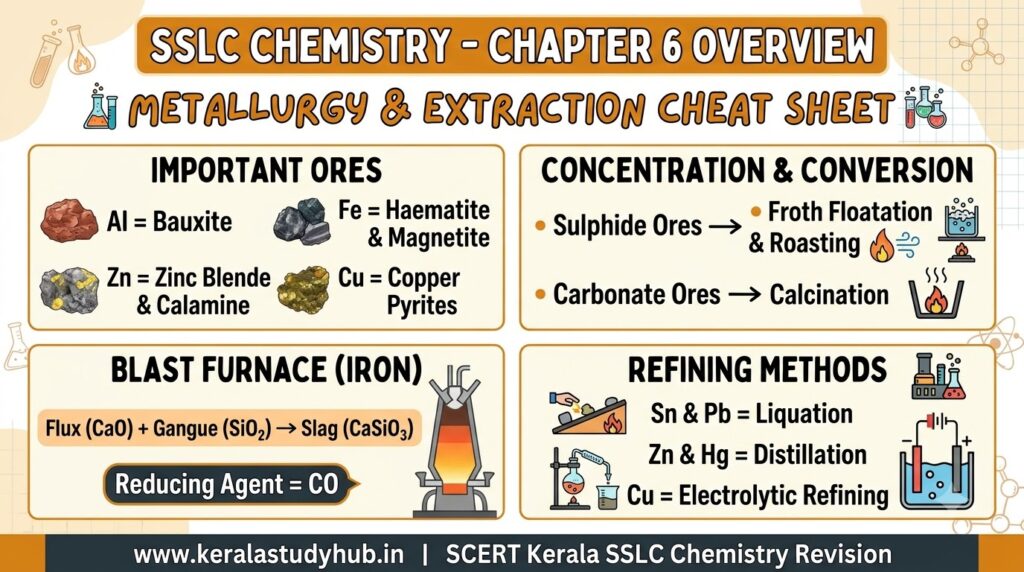
Iron is extracted industrially from Haematite (Fe2O3) in a tall cylindrical tower called a Blast Furnace. A mixture of three raw materials—Concentrated Haematite (Fe2O3), Coke (C), and Limestone (CaCO3)—is fed into the top of the blast furnace while a blast of hot air is blown from the bottom:
Four Key Chemical Reactions Inside the Blast Furnace:
1. Formation of Reducing Agent (CO): C + O2 → CO2 + Heat ; CO2 + C + Heat → 2CO
2. Decomposition of Limestone: CaCO3 —(Heat)→ CaO (Quicklime / Flux) + CO2
3. Formation of Slag (Flux + Gangue → Slag): CaO (Basic Flux) + SiO2 (Acidic Gangue) → CaSiO3 (Calcium silicate / Slag)
4. Reduction of Haematite to Iron: Fe2O3 + 3CO → 2Fe (Molten Iron) + 3CO2
- Main Reducing Agent in the Blast Furnace: Carbon Monoxide (
CO). - Pig Iron, Cast Iron & Wrought Iron: Molten iron tapped from the bottom of the blast furnace contains about
4%carbon along with small amounts of silicon, phosphorus, and manganese, and is called Pig Iron. Remelting Pig Iron gives Cast Iron; the purest commercial form of iron containing0.02% to 0.05%carbon is Wrought Iron. - Important Alloy Steels & Their Uses:
– Stainless Steel (Fe, Cr, Ni, C): Utensils, surgical instruments, and vehicle parts (resists rusting).
– Alnico (Fe, Al, Ni, Co): Manufacture of powerful permanent magnets.
– Nichrome (Fe, Ni, Cr, C): Heating coils in electric irons, heaters, and toasters.
4. Extraction of Aluminium: Hall-Heroult Process and Role of Cryolite
Because Aluminium is a highly reactive metal positioned high in the reactivity series, its oxide (Alumina, Al2O3) cannot be reduced by carbon or carbon monoxide. Therefore, Aluminium is extracted by the electrolysis of pure Alumina dissolved in molten Cryolite (Na3AlF6) in a carbon-lined iron tank. This electrolytic method is called the Hall-Heroult Process:
- Why Cryolite (
Na3AlF6) is added to Alumina (Sure 2-Mark Question): Pure Alumina has a very high melting point (above2000 °C) and is a poor electrical conductor. Dissolving Alumina in molten Cryolite lowers the melting point of the mixture to about950 °Cand increases its electrical conductivity. - Cathode (
–): Carbon lining inside the iron tank.
Reaction at Cathode:Al3+ + 3e– → Al (l)(Molten Aluminium collects at the bottom). - Anode (
+): Thick Carbon (Graphite) rods suspended into the molten electrolyte.
Reaction at Anode:2O2– → O2 (g) + 4e– - Why the Carbon Anode Rods Have to Be Replaced Periodically: At the high temperature of the cell, the Oxygen gas (
O2) liberated at the anode reacts with the Carbon blocks to form Carbon Monoxide and Carbon Dioxide (C + O2 → CO2), causing the carbon anodes to burn away gradually.
5. SCERT Textbook Let Us Assess & Sure A+ Public Exam Questions with Answers
Q1. Distinguish between Calcination and Roasting with one chemical equation for each.
Answer:
– Calcination: The process of heating the concentrated ore strongly in the absence of air below its melting point to convert it into metal oxide. It is used for carbonate and hydroxide ores. Example: ZnCO3 (Calamine) —(Heat)→ ZnO + CO2.
– Roasting: The process of heating the concentrated ore strongly in the presence of air below its melting point to convert it into metal oxide. It is used for sulphide ores. Example: 2ZnS (Zinc blende) + 3O2 —(Heat)→ 2ZnO + 2SO2.
Q2. Match the following Metals, Ores, Concentration Methods, and Refining Methods appropriately:
(a) Zinc Blende (ZnS) → Concentration: Froth Floatation | Extraction: Roasting & Carbon Reduction | Refining: Distillation.
(b) Calamine (ZnCO3) → Concentration: Levigation | Extraction: Calcination & Carbon Reduction | Refining: Distillation.
(c) Tinstone (SnO2) → Concentration: Magnetic Separation | Refining: Liquation.
(d) Copper Pyrites (CuFeS2) → Concentration: Froth Floatation | Refining: Electrolytic Refining.
6. Malayalam Medium Summary Notes (ലോഹങ്ങൾ)
പത്താം ക്ലാസ് രസതന്ത്രം അദ്ധ്യായം 6: ലോഹങ്ങൾ (മലയാളം മീഡിയം നോട്ടുകൾ)
- ധാതുക്കളും അയിരുകളും (Minerals & Ores): ഭൂവൽക്കത്തിൽ കാണപ്പെടുന്ന ലോഹസംയുക്തങ്ങളെ ധാതുക്കൾ എന്ന് വിളിക്കുന്നു. വ്യാവസായികമായി എളുപ്പത്തിലും ലാഭകരമായും ലോഹം വേർതിരിച്ചെടുക്കാൻ കഴിയുന്ന ധാതുവാണ് അയിര് (Ore). (ഉദാ: അലുമിനിയത്തിന്റെ അയിര്: ബോക്സൈറ്റ്; ഇരുമ്പിന്റെ അയിര്: ഹേമറ്റൈറ്റ്, മാഗ്നറ്റൈറ്റ്; സിങ്കിന്റെ അയിര്: സിങ്ക് ബ്ലെൻഡ്, കലാമൈൻ; കോപ്പറിന്റെ അയിര്: കോപ്പർ പൈറൈറ്റ്സ്).
- അയിരിന്റെ സാന്ദ്രണം (Concentration of Ores):
1. ജലപ്രവാഹത്തിൽ കഴുകിയെടുക്കൽ (Levigation): അയിരിന് ഗാങ്ങിനേക്കാൾ സാന്ദ്രത കൂടുതലുള്ളപ്പോൾ (ഓക്സൈഡ് അയിരുകൾ).
2. ഫ്രോത്ത് ഫ്ലോട്ടേഷൻ (Froth Floatation): അയിരിന് ഗാങ്ങിനേക്കാൾ സാന്ദ്രത കുറവുള്ളപ്പോൾ (സൾഫൈഡ് അയിരുകൾ).
3. കാന്തിക വിഭജനം (Magnetic Separation): അയിരിനോ ഗാങ്ങിനോ കാന്തിക സ്വഭാവമുള്ളപ്പോൾ (മാഗ്നറ്റൈറ്റ്, ടിൻസ്റ്റോൺ).
4. ലീച്ചിങ് (Leaching): ബോക്സൈറ്റിൽ നിന്ന് ശുദ്ധമായ അലുമിന (
Al2O3) വേർതിരിക്കാൻ ഉപയോഗിക്കുന്നു. - കാൽസിനേഷനും റോസ്റ്റിംഗും: വായുവിന്റെ അസാന്നിധ്യത്തിൽ അയിരിനെ ചൂടാക്കുന്ന പ്രക്രിയയാണ് കാൽസിനേഷൻ (കാർബണേറ്റ് അയിരുകൾക്ക്). വായുവിന്റെ സാന്നിധ്യത്തിൽ ചൂടാക്കുന്ന പ്രക്രിയയാണ് റോസ്റ്റിംഗ് (സൾഫൈഡ് അയിരുകൾക്ക്).
- ബ്ലാസ്റ്റ് ഫർണസിലെ ഇരുമ്പ് നിർമ്മാണം: ഹേമറ്റൈറ്റ് (
Fe2O3), കോക്ക് (C), ചുണ്ണാമ്പുകല്ല് (CaCO3) എന്നിവ ഫർണസിൽ ചേർക്കുന്നു. കാൽസ്യം ഓക്സൈഡ് (CaO– ഫ്ലക്സ്) സിലിക്കയുമായി (SiO2– ഗാങ്) ചേർന്ന് കാൽസ്യം സിലിക്കേറ്റ് (CaSiO3– സ്ലാഗ്) ഉണ്ടാകുന്നു. കാർബൺ മോണോക്സൈഡ് (CO) ആണ് ഇവിടുത്തെ പ്രധാന നിരോക്സീകാരി. - അലുമിനിയം നിർമ്മാണം (ഹാൾ-ഹെറോൾട്ട് പ്രക്രിയ): ഉരുകിയ ക്രയോലൈറ്റിൽ (
Na3AlF6) ലയിപ്പിച്ച അലുമിനയെ (Al2O3) വൈദ്യുതവിശ്ലേഷണം ചെയ്ത് അലുമിനിയം നിർമ്മിക്കുന്നു. അലുമിനയുടെ ദ്രവണാങ്കം കുറയ്ക്കാനും വൈദ്യുതചാലകത കൂട്ടാനുമാണ് ക്രയോലൈറ്റ് ചേർക്കുന്നത്.


Latest SCERT & DHSE Kerala Study Notes
- Kerala Class 9 Physics Chapter 2 Notes: Equations of Motion (ചലനസമവാക്യങ്ങൾ) Std 9 Let Us Assess Questions and Answers PDF
- Kerala SSLC Christmas Exam Question Paper 2025-27: All Subjects Second Term & Model Question Papers with Solved Answer Keys PDF (New SCERT Syllabus)
- Kerala SSLC English Christmas Exam Question Paper 2025-27: Second Term & Model Solved 80-Mark Answer Key, Discourses & Grammar PDF
- Kerala SSLC Social Science Christmas Exam Question Paper 2025-27: Second Term & Model Solved 80-Mark Answer Key, Weightage & Map Study PDF
- Kerala SSLC Maths Christmas Exam Question Paper 2025-27: Second Term & Model Solved Answer Key, Weightage & Formula Sheet PDF (New SCERT Syllabus)
- Kerala SSLC Biology Christmas Exam Question Paper 2025-27: Second Term & Model Solved Answer Key, Weightage & Flowcharts PDF (New SCERT Syllabus)
- Kerala SSLC Chemistry Christmas Exam Question Paper 2025-27: Second Term & Model Solved Answer Key, Weightage & Sure A+ Questions PDF (New SCERT Syllabus)
- Kerala SSLC Physics Christmas Exam Question Paper 2025-27: Second Term & Model Solved Answer Key, Weightage & Formula Sheet PDF (New SCERT Syllabus)