Kerala SSLC Social Science 1 Chapter 2 (Liberty Equality Fraternity) (Malayalam Medium: മാനവികത) cover the brand-new opening chapter of the revised Class 10 (Std 10) Social Science I (History) textbook published by the State Council of Educational Research and Training (SCERT Kerala). In the newly revised curriculum for the Kerala Pareeksha Bhavan SSLC Public Examination (and Kerala PSC Tenth-Level examinations), SCERT has replaced the old opening chapter with a comprehensive study of Humanism, the Italian Renaissance, Renaissance Literature, Art, Architecture, Science, the Printing Press, the Reformation, and the Counter-Reformation.
- 1. Transition from Middle Ages to Modernity: Why the Renaissance Began in Italy (നവോത്ഥാനവും മാനവികതയും)
- 1.1 Five Reasons Why the Renaissance Started in Italian Cities (4-Mark Essay Question)
- 1.2 Comparison: Scholasticism vs Humanism (3-Mark Table)
- 2. Master Table: Humanism in Literature, Painting, Sculpture & Architecture (സാഹിത്യവും കലയും)
- 3. Scientific Revolution, Printing Press, Reformation & Counter-Reformation (ശാസ്ത്രവിപ്ലവവും മതനവീകരണവും)
- 4. SCERT Textbook Let Us Assess Questions and Answers & Malayalam Medium Notes
- 1. Causes of the French Revolution (1789): Bourbon Autocracy & The Three Estates (ഫ്രഞ്ച് വിപ്ലവത്തിന്റെ കാരണങ്ങളും മൂന്ന് എസ്റ്റേറ്റുകളും)
- 1.1 Structure of the Three Estates of French Society (Guaranteed 4-Mark / 6-Mark Question!)
- 2. Role of Enlightenment Thinkers & Economists in the French Revolution (ചിന്തകന്മാരുടെ പങ്ക്)
- 3. Course of the Revolution: Tennis Court Oath, Fall of Bastille, Women’s Role & Reign of Terror
- 4. Administrative Reforms of Napoleon Bonaparte, Results of Revolution & Congress of Vienna (1815)
- 5. SCERT Textbook Let Us Assess Questions and Answers & Malayalam Medium Notes
As a High School Social Science teacher (HST Social Science), I have organized this complete English and Malayalam Medium guide with comparison tables (Scholasticism vs Humanism), a master chart of Renaissance writers, painters, and scientists, and solved textbook Let Us Assess and essay questions so you can score full marks in First Term, Second Term, and March Board Exams.
Quick SSLC Study Navigation: Continue to SSLC Social Science I Chapter 2: Liberty, Equality, Fraternity, or explore our completed SSLC Physics All 7 Chapters Hub, SSLC Chemistry All 7 Chapters Hub, and SSLC Biology All 6 Chapters Hub.
CHAPTER 1 AT A GLANCE: CLASS 10 SOCIAL SCIENCE I (HISTORY) REVISION BLUEPRINT
- Why Renaissance Began in Italy (14th Century): Flourishing trade cities (Florence, Venice, Milan, Genoa), patronage of wealthy families like the Medici family of Florence, heritage of Greco-Roman civilization, and migration of Greek scholars after the Ottoman capture of Constantinople in 1453.
- Father of Humanism: Petrarch (author of Secretum and sonnets to Laura).
- Renaissance Masterpieces: Dante (The Divine Comedy), Boccaccio (Decameron), Cervantes (Don Quixote), Erasmus (In Praise of Folly), Machiavelli (The Prince), Thomas More (Utopia).
- Renaissance Art & Science: Leonardo da Vinci (Mona Lisa, The Last Supper), Michelangelo (The Last Judgment, David, Pieta), Raphael (The School of Athens); Copernicus (Heliocentric theory), Galileo Galilei (Telescope), Johannes Gutenberg (Printing Press, 1450s).
- Reformation (1517): Led by Martin Luther in Germany against the sale of Indulgences (Ninety-Five Theses at Wittenberg); followed by the Counter-Reformation (Council of Trent, Ignatius Loyola’s Society of Jesus).
1. Transition from Middle Ages to Modernity: Why the Renaissance Began in Italy (നവോത്ഥാനവും മാനവികതയും)
During the European Middle Ages, society was dominated by feudalism, the authority of the Catholic Church, and Scholasticism (a philosophy rooted in religious dogma and the afterlife). From the 14th century onwards, a cultural and intellectual awakening known as the Renaissance (meaning “Rebirth”) began in Italian cities and transformed Europe.
1.1 Five Reasons Why the Renaissance Started in Italian Cities (4-Mark Essay Question)
- Growth of Prosperous Commercial Cities: Italian cities such as Florence, Venice, Milan, Genoa, and Rome became wealthy centres of Mediterranean trade, weakening feudal control and encouraging independent civic life.
- Patronage of Wealthy Merchant Families: Rich banking and merchant families—especially the Medici family in Florence (Cosimo de’ Medici and Lorenzo de’ Medici)—generously patronized painters, sculptors, architects, and humanist scholars.
- Remnants of Ancient Greco-Roman Civilization: Italy was the heartland of the ancient Roman Empire; the surviving monuments, sculptures, and Latin manuscripts inspired artists and thinkers to revive classical heritage.
- Fall of Constantinople (1453): When the Ottoman Turks captured Constantinople (capital of the Eastern Roman/Byzantine Empire) in 1453, hundreds of scholars, artists, and philosophers fled to Italian cities carrying priceless ancient Greek and Roman manuscripts.
- Crusades and Cultural Contact with the East: Trade and contact with the Islamic world and Asia introduced Europeans to advancements in mathematics, astronomy, medicine, paper-making, and navigation.

1.2 Comparison: Scholasticism vs Humanism (3-Mark Table)
| Basis of Comparison | Medieval Scholasticism (സ്കൊളാസ്റ്റിസിസം) | Renaissance Humanism (മാനവികത) |
|---|---|---|
| Core Focus | Centred on theology, divine authority, sin, and salvation in the afterlife. | Centred on human life, worldly happiness, human emotions, freedom, and rational inquiry. |
| Approach to Knowledge | Accepted Church dogmas and ancient authorities without questioning. | Emphasized reasoning, observation, experimentation, and critical thinking. |
| Language of Literature | Written almost exclusively in classical Latin understood only by the clergy. | Promoted regional (vernacular) languages such as Italian, English, German, French, and Spanish. |
2. Master Table: Humanism in Literature, Painting, Sculpture & Architecture (സാഹിത്യവും കലയും)
| Field & Thinker / Artist | Famous Work(s) | Significance & Exam Point |
|---|---|---|
| 1. Francesco Petrarch (Italy) | Secretum, Sonnets to Laura | Known as the “Father of Renaissance Humanism”; collected classical Latin and Greek manuscripts. |
| 2. Dante Alighieri (Italy) | The Divine Comedy | Written in the regional Tuscan (Italian) dialect; reflects human emotions, patriotism, and desire for a unified Italy. |
| 3. Giovanni Boccaccio (Italy) | The Decameron | Collection of 100 realistic stories told by young people fleeing the Black Death (plague) in Florence. |
| 4. Desiderius Erasmus (Netherlands) | In Praise of Folly | Satirized the superstitions, corruption, and worldly greed of the clergy. |
| 5. Niccolo Machiavelli (Italy) | The Prince | Presented a secular, realistic theory of statecraft and political power separate from religion; advocated a strong ruler. |
| 6. Sir Thomas More (England) & Cervantes (Spain) | Utopia (More) | Don Quixote (Cervantes) | Utopia envisioned an ideal egalitarian society; Don Quixote mocked outdated medieval feudal chivalry. |
| 7. William Shakespeare (England) | Hamlet, Othello, Macbeth, King Lear, Romeo and Juliet | Portrayed the complexity of human psychology, ambition, love, and tragedy in English drama. |
| 8. Leonardo da Vinci (Painter & Polymath) | Mona Lisa, The Last Supper | Mastered human anatomy, perspective, light-and-shadow (chiaroscuro/sfumato), and realistic facial expressions. |
| 9. Michelangelo Buonarroti (Painter & Sculptor) | The Last Judgment (Sistine Chapel ceiling), Sculptures: David, Pieta, Moses | Celebrated the majesty, muscular precision, and emotional depth of the human form. |
| 10. Raphael, Giotto, Donatello & Brunelleschi | The School of Athens & Sistine Madonna (Raphael) | Gattamelata (Donatello) | Florence Cathedral Dome (Brunelleschi) | Replaced Gothic pointed arches with Greco-Roman domes, pillars, and symmetrical Renaissance architecture. |
3. Scientific Revolution, Printing Press, Reformation & Counter-Reformation (ശാസ്ത്രവിപ്ലവവും മതനവീകരണവും)
- Refutation of Geocentric Theory & Rise of Modern Science:
- Ptolemy (Ancient Geocentric View): Claimed the Earth remained stationary at the centre of the universe.
- Nicolaus Copernicus (Poland): Proved the Heliocentric Theory—that the Sun is at the centre of the solar system and the Earth and other planets revolve around it (On the Revolutions of the Heavenly Spheres).
- Johannes Kepler (Germany): Proved that planets revolve around the Sun in elliptical orbits, not circular paths.
- Galileo Galilei (Italy): Designed a powerful telescope, discovered the moons of Jupiter, sunspots, and mountains on the Moon, and experimentally confirmed Copernicus’s Heliocentric theory.
- Sir Isaac Newton (England): Formulated the Law of Universal Gravitation and the Laws of Motion.
- Medical Science: Andreas Vesalius pioneered modern human anatomy through dissection (On the Fabric of the Human Body), and William Harvey discovered the circulation of blood pumped by the heart.
- Johannes Gutenberg & the Printing Press (c. 1450s, Mainz, Germany): Invented the movable metal-type printing press (first printed book: the Gutenberg Bible). Impact: Made books affordable, ended the monopoly of elites over knowledge, spread literacy in vernacular languages, and accelerated the spread of Renaissance and Reformation ideas.
- The Protestant Reformation (1517): Started in Germany by Martin Luther, a professor of theology at Wittenberg University, who opposed the corrupt practices of the Catholic Church—particularly the Sale of Indulgences (പാപമോചന പത്രങ്ങൾ) by Johann Tetzel. In 1517, Luther nailed his Ninety-Five Theses to the door of the Wittenberg Castle Church and translated the Bible into German. Other reformers included Huldrych Zwingli and John Calvin (Switzerland), and King Henry VIII (Anglican Church in England).
- Counter-Reformation (പ്രതിമതനവീകരണം): The Catholic Church’s internal reform movement to eliminate corruption and check the spread of Protestantism. Key measures:
- Council of Trent (1545–1563): Banned the sale of indulgences and enforced strict discipline among priests.
- Society of Jesus (Jesuits): Founded by Spanish soldier-turned-priest Ignatius Loyola to spread Catholic education and missionary service worldwide.
4. SCERT Textbook Let Us Assess Questions and Answers & Malayalam Medium Notes
Q1. How did the invention of the Printing Press by Johannes Gutenberg transform European society?
Answer: Before Gutenberg’s movable metal-type printing press (1450s), books were copied by hand on parchment, making them rare and expensive. The printing press enabled rapid, low-cost production of books in regional languages, promoted widespread literacy, fostered a reading public, spread scientific discoveries, and enabled Martin Luther’s Reformation pamphlets and translated Bible to reach ordinary people across Europe within weeks.
Q2. Explain how Renaissance Historiography (writing of history) differed from medieval chronicle writing.
Answer: Medieval chronicles attributed all historical events to divine intervention and miracles. Renaissance humanists like Leonardo Bruni and Flavio Biondo introduced secular, critical historiography based on primary archival evidence, archaeological inscriptions, cause-and-effect analysis, and human agency, dividing history into Ancient, Medieval, and Modern periods.
പത്താം ക്ലാസ് സാമൂഹ്യശാസ്ത്രം I അദ്ധ്യായം 1: മാനവികത (മലയാളം മീഡിയം നോട്ടുകൾ)
- ഇറ്റലിയിൽ നവോത്ഥാനം ആരംഭിക്കാനുള്ള കാരണങ്ങൾ: കച്ചവട നഗരങ്ങളുടെ വളർച്ച (ഫ്ലോറൻസ്, വെനീസ്, മിലാൻ), സമ്പന്ന കുടുംബങ്ങളുടെ (ഫ്ലോറൻസിലെ മെഡിസി കുടുംബം) പ്രോത്സാഹനം, പ്രാചീന ഗ്രീക്കോ-റോമൻ സംസ്കാരത്തിന്റെ ശേഷിപ്പുകൾ, 1453-ൽ ഓട്ടോമൻ തുർക്കികൾ കോൺസ്റ്റാന്റിനോപ്പിൾ കീഴടക്കിയപ്പോൾ പണ്ഡിതന്മാർ ഇറ്റലിയിലേക്ക് കുടിയേറിയത്.
- മാനവികതയുടെ പിതാവ് (Father of Humanism): പെട്രാർക്ക് (കൃതി: സെക്രട്ടം). പ്രധാന സാഹിത്യകൃതികൾ: ദാന്തെ (ഡിവൈൻ കോമഡി), ബൊക്കാച്ചിയോ (ഡെക്കാമറോൺ), ഇറാസ്മസ് (പ്രെയ്സ് ഓഫ് ഫോളി), മാക്യവല്ലി (ദി പ്രിൻസ്), തോമസ് മൂർ (ഉട്ടോപ്യ), സെർവാന്റസ് (ഡോൺ ക്വിക്സോട്ട്).
- ശാസ്ത്രവും മതനവീകരണവും: സൗരകേന്ദ്ര സിദ്ധാന്തം ആവിഷ്കരിച്ചത് കോപ്പർനിക്കസ്; ദൂരദർശിനി നിർമ്മിച്ചത് ഗലീലിയോ ഗലീലി; അച്ചടിയന്ത്രം കണ്ടുപിടിച്ചത് ജൊഹാനസ് ഗുട്ടൻബർഗ്; ജർമ്മനിയിൽ മതനവീകരണത്തിന് നേതൃത്വം നൽകിയത് മാർട്ടിൻ ലൂഥർ (1517); പ്രതിമതനവീകരണത്തിന്റെ ഭാഗമായി സൊസൈറ്റി ഓഫ് ജീസസ് സ്ഥാപിച്ചത് ഇഗ്നേഷ്യസ് ലയോള.
Teacher’s Classroom Note & Student Discussion Question:
Dear SSLC Students, the match-the-following table of Renaissance Writers and Artists (Section 2 above) is a guaranteed 3-Mark or 4-Mark question in every SSLC Social Science examination! Quick Question for You: Who is known as the “Father of Humanism”, and in which year did the Ottoman Turks capture Constantinople? Write your answer in the comments below!
POST 89: KERALA SSLC SOCIAL SCIENCE I CHAPTER 2 NOTES (LIBERTY, EQUALITY, FRATERNITY / സ്വാതന്ത്ര്യം സമത്വം സാഹോദര്യം)
Copy everything inside the HTML block below and paste it into the WordPress Editor. (Zero broken image tags, zero duplicate TOCs, includes a unique Teacher’s Opening, the CHAPTER 2 AT A GLANCE blueprint card, high-search H2/H3 headings, and the built-in Teacher’s Classroom Note & Student Discussion Question at the bottom!)
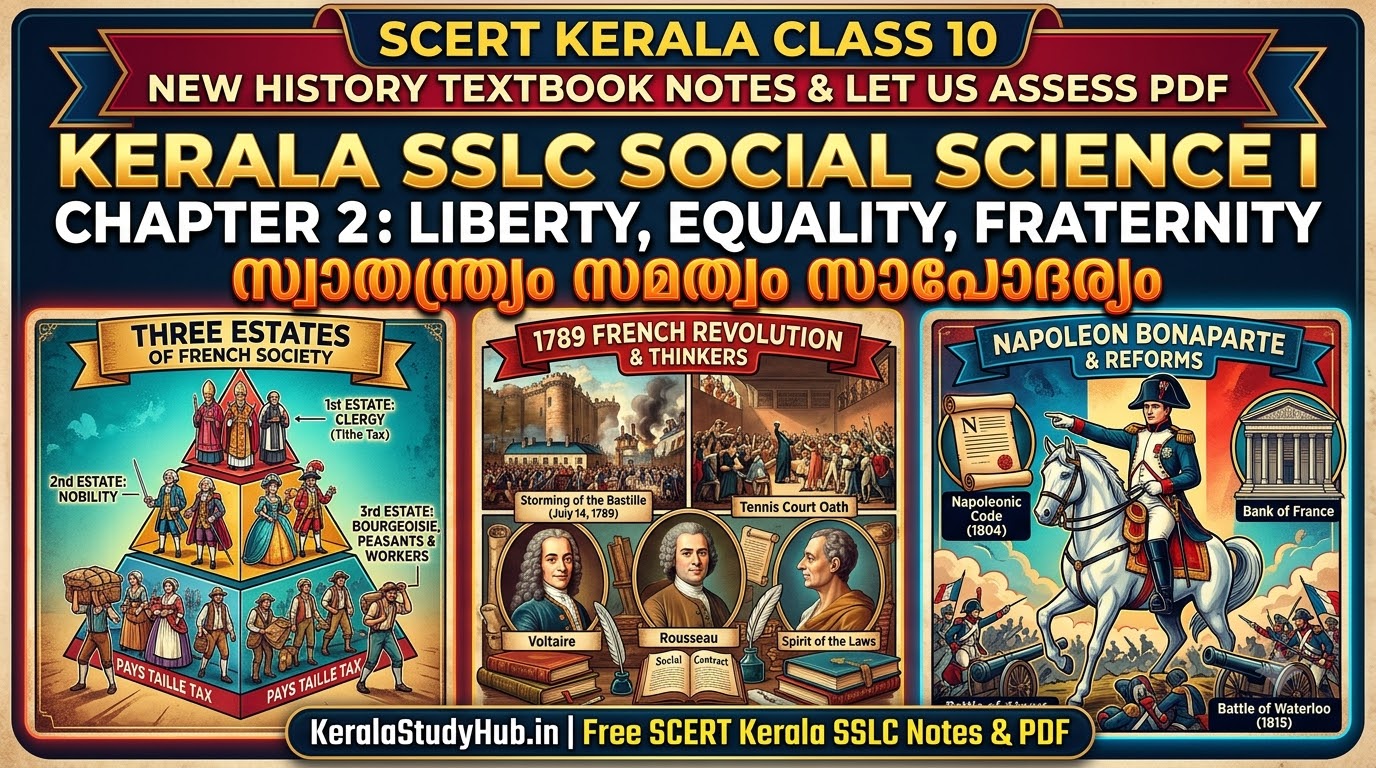
Kerala SSLC Social Science 1 Chapter 2 Notes for Liberty, Equality, Fraternity (Malayalam Medium: സ്വാതന്ത്ര്യം സമത്വം സാഹോദര്യം) cover the second unit of the newly revised Class 10 (Std 10) Social Science I (History) textbook published by the State Council of Educational Research and Training (SCERT Kerala). In the Kerala Pareeksha Bhavan SSLC Public Examination, the French Revolution of 1789, the structure of the Three Estates of French Society, the ideas of Voltaire, Rousseau, and Montesquieu, the Declaration of the Rights of Man, the role of women in the revolution, and the Reforms of Napoleon Bonaparte carry 6 to 8 marks (including a regular 6-Mark/8-Mark Essay Question!).
As a High School Social Science teacher, I have structured this complete bilingual English and Malayalam Medium guide with clear tables, chronological timelines, and solved Let Us Assess questions so you can write high-scoring answers effortlessly.
Quick SSLC Study Navigation: Revise SSLC Social Science I Chapter 1: Humanism | Explore our completed SSLC Physics All 7 Chapters Hub | SSLC Chemistry All 7 Chapters Hub | SSLC Biology All 6 Chapters Hub.
CHAPTER 2 AT A GLANCE: CLASS 10 SOCIAL SCIENCE I (HISTORY) REVISION BLUEPRINT
- Bourbon Autocracy: Louis XIV (“I am the State”), Louis XV (“After me, the deluge”), and Louis XVI & Queen Marie Antoinette (extravagant Palace of Versailles & bankruptcy).
- Three Estates of French Society: First Estate (Clergy — exempted from taxes; collected Tithe), Second Estate (Nobility — exempted from taxes; enjoyed feudal privileges), Third Estate (Middle class/Bourgeoisie, peasants, artisans — 97% of population; paid all taxes including Taille and Tithe).
- Enlightenment Thinkers: Voltaire (criticized clergy exploitation), Jean-Jacques Rousseau (The Social Contract — “Man is born free, but everywhere he is in chains”), Montesquieu (The Spirit of the Laws — Separation of Powers: Legislature, Executive, Judiciary).
- Key Events of 1789: Estates-General convened (May 5, 1789) → Tennis Court Oath (June 20, 1789) → Fall of the Bastille Prison (July 14, 1789) → Declaration of the Rights of Man and of the Citizen (August 1789) → Olympe de Gouges (Declaration of the Rights of Woman, 1791).
- Napoleon Bonaparte (1799–1815) & Congress of Vienna (1815): Napoleonic Code, Bank of France, Lycee schools, Concordat, Continental System, Battle of Waterloo (1815), and Congress of Vienna led by Austrian Chancellor Metternich.
1. Causes of the French Revolution (1789): Bourbon Autocracy & The Three Estates (ഫ്രഞ്ച് വിപ്ലവത്തിന്റെ കാരണങ്ങളും മൂന്ന് എസ്റ്റേറ്റുകളും)
In the 18th century, France was ruled by the autocratic Bourbon Dynasty claiming the Divine Right of Kings:
- Louis XIV: Declared, “I am the State” (L’etat, c’est moi) and built the opulent Palace of Versailles.
- Louis XV: Engaged in costly wars and remarked indifferently, “After me, the deluge.”
- Louis XVI (1774–1792) & Queen Marie Antoinette: Inherited an empty treasury due to prolonged wars (including financial and military aid to the American War of Independence) and the extravagant lifestyle of the royal court at Versailles.
1.1 Structure of the Three Estates of French Society (Guaranteed 4-Mark / 6-Mark Question!)
| Estate | Who Belonged to It | Privileges & Tax Burden |
|---|---|---|
| First Estate (ഒന്നാം എസ്റ്റേറ്റ്) | The Clergy (Catholic Church hierarchy) | Owned vast tracts of tax-free land; exempted from paying taxes to the state; collected a religious tax called Tithe (ദശാംശം — one-tenth of agricultural produce) from peasants. |
| Second Estate (രണ്ടാം എസ്റ്റേറ്റ്) | The Nobility (Feudal lords & aristocrats) | Held all highest military and administrative posts; owned vast lands; exempted from paying taxes; collected feudal dues (banalites, corvee) from peasants. |
| Third Estate (മൂന്നാം എസ്റ്റേറ്റ്) | Middle Class (Bourgeoisie: doctors, lawyers, teachers, writers, merchants, bankers), Peasants, and Urban Artisans/Workers (~97% of the population) | Enjoyed no political rights or privileges; bore the entire tax burden of the state, including Taille (ടൈൽ — direct land/property tax paid to the government), Tithe (to the Church), and Gabelle (salt tax). |
2. Role of Enlightenment Thinkers & Economists in the French Revolution (ചിന്തകന്മാരുടെ പങ്ക്)
| Philosopher / Thinker | Major Work(s) | Core Revolutionary Idea (ആശയങ്ങൾ) |
|---|---|---|
| 1. Voltaire (വോൾട്ടയർ) | Candide, Philosophical Letters | Ridiculed the exploitation of the clergy, religious intolerance, and superstition; championed freedom of speech, reason, and rationalism. |
| 2. Jean-Jacques Rousseau (റൂസ്സോ) | The Social Contract (സോഷ്യൽ കോൺട്രാക്ട്) | Declared that sovereignty belongs to the people (General Will) and that the king rules only by a contract with the citizens. Famous quote: “Man is born free, but everywhere he is in chains.” |
| 3. Montesquieu (മോണ്ടെസ്ക്യൂ) | The Spirit of the Laws (ദി സ്പിരിറ്റ് ഓഫ് ദി ലോസ്) | Opposed royal autocracy and proposed the Theory of Separation of Powers into three independent branches: Legislature, Executive, and Judiciary to safeguard individual liberty. |
| 4. Denis Diderot & Physiocrats (Turgot, Necker) | Encyclopedie (Diderot) | Laissez-faire economics | Promoted scientific rationalism, free trade, and taxation of noble/church lands to solve France’s financial crisis. |
3. Course of the Revolution: Tennis Court Oath, Fall of Bastille, Women’s Role & Reign of Terror
- Estates-General & The Tennis Court Oath (June 20, 1789): To impose new taxes, Louis XVI convened the Estates-General on May 5, 1789 after 175 years. Traditionally, each Estate had one collective vote (allowing the First and Second Estates to outvote the Third Estate 2 to 1). The Third Estate demanded “One Member, One Vote”. When locked out of the hall, the representatives of the Third Estate (led by Mirabeau and Abbe Sieyes, author of What is the Third Estate?) assembled at an indoor Tennis Court on June 20, 1789, declared themselves the National Assembly, and swore not to disperse until they drafted a Constitution for France.
- Fall of the Bastille (July 14, 1789): Angered by rising bread prices (Subsistence Crisis) and troop movements, Parisian citizens stormed and demolished the Bastille Prison—the hated symbol of Bourbon royal tyranny—on July 14, 1789 (celebrated as France’s National Day).
- Abolition of Feudalism & Declaration of the Rights of Man (August 1789): The National Assembly abolished feudal privileges and tithes, and adopted the historic Declaration of the Rights of Man and of the Citizen, proclaiming natural rights to liberty, property, security, equality before the law, and popular sovereignty.
- Role of Women in the French Revolution (New Textbook Focus!): Women actively led the Women’s March on Versailles (October 5, 1789) demanding bread and forcing King Louis XVI to move to Paris; they founded political clubs like the Society of Revolutionary and Republican Women. In 1791, revolutionary writer Olympe de Gouges published the Declaration of the Rights of Woman and of the Female Citizen, demanding equal political and legal rights for women.
- National Convention, Republic & Reign of Terror (1792–1794): In September 1792, the National Convention abolished the monarchy and declared France a Republic. Under the radical Jacobin leader Maximilien Robespierre (1793–1794), the Committee of Public Safety instituted the Reign of Terror, executing King Louis XVI, Marie Antoinette, and thousands of suspected counter-revolutionaries using the Guillotine, while also abolishing slavery in French colonies and fixing maximum prices on bread and essentials.
4. Administrative Reforms of Napoleon Bonaparte, Results of Revolution & Congress of Vienna (1815)
Following the rule of the five-member Directory (1795–1799), Napoleon Bonaparte seized power in 1799 as First Consul and crowned himself Emperor of France in 1804.
- 6 Major Reforms of Napoleon Bonaparte (4-Mark Question):
- The Napoleonic Code (Civil Code of 1804): Abolished birth-based privileges, established equality before the law, secured the right to private property, and simplified legal administration across Europe.
- Abolition of Feudalism: Ended serfdom and manorial dues in conquered territories, freeing peasants.
- Economic Reforms & Bank of France (1800): Established the Bank of France to stabilize currency, reformed tax collection, and encouraged industry and trade.
- Educational Reforms (Lycees): Set up state-run secondary schools called Lycees and the University of France to train patriotic citizens and civil servants.
- Concordat of 1801: Reached an agreement with the Pope restoring cordial relations with the Catholic Church while keeping the Church subordinate to the State.
- Public Works & Uniform Weights/Measures: Constructed roads, canals, and bridges, and promoted the uniform metric system.
- Continental System & Downfall at Waterloo (1815): To defeat his arch-rival Britain economically, Napoleon imposed the Continental System (1806) forbidding European nations from trading with Britain. After his disastrous invasion of Russia (1812), European coalition forces finally defeated Napoleon at the Battle of Waterloo in 1815.
- Congress of Vienna (1815): Hosted by Austrian Chancellor Duke Metternich, the victorious European powers (Austria, Britain, Prussia, Russia) met at Vienna in 1815 to restore conservative monarchies (including the Bourbon dynasty in France), redraw European borders, and suppress nationalism and liberalism.
- Global Impact of the French Revolution: Spread the immortal watchwords Liberty, Equality, and Fraternity worldwide; ended feudalism in Europe; inspired nationalist movements in Europe, Latin America, and India (including Tipu Sultan, who planted a Tree of Liberty at Seringapatam and joined the Jacobin Club, and Raja Rammohan Roy).
5. SCERT Textbook Let Us Assess Questions and Answers & Malayalam Medium Notes
Q1. Why is it said that “When France sneezes, the rest of Europe catches cold”? Who made this remark?
Answer: This famous remark was made by Austrian Chancellor Duke Metternich. It signifies that any political upheaval or democratic revolution beginning in France (in 1789, 1830, and 1848) immediately inspired similar liberal and nationalist revolutions across the rest of the European continent.
Q2. Distinguish between the taxes “Tithe” and “Taille” in pre-revolutionary France.
Answer: Tithe (ദശാംശം) was a religious tax collected by the Catholic Church (First Estate) from the peasants, amounting to one-tenth of their agricultural produce. Taille (ടൈൽ) was a direct land and property tax paid by the members of the Third Estate directly to the French royal government.
പത്താം ക്ലാസ് സാമൂഹ്യശാസ്ത്രം I അദ്ധ്യായം 2: സ്വാതന്ത്ര്യം സമത്വം സാഹോദര്യം (മലയാളം മീഡിയം നോട്ടുകൾ)
- ഫ്രഞ്ച് സമൂഹത്തിലെ മൂന്ന് എസ്റ്റേറ്റുകൾ: ഒന്നാം എസ്റ്റേറ്റ് (പുരോഹിതന്മാർ – Clergy): നികുതികളിൽ നിന്ന് ഒഴിവാക്കപ്പെട്ടു, കർഷകരിൽ നിന്ന് ദശാംശം (Tithe) എന്ന നികുതി പിരിച്ചു. രണ്ടാം എസ്റ്റേറ്റ് (പ്രഭുക്കന്മാർ – Nobility): ഉയർന്ന പദവികൾ അനുഭവിച്ചു, നികുതി നൽകിയില്ല. മൂന്നാം എസ്റ്റേറ്റ് (സാധാരണക്കാർ, കർഷകർ, മധ്യവർഗ്ഗം): യാതൊരു അവകാശങ്ങളുമില്ലാതെ സർക്കാരിലേക്ക് ടൈൽ (Taille) ഉൾപ്പെടെയുള്ള എല്ലാ നികുതികളും നൽകേണ്ടി വന്നു.
- പ്രധാന ചിന്തകന്മാർ: വോൾട്ടയർ (പുരോഹിതന്മാരുടെ ചൂഷണത്തെ വിമർശിച്ചു), റൂസ്സോ (കൃതി: സോഷ്യൽ കോൺട്രാക്ട് — “മനുഷ്യൻ സ്വതന്ത്രനായി ജനിക്കുന്നു, എന്നാൽ എവിടെയും ചങ്ങലയിലാണ്”), മോണ്ടെസ്ക്യൂ (കൃതി: ദി സ്പിരിറ്റ് ഓഫ് ദി ലോസ് — അധികാര വിഭജന സിദ്ധാന്തം: നിയമനിർമ്മാണ വിഭാഗം, കാര്യനിർവ്വഹണ വിഭാഗം, നീതിന്യായ വിഭാഗം).
- പ്രധാന സംഭവങ്ങളും നെപ്പോളിയന്റെ പരിഷ്കാരങ്ങളും: ടെന്നീസ് കോർട്ട് പ്രതിജ്ഞ (1789 ജൂൺ 20), ബാസ്റ്റിൽ കോട്ടയുടെ പതനം (1789 ജൂലൈ 14), മനുഷ്യാവകാശ പ്രഖ്യാപനം (1789 ഓഗസ്റ്റ്), സ്ത്രീകളുടെ അവകാശ പ്രഖ്യാപനം (ഒളിമ്പെ ഡി ഗൂജസ് – 1791). നെപ്പോളിയൻ നടപ്പിലാക്കിയ പരിഷ്കാരങ്ങൾ: നെപ്പോളിയനിക് കോഡ് (1804), ബാങ്ക് ഓഫ് ഫ്രാൻസ്, ലൈസി (Lycee) വിദ്യാലയങ്ങൾ. 1815-ൽ വാട്ടർലൂ യുദ്ധത്തിൽ നെപ്പോളിയൻ പരാജയപ്പെട്ടു.
Teacher’s Classroom Note & Student Discussion Question:
Dear SSLC Students, “Causes and Results of the French Revolution (Three Estates + Philosophers)” is the #1 most repeated 6-Mark/8-Mark Essay Question in SSLC Social Science I! Quick Question for You: Who authored The Social Contract and The Spirit of the Laws, and who wrote the Declaration of the Rights of Woman in 1791? Write your answer in the comments below!


Latest SCERT & DHSE Kerala Study Notes
- Kerala Class 9 Physics Chapter 2 Notes: Equations of Motion (ചലനസമവാക്യങ്ങൾ) Std 9 Let Us Assess Questions and Answers PDF
- Kerala SSLC Christmas Exam Question Paper 2025-27: All Subjects Second Term & Model Question Papers with Solved Answer Keys PDF (New SCERT Syllabus)
- Kerala SSLC English Christmas Exam Question Paper 2025-27: Second Term & Model Solved 80-Mark Answer Key, Discourses & Grammar PDF
- Kerala SSLC Social Science Christmas Exam Question Paper 2025-27: Second Term & Model Solved 80-Mark Answer Key, Weightage & Map Study PDF
- Kerala SSLC Maths Christmas Exam Question Paper 2025-27: Second Term & Model Solved Answer Key, Weightage & Formula Sheet PDF (New SCERT Syllabus)
- Kerala SSLC Biology Christmas Exam Question Paper 2025-27: Second Term & Model Solved Answer Key, Weightage & Flowcharts PDF (New SCERT Syllabus)
- Kerala SSLC Chemistry Christmas Exam Question Paper 2025-27: Second Term & Model Solved Answer Key, Weightage & Sure A+ Questions PDF (New SCERT Syllabus)
- Kerala SSLC Physics Christmas Exam Question Paper 2025-27: Second Term & Model Solved Answer Key, Weightage & Formula Sheet PDF (New SCERT Syllabus)
