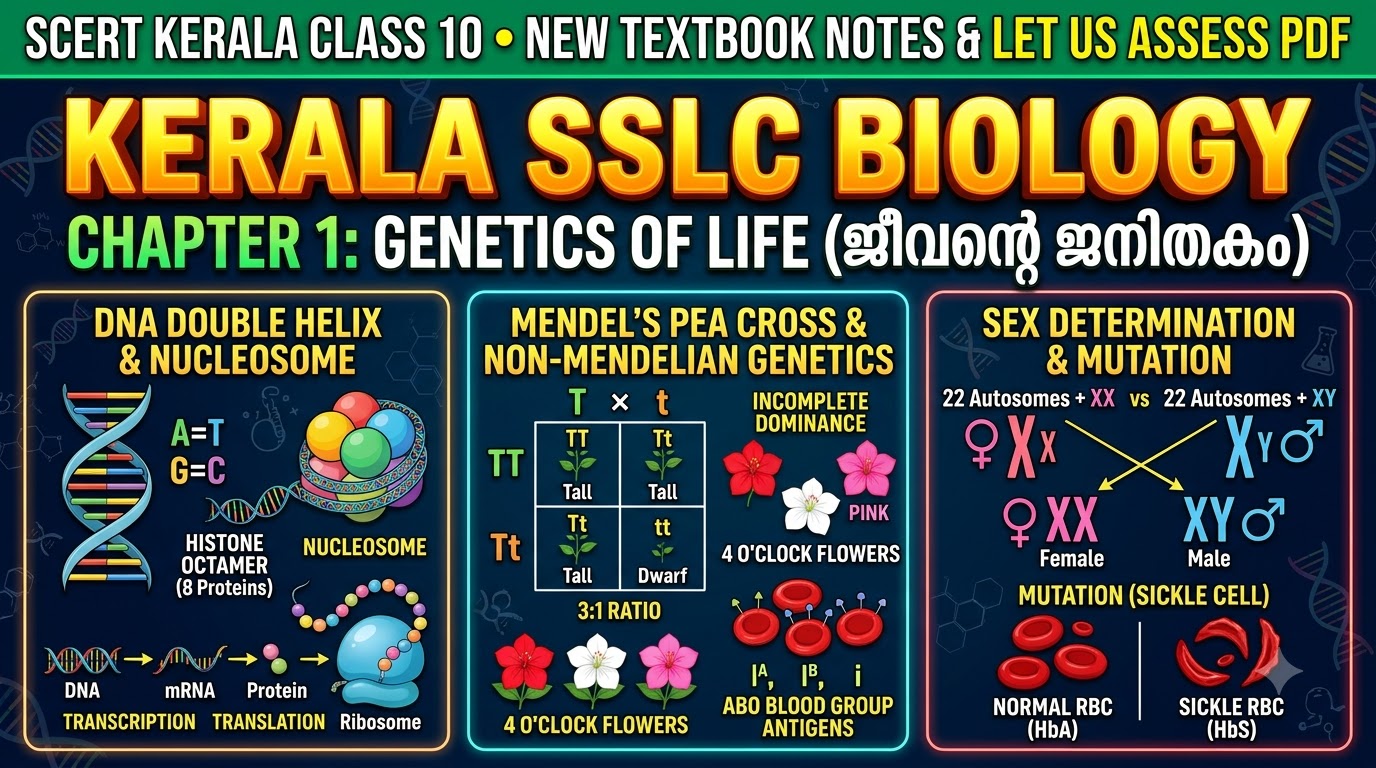
Kerala SSLC Biology Chapter 1 Notes on Genetics of Life (Malayalam Medium: ജീവന്റെ ജനിതകം) cover the opening unit of the newly revised Class 10 (Std 10) Biology textbook published by the State Council of Educational Research and Training (SCERT Kerala). In the earlier syllabus, Genetics was taught in the second half of the year, but in the revised textbook for the Kerala Pareeksha Bhavan examinations, SCERT has placed Genetics of Life as Chapter 1 and introduced high-priority modern topics including Histone Octamer & Nucleosome packaging, Rosalind Franklin’s Photo 51, Non-Mendelian Inheritance (Incomplete Dominance, Co-dominance, Multiple Allelism, Polygenic Inheritance), and CRISPR-Cas9 Gene Editing.
- 1. Kerala SSLC Biology Chapter 1 Notes: Structure of Chromosome, Nucleosome, DNA and RNA
- A. Histone Octamer, Nucleosome, and Human Chromosomes (44 + XX / 44 + XY)
- B. James Watson, Francis Crick, Rosalind Franklin & Comparison of DNA vs RNA
- 2. Action of Genes (Protein Synthesis): Transcription, Translation & Roles of mRNA, tRNA, rRNA
- 3. Mendel’s Laws of Inheritance, Monohybrid/Dihybrid Cross & Non-Mendelian Inheritance
- Non-Mendelian Inheritance Table (New 2025-27 Textbook High-Priority Topic!)
- 4. Genetic Variations: Crossing Over (Chiasma), Mutation & CRISPR Gene Editing
- 5. Class 10 Biology Chapter 1 Let Us Assess Questions and Answers (SCERT Solutions)
- 6. Class 10 Biology Chapter 1 Malayalam Medium Notes (ജീവന്റെ ജനിതകം – ചോദ്യോത്തരങ്ങൾ)
As a High School Natural Science teacher, I have prepared this complete bilingual guide so that whether you are revising for the First Term (Onam), Second Term (Christmas Exam), or March SSLC Public Examination, you have every flowchart, DNA vs RNA comparison table, Monohybrid/Dihybrid cross Punnett square, and solved Let Us Assess answer in one place.
Quick Navigation Across SSLC Science Hubs: Continue to SSLC Biology Chapter 2: Paths of Evolution, or explore our completed Kerala SSLC Physics All 7 Chapters Master Hub and Kerala SSLC Chemistry All 7 Chapters Master Hub.
CHAPTER 1 AT A GLANCE: CLASS 10 BIOLOGY QUICK REVISION BLUEPRINT
- Chapter 1 Title (EM & MM): Genetics of Life (ജീവന്റെ ജനിതകം)
- Expected SSLC Public Exam Weightage: 7 to 8 Marks (Out of 40 Theory Marks)
- Chromosome Packaging Hierarchy:
DNA + 8 Histone Proteins (Histone Octamer) → Nucleosome → Chromatid → Chromosome (46 in humans = 44 Autosomes + XX/XY) - DNA vs RNA Base Pairing: DNA has Deoxyribose sugar &
A–T, G–C| RNA has Ribose sugar &A, U, G, C(Uracil instead of Thymine) - Two Stages of Protein Synthesis: (1) Transcription (DNA → mRNA inside Nucleus) | (2) Translation (mRNA + tRNA + rRNA → Protein at Ribosome)
- Causes of Genetic Variations: (1) Crossing Over at Chiasma during Meiosis | (2) Independent Assortment & Fertilization | (3) Mutation
1. Kerala SSLC Biology Chapter 1 Notes: Structure of Chromosome, Nucleosome, DNA and RNA
Every characteristic feature of an organism—from eye colour and blood group in humans to stem height and flower colour in pea plants—is controlled by specific functional segments of DNA called Genes located inside the cell nucleus. In Kerala SSLC Biology Chapter 1 Notes, understanding the exact structural hierarchy from a cell to a nucleotide is a guaranteed 3-mark exam question:
Location & Packaging Flowchart of Genetic Material:
Cell → Nucleus → Chromosome → Chromatid → Nucleosome (DNA + Histone Octamer) → DNA → Gene → Nucleotide
A. Histone Octamer, Nucleosome, and Human Chromosomes (44 + XX / 44 + XY)
- Histone Octamer & Nucleosome (ന്യൂക്ലിയോസോം): DNA and histone proteins are the primary components of a chromosome. Eight histone proteins cluster together to form a Histone Octamer, and a negatively charged DNA strand winds around this histone octamer to form a bead-like unit called a Nucleosome. Thousands of nucleosomes coil and supercoil tightly to form two sister Chromatids held together at the Centromere.
- Fascinating Size of Human DNA: The DNA inside a single human chromosome is about 2 inches (5 cm) long. If the DNA from all 46 chromosomes in a single human cell is joined end to end, it measures about 6 feet (2 metres); across all trillions of cells in the human body, total DNA stretches nearly 67 billion miles!
- Somatic Chromosomes vs Sex Chromosomes in Humans: Every normal human somatic cell contains 46 chromosomes (23 pairs):- 44 Somatic Chromosomes (22 pairs of Autosomes): Control physical and physiological body characteristics.
– 2 Sex Chromosomes (1 pair — Allosomes): Determine biological sex. In Females, the genetic makeup is
44 + XX(two identical X chromosomes). In Males, the genetic makeup is44 + XY(one larger X chromosome and one smaller Y chromosome).– Role of the SRY Gene: The SRY gene (Sex-determining Region Y) located on the Y chromosome triggers the development of testes in the male embryo. Because a father produces 50%
22 + Xsperm and 50%22 + Ysperm while a mother produces only22 + Xova, the sex chromosomes of the father determine the sex of the child with a1 : 1probability ratio.

B. James Watson, Francis Crick, Rosalind Franklin & Comparison of DNA vs RNA
In 1953, James Watson and Francis Crick presented the famous Double Helix Model of DNA based on crucial X-ray diffraction data—specifically the famous X-ray image ‘Photo 51’—captured by Rosalind Franklin and Maurice Wilkins. Both DNA and RNA are nucleic acids built from repeating units called Nucleotides (each nucleotide consists of a Pentose Sugar + Phosphate Group + Nitrogen Base):
| Feature | DNA (Deoxyribonucleic Acid) | RNA (Ribonucleic Acid) |
|---|---|---|
| Number of Strands | Two strands wound into a Double Helix (sugar-phosphate backbone; nitrogen base rungs). | Single strand of nucleotides. |
| Type of Pentose Sugar | Deoxyribose sugar | Ribose sugar |
| Nitrogen Bases Present | Adenine (A), Thymine (T), Guanine (G), Cytosine (C). (Pairing rule: A pairs with T; G pairs with C). |
Adenine (A), Uracil (U), Guanine (G), Cytosine (C). (Thymine is absent; Uracil replaces Thymine). |
2. Action of Genes (Protein Synthesis): Transcription, Translation & Roles of mRNA, tRNA, rRNA
Genes control physical traits and metabolic activities by synthesizing specific proteins (enzymes, hormones, structural proteins). Protein synthesis takes place in two sequential stages involving three types of RNA:
- Stage 1 — Transcription (ട്രാൻസ്ക്രിപ്ഷൻ — Occurs Inside the Nucleus):
A specific nucleotide sequence (gene) on a DNA strand synthesizes a complementary single-stranded mRNA (messenger RNA) molecule with the help of RNA polymerase enzymes. The newly formed mRNA carries the genetic message for protein synthesis out of the nucleus through nuclear pores and reaches the Ribosome in the cytoplasm. - Stage 2 — Translation (ട്രാൻസ്ലേഷൻ — Occurs at the Ribosome in Cytoplasm):
– Role of mRNA (Messenger RNA): Provides the coded genetic message specifying the sequence of amino acids.
– Role of tRNA (Transfer RNA): Reads the codons on mRNA and transports the specific amino acids from the cytoplasm to the ribosome.
– Role of rRNA (Ribosomal RNA): Forms the structural and catalytic core of the ribosome and links the amino acids together via peptide bonds to synthesize a complete Protein molecule.
3. Mendel’s Laws of Inheritance, Monohybrid/Dihybrid Cross & Non-Mendelian Inheritance
Gregor Johann Mendel (1822–1884) is honoured as the Father of Genetics for his pioneering hybridisation experiments conducted on garden pea plants (Pisum sativum) considering seven pairs of contrasting traits:
- Monohybrid Cross (Considering 1 Pair of Contrasting Characters — Tall
TT× Dwarftt):– First Generation (F1): All offspring have genotypeTtand phenotype Tall (becauseTis the Dominant allele andtis the hidden Recessive allele).– Self-Pollination of
F1(Tt × Tt) to getF2Generation: Produces genotypesTT, Tt, Tt, tt. TheF2Phenotypic Ratio is3 : 1(3 Tall : 1 Dwarf) and Genotypic Ratio is1 : 2 : 1. - Dihybrid Cross (Considering 2 Pairs of Contrasting Characters — e.g., Tall plant with Round seeds
TTRR× Dwarf plant with Wrinkled seedsttrr):– In theF2generation, new parental combinations (Tall with Wrinkled seeds, and Dwarf with Round seeds) appear in the ratio9 : 3 : 3 : 1because alleles of different traits segregate and assort independently of each other during gamete formation.
Non-Mendelian Inheritance Table (New 2025-27 Textbook High-Priority Topic!)
| Type of Non-Mendelian Inheritance | Genetic Mechanism / Cause | SCERT Textbook Example |
|---|---|---|
| 1. Incomplete Dominance (അപൂർണ്ണ പ്രകടസ്വഭാവം) |
A dominant allele cannot completely hide or mask the recessive allele in the heterozygous condition, producing an intermediate phenotype. | Crossing a red-flowered Four O’Clock plant (Mirabilis jalapa) with a white-flowered plant yields Pink-flowered offspring in F1. |
| 2. Co-dominance (സഹപ്രകടസ്വഭാവം) |
Both alleles of a gene express their traits simultaneously side by side in the heterozygote without blending. | Roan coat colour pattern in cattle and horses (both red and white hairs expressed); AB blood group. |
| 3. Multiple Allelism (മൾട്ടിപ്പിൾ അലീലിസം) |
A single gene has more than two alternative alleles in the population. | ABO Blood Group in humans controlled by three alleles: IA, IB, and i. |
| 4. Polygenic Inheritance (പോളിജെനിക് പാരമ്പര്യം) |
More than one gene controls a single trait, producing continuous variation. | Difference in human skin colour (controlled by multiple genes regulating melanin production). |
4. Genetic Variations: Crossing Over (Chiasma), Mutation & CRISPR Gene Editing
- 1. Crossing Over of Chromosomes (ക്രോസിങ് ഓവർ): During the first stage of Meiosis (gamete formation), homologous chromosomes pair up. The point of contact where non-sister chromatids cross each other is called the Chiasma (കയാസ്മ). The chromatids break at the chiasma and exchange segments, creating new recombinations of alleles and causing variations in offspring.
- 2. Mutation (മ്യൂട്ടേഷൻ): A sudden, heritable change in the nucleotide sequence of DNA. Mutations are caused by errors during DNA replication, exposure to radioactive rays (X-rays, UV rays, gamma rays), or mutagenic chemicals. While many mutations are harmful (causing genetic disorders), beneficial mutations help organisms survive and drive organic evolution.
- 3. Gene Editing (CRISPR-Cas9 — 2020 Nobel Prize): Gene editing is a modern biotechnology technique that brings desirable changes by adding, removing, or altering specific gene sequences in DNA. Emmanuelle Charpentier and Jennifer A. Doudna were awarded the 2020 Nobel Prize in Chemistry for developing the CRISPR-Cas9 gene-editing tool, which holds revolutionary promise for curing genetic diseases, cancer therapy, and developing pest-resistant crops.
5. Class 10 Biology Chapter 1 Let Us Assess Questions and Answers (SCERT Solutions)
Q1. “Offspring of the same parents show differences (variations) among themselves.” Explain the genetic processes responsible for this observation.
Answer: Variations among siblings born to the same parents arise due to three main genetic processes: (1) Crossing Over of homologous chromosomes at the chiasma during meiosis, which exchanges gene segments and forms recombinant gametes; (2) Independent segregation and random fusion of gametes during fertilization; and (3) Occasional Mutations (sudden changes in DNA nucleotide sequences).
Q2. Arrange the following statements under the headings ‘Transcription’ and ‘Translation’:
(a) Amino acids are combined together to form protein.
(b) tRNAs carry specific amino acids to the ribosome.
(c) mRNA is synthesized from a specific gene in DNA inside the nucleus.
(d) Ribosome moves along the mRNA strand.
Answer:
– Transcription: (c) mRNA is synthesized from a specific gene in DNA inside the nucleus.
– Translation: (a), (b), and (d).
Q3. Distinguish between Incomplete Dominance and Polygenic Inheritance with one example for each.
Answer: In Incomplete Dominance, a single gene’s dominant allele cannot completely mask its recessive allele, producing an intermediate trait (e.g., Pink flowers in Mirabilis jalapa). In Polygenic Inheritance, a single trait is controlled by the cumulative action of more than one gene (e.g., variations in human skin colour due to differences in melanin production).
6. Class 10 Biology Chapter 1 Malayalam Medium Notes (ജീവന്റെ ജനിതകം – ചോദ്യോത്തരങ്ങൾ)
പത്താം ക്ലാസ് ജീവശാസ്ത്രം അദ്ധ്യായം 1: ജീവന്റെ ജനിതകം (മലയാളം മീഡിയം നോട്ടുകൾ)
- ക്രോമസോമിന്റെ ഘടന (Nucleosome): DNA-യും ഹിസ്റ്റോൺ പ്രോട്ടീനുകളുമാണ് ക്രോമസോമിലെ പ്രധാന ഘടകങ്ങൾ. 8 ഹിസ്റ്റോൺ പ്രോട്ടീനുകൾ ചേർന്ന് ഹിസ്റ്റോൺ ഒക്ടാമർ (Histone octamer) ഉണ്ടാകുന്നു. ഇതിനു ചുറ്റും DNA ചുറ്റി ന്യൂക്ലിയോസോം (Nucleosome) രൂപപ്പെടുന്നു.
- DNA-യും RNA-യും തമ്മിലുള്ള വ്യത്യാസം: DNA-യിൽ ഡിഓക്സിറൈബോസ് പഞ്ചസാരയും അഡിനിൻ (A), തൈമിൻ (T), ഗ്വാനിൻ (G), സൈറ്റോസിൻ (C) എന്നീ നൈട്രജൻ ബേസുകളുമുണ്ട് (ഇരട്ട ഇഴ). RNA-യിൽ റൈബോസ് പഞ്ചസാരയും തൈമിനു പകരം യുറാസിലും (Uracil – U) കാണപ്പെടുന്നു (ഒറ്റ ഇഴ).
- പ്രോട്ടീൻ നിർമ്മാണ ഘട്ടങ്ങൾ:1. ട്രാൻസ്ക്രിപ്ഷൻ (Transcription): മർമ്മത്തിനുള്ളിൽ വെച്ച് DNA-യിൽ നിന്ന് mRNA രൂപപ്പെടുന്നു.
2. ട്രാൻസ്ലേഷൻ (Translation): സൈറ്റോപ്ലാസത്തിലെ റൈബോസോമിൽ വെച്ച് mRNA-യിലെ സന്ദേശത്തിനനുസരിച്ച് tRNA കൊണ്ടുവരുന്ന അമിനോ ആസിഡുകളെ rRNA കൂട്ടിച്ചേർത്ത് പ്രോട്ടീൻ നിർമ്മിക്കുന്നു.
- വ്യതിയാനങ്ങൾക്കുള്ള കാരണങ്ങൾ: ഊനഭംഗത്തിന്റെ (Meiosis) ആദ്യഘട്ടത്തിൽ സ്വരൂപ ക്രോമസോമുകൾ കയാസ്മയിൽ (Chiasma) വെച്ച് മുറിഞ്ഞ് ഭാഗങ്ങൾ പരസ്പരം കൈമാറുന്ന ക്രോസിങ് ഓവർ (Crossing over), ലിംഗകോശങ്ങളുടെ സംയോജനം, മ്യൂട്ടേഷൻ (Mutation) എന്നിവ സന്താനങ്ങളിൽ വ്യതിയാനങ്ങൾ ഉണ്ടാക്കുന്നു.
- മെൻഡലിയൻ ഇതര പാരമ്പര്യം (Non-Mendelian Inheritance): അപൂർണ്ണ പ്രകടസ്വഭാവം (Incomplete dominance – നാലുമണി ചെടിയിലെ പിങ്ക് പൂക്കൾ), സഹപ്രകടസ്വഭാവം (Co-dominance – കന്നുകാലികളിലെ റോൺ നിറം), മൾട്ടിപ്പിൾ അലീലിസം (മനുഷ്യരിലെ ABO രക്തഗ്രൂപ്പ്), പോളിജെനിക് പാരമ്പര്യം (ത്വക്കിന്റെ നിറവ്യത്യാസം).
Teacher’s Classroom Note & Student Discussion Question:
Dear SSLC Students, while revising Chapter 1 (Genetics of Life) for your upcoming Second Term (Christmas Exam) and March Public Exam, make sure you practise drawing the Transcription → Translation flowchart and the Monohybrid Cross (3:1) Punnett Square at least twice in your rough notebook. Quick Question for You: Which Non-Mendelian inheritance type governs the ABO blood group system in humans, and what are its three alleles? Write your answer or ask any doubt from this chapter in the comments section below, and I will personally reply to help you!


Latest SCERT & DHSE Kerala Study Notes
- Kerala Class 9 Physics Chapter 2 Notes: Equations of Motion (ചലനസമവാക്യങ്ങൾ) Std 9 Let Us Assess Questions and Answers PDF
- Kerala SSLC Christmas Exam Question Paper 2025-27: All Subjects Second Term & Model Question Papers with Solved Answer Keys PDF (New SCERT Syllabus)
- Kerala SSLC English Christmas Exam Question Paper 2025-27: Second Term & Model Solved 80-Mark Answer Key, Discourses & Grammar PDF
- Kerala SSLC Social Science Christmas Exam Question Paper 2025-27: Second Term & Model Solved 80-Mark Answer Key, Weightage & Map Study PDF
- Kerala SSLC Maths Christmas Exam Question Paper 2025-27: Second Term & Model Solved Answer Key, Weightage & Formula Sheet PDF (New SCERT Syllabus)
- Kerala SSLC Biology Christmas Exam Question Paper 2025-27: Second Term & Model Solved Answer Key, Weightage & Flowcharts PDF (New SCERT Syllabus)
- Kerala SSLC Chemistry Christmas Exam Question Paper 2025-27: Second Term & Model Solved Answer Key, Weightage & Sure A+ Questions PDF (New SCERT Syllabus)
- Kerala SSLC Physics Christmas Exam Question Paper 2025-27: Second Term & Model Solved Answer Key, Weightage & Formula Sheet PDF (New SCERT Syllabus)