
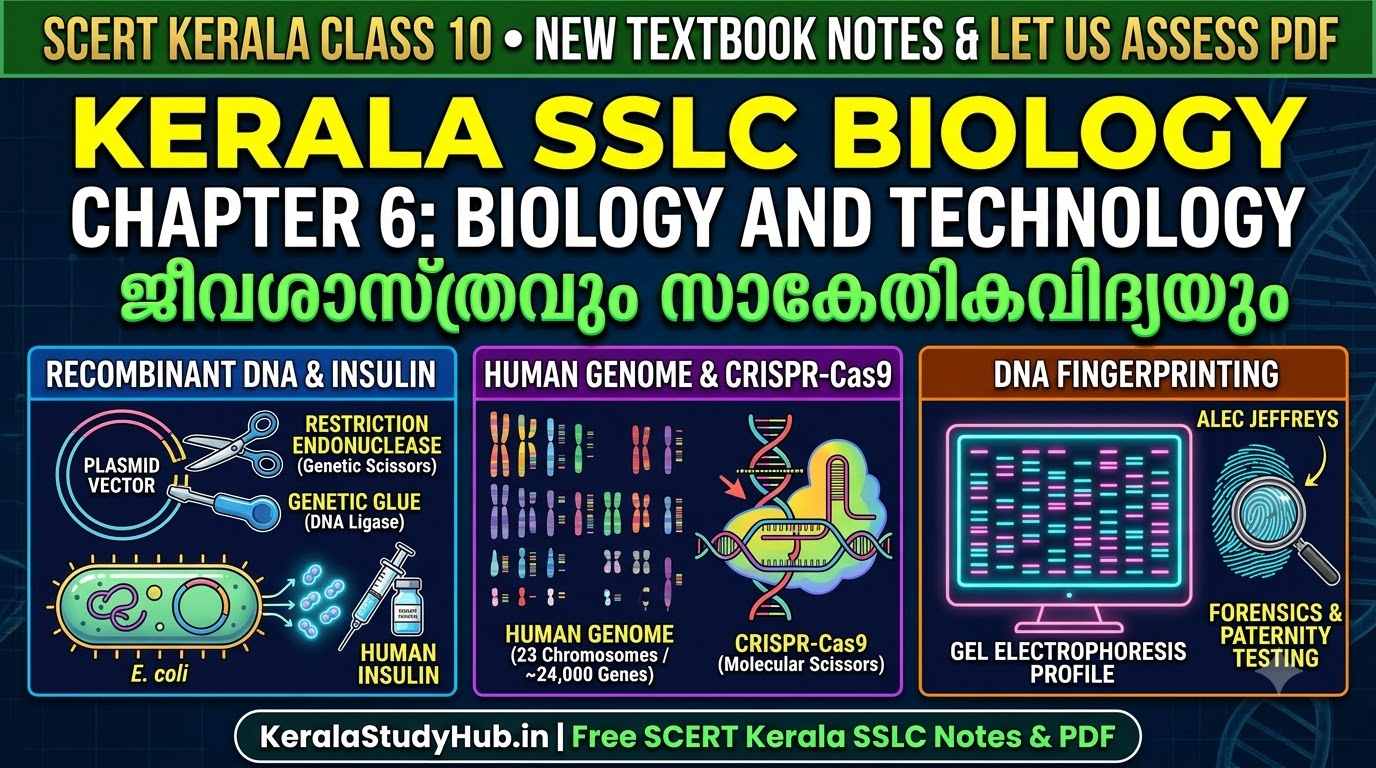
Kerala SSLC Biology Chapter 6 Notes for Biology and Technology (Malayalam Medium: ജീവശാസ്ത്രവും സാങ്കേതികവിദ്യയും) cover the sixth and final unit of the newly revised Class 10 (Std 10) Biology textbook published by the State Council of Educational Research and Training (SCERT Kerala). In the Kerala Pareeksha Bhavan SSLC Biology public examination, modern biotechnology—including Recombinant DNA (rDNA) technology, Genetic Scissors (Restriction Endonuclease), Genetic Glue (DNA Ligase), CRISPR-Cas9 Gene Editing, Human Genome Project, and DNA Profiling (DNA Fingerprinting)—carries 5 to 6 marks.
- 1. Genetic Engineering, Recombinant DNA (rDNA) & Human Insulin Production (ജനിതക എൻജിനീയറിങ്ങും ഇൻസുലിൻ നിർമ്മാണവും)
- 2. Human Genome Project, Gene Therapy, CRISPR-Cas9 & Pharm Animals (ജീൻ തെറാപ്പിയും ജീനോം പ്രോജക്ടും)
- 3. DNA Fingerprinting (DNA Profiling) & Bioethics (ഡി.എൻ.എ ഫിംഗർപ്രിന്റിങ്)
- 4. SCERT Textbook Let Us Assess Questions and Answers & Malayalam Medium Notes
As a High School Natural Science teacher, I have prepared this complete bilingual revision guide so you can score full marks on the step-by-step flowchart of human insulin production using bacteria (E. coli), GM crops (Bt Cotton), Gene Therapy, and all solved Let Us Assess textbook questions.
Quick SSLC Biology & Science Navigation: SSLC Biology All 6 Chapters Master Hub | Chapter 1: Genetics of Life | Chapter 5: Immunity and Healthcare | SSLC Physics Master Hub | SSLC Chemistry Master Hub.
CHAPTER 6 AT A GLANCE: CLASS 10 BIOLOGY QUICK REVISION BLUEPRINT
- Enzymes & Vectors in Genetic Engineering: Genetic Scissors = Restriction Endonuclease (cuts genes at specific sites); Genetic Glue = DNA Ligase (joins target gene to vector); Vector = Bacterial Plasmid (circular DNA in bacteria).
- Recombinant DNA (rDNA) Insulin Production: Human Insulin Gene + Bacterial Plasmid —(DNA Ligase)→ rDNA → inserted into E. coli bacterium → multiplies in bioreactor → produces Human Insulin (Humulin).
- Human Genome Project (HGP): Started in 1990, completed in 2003; mapped ~24,000 functional genes. Only 1–2% of human DNA codes for proteins; non-functional repetitive DNA is called Junk DNA.
- DNA Profiling (DNA Fingerprinting): Pioneered by Alec Jeffreys (1984); analyses repetitive nitrogen base sequences unique to each person to identify criminals, disaster victims, and biological parents.
- Modern Frontiers: CRISPR-Cas9 (precise genome editing), Pharm Animals (producing medicinal proteins in milk/blood), and Bt Cotton (Bacillus thuringiensis toxin gene).
1. Genetic Engineering, Recombinant DNA (rDNA) & Human Insulin Production (ജനിതക എൻജിനീയറിങ്ങും ഇൻസുലിൻ നിർമ്മാണവും)
Biotechnology (ജൈവസാങ്കേതികവിദ്യ) is the use of microorganisms and biological processes for human benefit (traditional examples: yeast for bread/alcohol, Lactobacillus for curd). Modern biotechnology uses Genetic Engineering (Recombinant DNA Technology) to make desirable changes in the genetic constitution of an organism by inserting or removing specific genes.
| Biotechnology Tool | Scientific Name | Exact Function in Genetic Engineering |
|---|---|---|
| 1. Genetic Scissors (ജനിതക കത്രിക) | Restriction Endonuclease (റെസ്ട്രിക്ഷൻ എൻഡോന്യൂക്ലിയേസ്) | Enzyme used to cut a specific desirable gene from the DNA helix and to cut open the circular plasmid vector. |
| 2. Genetic Glue (ജനിതക പശ) | DNA Ligase (ഡി.എൻ.എ ലിഗേസ്) | Enzyme used to join (ligate) the cut human gene with the cut bacterial plasmid DNA to form Recombinant DNA (rDNA). |
| 3. Gene Vector (വാഹകർ) | Bacterial Plasmid (പ്ലാസ്മിഡ്) or Viruses | Extra-chromosomal circular DNA in bacteria used to carry the ligated foreign gene into the host target cell. |
4-Step Flowchart: Production of Human Insulin using Bacteria (4-Mark Exam Question):
Step 1: From human DNA, the gene responsible for the production of Insulin is cut out using the enzyme Restriction Endonuclease (Genetic Scissors). Simultaneously, the circular DNA (Plasmid) of a bacterium is isolated and cut open using the same enzyme.
↓
Step 2: The cut human insulin gene is joined (ligated) to the open bacterial plasmid using the enzyme DNA Ligase (Genetic Glue) to form Recombinant DNA (rDNA).
↓
Step 3: The plasmid containing the human insulin gene (rDNA) is inserted into a host bacterium (Escherichia coli).
↓
Step 4: The genetically modified bacteria are allowed to multiply rapidly inside a nutrient medium (culture medium), producing active Human Insulin on an industrial scale!
2. Human Genome Project, Gene Therapy, CRISPR-Cas9 & Pharm Animals (ജീൻ തെറാപ്പിയും ജീനോം പ്രോജക്ടും)
- Genome & Human Genome Project (HGP): The sum total of all genes (both functional coding genes and non-functional Junk DNA) present in an organism is called its Genome. Launched in 1990 and completed in 2003, the Human Genome Project mapped the exact location of around 24,000 functional genes on the 46 human chromosomes (Gene Mapping).
- Gene Therapy (ജീൻ തെറാപ്പി): A method of curing incurable genetic diseases and cancer by removing defective/disease-causing genes from the patient’s genome and inserting normal, functional genes in their place.
- CRISPR-Cas9 Gene Editing: A revolutionary modern genome-editing technology (discovered by Emmanuelle Charpentier and Jennifer Doudna) that uses a guide RNA and the Cas9 enzyme as molecular scissors to precisely edit or correct mutated DNA sequences inside living cells.
- Genetically Modified Animals (Pharm Animals): Genes responsible for producing human medicinal proteins are inserted into animals like cows, goats, sheep, and pigs; the medicine is then extracted easily from their milk or blood:
• Somatotropin (Human Growth Hormone): For dwarfism.
• Interferons: For viral diseases.
• Insulin: For diabetes.
• Endorphin: For relieving severe pain. - Genetically Modified Crops (Bt Crops & Golden Rice): By incorporating the toxin-producing gene from the soil bacterium Bacillus thuringiensis (Bt) into cotton, brinjal, or maize, plants develop built-in resistance against bollworm pests (Bt Cotton, Bt Brinjal). Golden Rice is genetically modified to produce Beta-carotene (precursor of Vitamin A).
3. DNA Fingerprinting (DNA Profiling) & Bioethics (ഡി.എൻ.എ ഫിംഗർപ്രിന്റിങ്)
Pioneered by Alec Jeffreys in 1984, DNA Fingerprinting (DNA Profiling / DNA Testing) is the technology of testing the arrangement of nucleotides in a person’s DNA. Just as fingerprints differ between individuals, the sequence of nitrogen base pairs in the repetitive non-coding regions (VNTRs) of DNA is unique to every human being (except identical twins).
- 3 Major Applications of DNA Fingerprinting (3-Mark Question):
- To find out hereditary characteristics and resolve paternity/maternity disputes (identifying real biological parents).
- To identify real criminals in forensic investigations using tiny biological samples (hair root, blood drop, saliva, skin, or semen) left at a crime scene.
- To identify unrecognizable bodies of victims lost due to wars, air crashes, floods, or natural disasters.
- Concerns / Misuse of Genetic Engineering: Threat to indigenous varieties of crops, risk that genetically modified organisms (super-weeds or super-bugs) may harm the ecosystem, and danger of genetically modified pathogens being used as Bioweapons (ജൈവായുധങ്ങൾ) in biological warfare.
4. SCERT Textbook Let Us Assess Questions and Answers & Malayalam Medium Notes
Q1. Why are Restriction Endonuclease and DNA Ligase called “Genetic Scissors” and “Genetic Glue” respectively?
Answer: Restriction Endonuclease is called Genetic Scissors because it recognizes specific nucleotide sequences and cuts a desirable gene from DNA. DNA Ligase is called Genetic Glue because it joins (ligates) the cut ends of the desirable gene to the open bacterial plasmid vector.
Q2. What is the scientific basis of DNA Fingerprinting proposed by Alec Jeffreys?
Answer: Although 99.9% of the DNA nucleotide sequence is identical in all humans, the arrangement of nucleotides in certain repetitive sequences of DNA differs uniquely from person to person (except in identical twins). Analyzing this unique nucleotide arrangement is the basis of DNA Profiling.
പത്താം ക്ലാസ് ജീവശാസ്ത്രം അദ്ധ്യായം 6: ജീവശാസ്ത്രവും സാങ്കേതികവിദ്യയും (മലയാളം മീഡിയം നോട്ടുകൾ)
- ജനിതക കത്രികയും ജനിതക പശയും: ഡി.എൻ.എ-യെ മുറിക്കാൻ ഉപയോഗിക്കുന്ന എൻസൈമാണ് റെസ്ട്രിക്ഷൻ എൻഡോന്യൂക്ലിയേസ് (ജനിതക കത്രിക). മുറിച്ച ജീനിനെ വാഹക ഡി.എൻ.എ-യുമായി (പ്ലാസ്മിഡ്) കൂട്ടിച്ചേർക്കാൻ ഉപയോഗിക്കുന്ന എൻസൈമാണ് ഡി.എൻ.എ ലിഗേസ് (ജനിതക പശ).
- ഡി.എൻ.എ ഫിംഗർപ്രിന്റിങ് (Alec Jeffreys): ഓരോ വ്യക്തിയുടെയും ഡി.എൻ.എ-യിലെ നൈട്രജൻ ബേസുകളുടെ ക്രമീകരണം വ്യത്യസ്തമായിരിക്കും. കുറ്റവാളികളെ തിരിച്ചറിയാനും, ദുരന്തങ്ങളിൽ മരിച്ചവരെ തിരിച്ചറിയാനും, മാതാപിതാക്കളെ കണ്ടെത്താനും ഇത് ഉപയോഗിക്കുന്നു.
- ജീൻ തെറാപ്പി: ജനിതക രോഗങ്ങൾ ചികിത്സിക്കുന്നതിനായി രോഗകാരിയായ ജീനുകളെ മാറ്റി പകരം പ്രവർത്തനക്ഷമമായ ജീനുകളെ ഉൾപ്പെടുത്തുന്ന രീതി.
Teacher’s Classroom Note & Student Discussion Question:
Dear SSLC Students, congratulations on completing all 6 chapters of the revised SCERT Kerala Class 10 Biology syllabus! Quick Question for You: Which enzyme acts as the “Genetic Scissors” and which circular bacterial DNA acts as the “Vector” during the production of Human Insulin? Write your answer in the comments below!


Latest SCERT & DHSE Kerala Study Notes
- Kerala Class 9 Physics Chapter 2 Notes: Equations of Motion (ചലനസമവാക്യങ്ങൾ) Std 9 Let Us Assess Questions and Answers PDF
- Kerala SSLC Christmas Exam Question Paper 2025-27: All Subjects Second Term & Model Question Papers with Solved Answer Keys PDF (New SCERT Syllabus)
- Kerala SSLC English Christmas Exam Question Paper 2025-27: Second Term & Model Solved 80-Mark Answer Key, Discourses & Grammar PDF
- Kerala SSLC Social Science Christmas Exam Question Paper 2025-27: Second Term & Model Solved 80-Mark Answer Key, Weightage & Map Study PDF
- Kerala SSLC Maths Christmas Exam Question Paper 2025-27: Second Term & Model Solved Answer Key, Weightage & Formula Sheet PDF (New SCERT Syllabus)
- Kerala SSLC Biology Christmas Exam Question Paper 2025-27: Second Term & Model Solved Answer Key, Weightage & Flowcharts PDF (New SCERT Syllabus)
- Kerala SSLC Chemistry Christmas Exam Question Paper 2025-27: Second Term & Model Solved Answer Key, Weightage & Sure A+ Questions PDF (New SCERT Syllabus)
- Kerala SSLC Physics Christmas Exam Question Paper 2025-27: Second Term & Model Solved Answer Key, Weightage & Formula Sheet PDF (New SCERT Syllabus)