
Kerala SSLC Chemistry Chapter 2 Notes on Chemical Reactions of Organic Compounds (Malayalam Medium: ഓർഗാനിക് സംയുക്തങ്ങളുടെ രാസപ്രവർത്തനങ്ങൾ) cover the second unit of the newly revised Class 10 (Std 10) Chemistry textbook published by the State Council of Educational Research and Training (SCERT Kerala). In the Kerala Pareeksha Bhavan SSLC Public Examination, this chapter carries 6 marks—testing the 5 types of organic reactions (Substitution, Addition, Polymerisation, Combustion, and Thermal Cracking) alongside industrial manufacture of Methanol, Ethanol (Fermentation of Molasses), Ethanoic Acid, Esters, and Soaps.
As a High School Chemistry teacher, I advise every student to memorize one simple rule to identify organic reactions in the exam hall: Saturated Alkanes undergo Substitution, whereas Unsaturated Alkenes & Alkynes undergo Addition and Polymerisation!
Quick Navigation Across SSLC Chemistry: Review Chapter 1: Nomenclature of Organic Compounds and Isomerism, continue to Chapter 3: Periodic Table and Electron Configuration, or visit our Kerala SSLC Chemistry All 7 Chapters Master Hub.
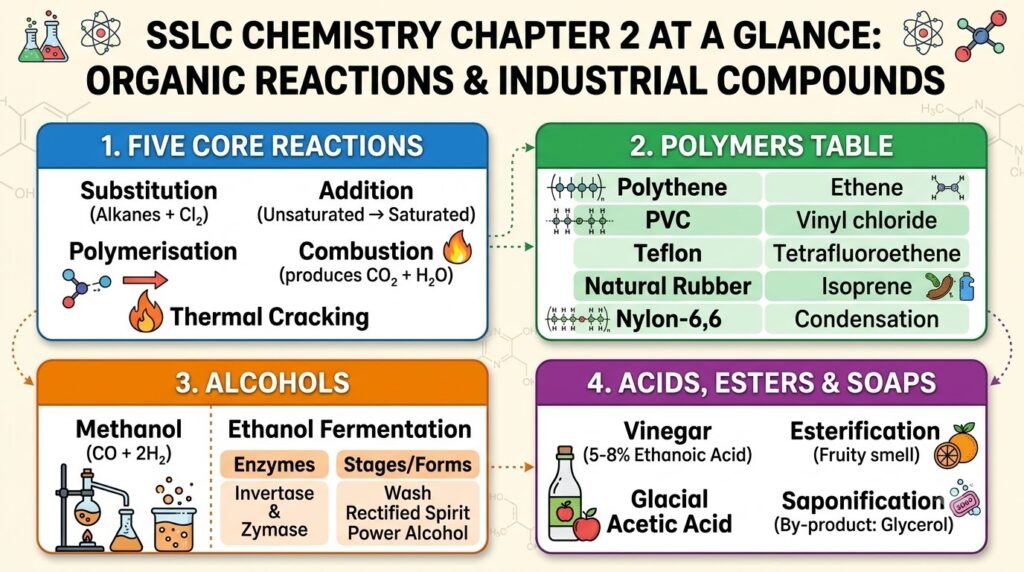
CHAPTER 2 AT A GLANCE: CLASS 10 CHEMISTRY QUICK REVISION BLUEPRINT
- Chapter 2 Title (EM & MM): Chemical Reactions of Organic Compounds (ഓർഗാനിക് സംയുക്തങ്ങളുടെ രാസപ്രവർത്തനങ്ങൾ)
- 5 Major Reaction Types: (1) Substitution | (2) Addition | (3) Polymerisation | (4) Combustion | (5) Thermal Cracking
- Important Monomers: Polythene = Ethene | PVC = Vinyl chloride | Teflon = Tetrafluoroethene | Natural Rubber = Isoprene
- Ethanol Manufacture (Molasses Fermentation): Enzymes = Invertase & Zymase | Wash = 8–10% | Rectified Spirit = 95.6% | Absolute Alcohol = 99.5%+
- Vinegar & Esterification: Vinegar = 5–8% Ethanoic acid | Acid + Alcohol —(Conc.
H2SO4)→ Ester (Fruity smell) + Water
1. Kerala SSLC Chemistry Chapter 2 Notes: Five Major Organic Reactions and Polymers Table
- Substitution Reactions (ആദേശ രാസപ്രവർത്തനങ്ങൾ): Replacement of an atom or group in a saturated alkane by another atom or group. Example: Stepwise chlorination of Methane in sunlight:
CH4 + Cl2 → CH3Cl (Chloromethane) → CH2Cl2 (Dichloromethane) → CHCl3 (Trichloromethane / Chloroform) → CCl4 (Tetrachloromethane). - Addition Reactions (അഡിഷൻ രാസപ്രവർത്തനങ്ങൾ): Unsaturated alkenes/alkynes combine with
H2, Cl2, Br2,orHClto form saturated compounds:
CH2=CH2 (Ethene) + H2 —(Ni, Heat)→ CH3–CH3 (Ethane). - Polymerisation (പോളിമറൈസേഷൻ): Simple monomer molecules combine to form giant polymers:- Polythene: Monomer = Ethene (
CH2=CH2)– PVC (Polyvinyl chloride): Monomer = Vinyl chloride / Chloroethene (
CH2=CH–Cl, used for pipes)– Teflon (PTFE): Monomer = Tetrafluoroethene (
CF2=CF2, non-stick cookware coating)– Natural Rubber: Monomer = Isoprene (Synthetic rubber Neoprene = Chloroprene; Condensation polymer Nylon-6,6 = Adipic acid + Hexamethylenediamine).
- Combustion (ജ്വലനം): Complete burning of hydrocarbons in oxygen yields
CO2 + H2O + Heat(CH4 + 2O2 → CO2 + 2H2O + Heat). - Thermal Cracking (താപീയ വിഘടനം): Heating high-molecular-mass alkanes in the absence of air breaks them into lower alkanes and alkenes (
CH3–CH2–CH3 → CH4 + CH2=CH2).
2. Industrial Preparation of Methanol, Ethanol (Molasses), Ethanoic Acid, Esters & Soaps
- Methanol (
CH3OH— Wood Spirit): Manufactured industrially from Water Gas (CO + H2):CO + 2H2 —(Catalyst, 573–673 K, 200 atm)→ CH3OH. Poisonous alcohol. - Ethanol (
C2H5OH— Grape Spirit) from Fermentation of Molasses:
1.C12H22O11 (Sucrose) + H2O —(Invertase enzyme)→ C6H12O6 (Glucose) + C6H12O6 (Fructose)
2.C6H12O6 —(Zymase enzyme)→ 2C2H5OH (Ethanol) + 2CO2
Commercial Grades: Wash (8–10% ethanol), Rectified Spirit (95.6% ethanol), Absolute Alcohol (99.5%+ pure ethanol), Power Alcohol (Absolute alcohol + Petrol fuel), Denatured Spirit (ethanol mixed with poison like methanol or pyridine). - Ethanoic Acid (
CH3COOH): Manufactured by reacting methanol withCOin the presence of a catalyst (CH3OH + CO → CH3COOH). 5–8% ethanoic acid is Vinegar; 100% pure ethanoic acid solidifies at16.6 °Cinto ice-like crystals called Glacial Acetic Acid. - Esterification & Saponification: Carboxylic acid + Alcohol in the presence of Conc.
H2SO4gives fruity-smelling Ester + Water (CH3COOH + C2H5OH → CH3COOC2H5 [Ethyl ethanoate] + H2O). Alkaline hydrolysis of oils/fats (esters of fatty acids with Glycerol) usingNaOHorKOHyields Soap + Glycerol.
പത്താം ക്ലാസ് രസതന്ത്രം അദ്ധ്യായം 2: ഓർഗാനിക് സംയുക്തങ്ങളുടെ രാസപ്രവർത്തനങ്ങൾ (മലയാളം മീഡിയം നോട്ടുകൾ)
- 5 പ്രധാന ഓർഗാനിക് രാസപ്രവർത്തനങ്ങൾ: ആദേശ രാസപ്രവർത്തനം (Substitution – ആൽക്കെയ്നുകളിൽ), അഡിഷൻ രാസപ്രവർത്തനം (Addition – ആൽക്കീനുകളിലും ആൽക്കൈനുകളിലും), പോളിമറൈസേഷൻ (Polymerisation), ജ്വലനം (Combustion), താപീയ വിഘടനം (Thermal Cracking).
- എഥനോൾ നിർമ്മാണം: മൊളാസസിന്റെ ഫെർമെന്റേഷൻ വഴി (എൻസൈമുകൾ: ഇൻവെർട്ടേസ്, സൈമേസ്). വാഷ് (8-10% എഥനോൾ), റെക്റ്റിഫൈഡ് സ്പിരിറ്റ് (95.6%), അബ്സൊല്യൂട്ട് ആൽക്കഹോൾ (99.5%+), പവർ ആൽക്കഹോൾ (പെട്രോളും അബ്സൊല്യൂട്ട് ആൽക്കഹോളും).
- വിനാഗിരിയും എസ്റ്ററീകരണവും: 5-8% എഥനോയിക് ആസിഡാണ് വിനാഗിരി. കാർബോക്സിലിക് ആസിഡും ആൽക്കഹോളും ഗാഢ
H2SO4-ന്റെ സാന്നിധ്യത്തിൽ പ്രവർത്തിച്ച് പഴങ്ങളുടെ സുഗന്ധമുള്ള എസ്റ്ററുകൾ ഉണ്ടാകുന്നു.
Teacher’s Classroom Note & Student Discussion Question:
Dear SSLC Students, make sure you can write the two enzyme equations (Invertase and Zymase) for the manufacture of Ethanol from Molasses without any mistake! Quick Question for You: What is the monomer of Natural Rubber, and which condensation polymer is listed in this chapter? Write your answer in the comments below!