
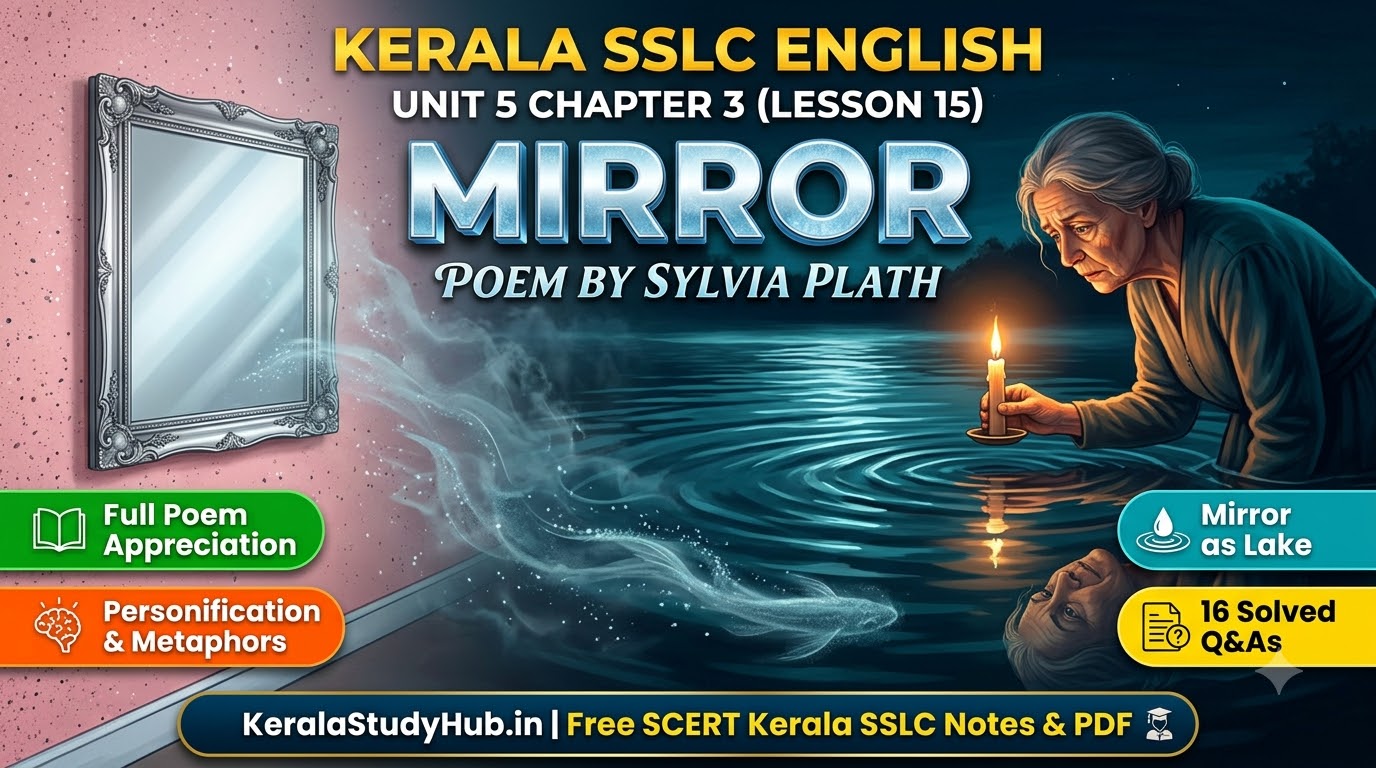
Kerala SSLC English Chapter 15 Notes on the haunting masterpiece Mirror by celebrated American poet Sylvia Plath (1932–1963) bring you to the concluding fifteenth lesson (Unit V, Lesson 3: Songs of the Self) of the newly revised Class 10 (Std 10) Kerala Reader English textbook published by the State Council of Educational Research and Training (SCERT Kerala). In my classroom, when we read this two-stanza poem narrated by a mirror itself, I ask my students: “Why does the mirror call itself ‘silver and exact’ and ‘the eye of a little god, four-cornered’ in Stanza 1, why does it call candles and the moon ‘those liars’ in Stanza 2, and what does the unforgettable closing simile—’in me an old woman / Rises toward her day after day, like a terrible fish’—reveal about our human fear of ageing?”
Designed for the Kerala Pareeksha Bhavan SSLC Public Examination, this complete classroom guide includes the Stanza-by-Stanza Explanation (English & Malayalam), Full 6-Mark Poem Appreciation of “Mirror”, Complete Poetic Devices & Imagery Breakdown, and 16 Solved Textbook & Exam Questions and Answers.
Quick SSLC English Navigation: SSLC English All 15 Chapters Master Hub | Previous: Chapter 14: Préférence Nationale (Fatou Diome) | Unit IV Poem: Chapter 12: The Wild Swans at Coole (W.B. Yeats).
CHAPTER 15 AT A GLANCE: MIRROR BY SYLVIA PLATH (POETIC BLUEPRINT)
- Poem & Poet: Mirror (written in 1961; published in Crossing the Water, 1971) by Sylvia Plath (1932–1963), Pulitzer Prize-winning American poet.
- Speaker / Narrator & Form: Narrated in the first person (
"I") by a personified Mirror across two 9-line stanzas (18 lines total) written in Free Verse (no rhyme scheme). - Stanza 1 vs Stanza 2 Shift: In Stanza 1, the speaker is a four-cornered wall mirror meditating on a speckled pink wall (“I am silver and exact. I have no preconceptions… The eye of a little god, four-cornered”). In Stanza 2, the mirror transforms into a deep lake (“Now I am a lake”) into which an ageing woman bends every morning searching for her lost youth.
- Key Metaphors & Simile: (1) “The eye of a little god, four-cornered” (Metaphor for impartial truth), (2) “Now I am a lake” (Metaphor for depth of time and reflection), (3) “those liars, the candles or the moon” (Metaphor for flattering illusions), and (4) “like a terrible fish” (Simile for the inescapable, frightening reality of old age rising from the depths).
1. Detailed Stanza-by-Stanza Analysis (English & Malayalam)
| Stanza & Key Lines | Detailed Explanation & Symbolism |
|---|---|
| Stanza 1 (Lines 1–9): “I am silver and exact. I have no preconceptions… The eye of a little god, four-cornered.” |
The personified wall mirror introduces itself as silver, exact, and completely free from preconceptions (prejudices). Whatever it sees, it “swallows immediately” just as it is, “unmisted by love or dislike”. It insists that it is not cruel, only truthful—comparing itself to “The eye of a little god, four-cornered” that observes everything objectively from all four angles. Most of the time, it meditates quietly on the opposite pink wall with speckles, which it has looked at for so long that it thinks the wall is “part of my heart”, interrupted only by faces and darkness that flicker between them. |
| Stanza 2 (Lines 10–18): “Now I am a lake. A woman bends over me… like a terrible fish.” |
In the second stanza, the mirror becomes a deep lake (“Now I am a lake”). A woman bends over it, searching its depths for “what she really is”. Horrified by her ageing reflection, she turns away to “those liars, the candles or the moon”, whose dim, soft light flatters her and hides her wrinkles. Yet the mirror faithfully reflects even her back, and she rewards its honesty with tears and an agitation of hands. She is important to the mirror; every morning her face replaces the darkness. Over the years, “In me she has drowned a young girl, and in me an old woman / Rises toward her day after day, like a terrible fish.” |
മലയാളം സംഗ്രഹം (Malayalam Summary — “Mirror” by Sylvia Plath):
പ്രശസ്ത അമേരിക്കൻ കവയിത്രി സിൽവിയ പ്ലാത്തിന്റെ (Sylvia Plath) ആഴമേറിയ കവിതയാണ് ‘Mirror’ (കണ്ണാടി). ഒരു കണ്ണാടി സ്വയം സംസാരിക്കുന്ന രീതിയിലാണ് (Personification) കവിത രചിച്ചിരിക്കുന്നത്. ഒന്നാം സ്റ്റാൻസയിൽ, താൻ മുൻവിധികളില്ലാത്തവനും സത്യസന്ധനുമാണെന്ന് കണ്ണാടി പറയുന്നു (“I am silver and exact. I have no preconceptions”). ഇഷ്ടാനിഷ്ടങ്ങൾക്കപ്പുറം മുന്നിൽ കാണുന്നതിനെ അതേപടി പ്രതിഫലിപ്പിക്കുന്ന കണ്ണാടി സ്വയം ‘നാല് മൂലകളുള്ള ഒരു കൊച്ചു ദൈവത്തിന്റെ കണ്ണ്’ (“The eye of a little god, four-cornered”) എന്ന് വിശേഷിപ്പിക്കുന്നു. രണ്ടാം സ്റ്റാൻസയിൽ കണ്ണാടി സ്വയം ഒരു തടാകമായി (Lake) രൂപാന്തരപ്പെടുന്നു. ഒരു സ്ത്രീ തന്റെ യഥാർത്ഥ രൂപം തിരഞ്ഞ് ആ തടാകത്തിലേക്ക് നോക്കുന്നു. വാർദ്ധക്യത്തിന്റെ ചുളിവുകൾ കണ്ട് ഞെട്ടുന്ന അവൾ, സത്യം മറച്ചുവെക്കുന്ന ‘നുണയന്മാരായ മെഴുകുതിരി വെളിച്ചത്തിലേക്കും നിലാവിലേക്കും’ (“those liars, the candles or the moon”) തിരിയുന്നു. എന്നാൽ കണ്ണാടി സത്യം മാത്രം കാണിക്കുന്നതിനാൽ അവൾ കണ്ണീരോടെ കൈകൾ കുടയുന്നു. അവളുടെ യൗവനം ആ കണ്ണാടിയിൽ മുങ്ങിപ്പോയെന്നും, ഇപ്പോൾ ഓരോ ദിവസവും വാർദ്ധക്യത്തിലേക്ക് കടക്കുന്ന ഒരു വൃദ്ധ ‘ഭീകരമായ ഒരു മത്സ്യത്തെപ്പോലെ’ (“like a terrible fish”) അതിൽ നിന്ന് അവൾക്ക് നേരെ പൊങ്ങിവരുന്നുവെന്നും പറഞ്ഞുകൊണ്ട് കവിത അവസാനിക്കുന്നു.
2. Complete 6-Mark Poem Appreciation: “Mirror” by Sylvia Plath
Critical Appreciation of the Poem “Mirror” (Exam Model Answer — 6 Marks)
Introduction: “Mirror” is one of the most celebrated confessional poems by the Pulitzer Prize-winning American poet Sylvia Plath (1932–1963). Written in two compact nine-line stanzas of free verse, the poem uses the voice of a personified mirror to explore the themes of objective truth, self-identity, human vanity, and the painful, inescapable reality of ageing.
Theme & Stanza-wise Development: In the first stanza, the mirror speaks as a four-cornered wall mirror hanging opposite a pink speckled wall. It declares itself “silver and exact” with “no preconceptions”. Unclouded by human emotions of love or dislike, it swallows whatever it sees immediately. Calling itself “not cruel, only truthful, / The eye of a little god, four-cornered,” it establishes its impartial objectivity. In the second stanza, the mirror transforms into a deep lake (“Now I am a lake”). A woman bends over it every morning searching for her true self. Distressed by the loss of her youthful beauty, she turns for comfort to “those liars, the candles or the moon”, whose dim, romantic glow hides her wrinkles. Yet she returns to the truthful mirror every morning with tears and agitated hands. Over time, her youth has drowned in the mirror, and an old woman rises toward her day after day “like a terrible fish”.
Poetic Devices & Imagery: The entire poem is built on sustained Personification, giving a lifeless mirror a calm, philosophical voice (“I swallow”, “I meditate”, “my heart”). Plath employs brilliant Metaphors—describing the mirror as “The eye of a little god” and “a lake”, calling candles and the moon “those liars”, and picturing lost youth as a “drowned” young girl. The closing line contains a haunting Simile—“like a terrible fish”—which captures how frightening and alien old age feels to a person clinging to youth. Vivid Visual Imagery (silver, pink with speckles, candles, moon, tears, terrible fish) and free-verse rhythm give the poem a clinical yet deeply moving precision.
Conclusion: Like W.B. Yeats’s “The Wild Swans at Coole”, Sylvia Plath’s “Mirror” confronts the passage of time, reminding us that while illusions may flatter us temporarily, self-acceptance requires facing the truth of change and mortality.
3. 16 Solved Textbook & Exam Questions and Answers (Chapter 15)
Q1: Who is the speaker (“I”) in the poem “Mirror”, and what poetic device is used here?
Answer: The speaker (“I”) is a mirror (first a wall mirror in Stanza 1, and then a lake in Stanza 2). The poetic device used throughout the poem is Personification.
Q2: Explain the opening lines: “I am silver and exact. I have no preconceptions.”
Answer: The mirror states that it has a silver surface and gives a 100% accurate reflection. Having “no preconceptions” means it holds no prior bias, prejudice, or judgment about anyone who looks into it.
Q3: What does the mirror mean by “Whatever I see I swallow immediately / Just as it is, unmisted by love or dislike”?
Answer: Unlike human beings whose perception of others is clouded (“misted”) by affection or hatred, the mirror instantly accepts and reflects whatever stands in front of it with complete neutrality.
Q4: Why does the mirror call itself “The eye of a little god, four-cornered”? Name the figure of speech.
Answer: Like an all-seeing, impartial god, the rectangular (four-cornered) mirror watches everything in the room truthfully without emotion or bias. The figure of speech is a Metaphor.
Q5: What does the mirror do most of the time, and what interrupts its meditation?
Answer: Most of the time, the mirror meditates on the opposite wall (which is pink with speckles) until it feels the wall is part of its heart. Its view is interrupted only by human faces looking into the mirror during the day and by darkness at night.
Q6: Why does the mirror say “Now I am a lake” in the second stanza?
Answer: Comparing itself to a lake (Metaphor) adds depth and fluidity: just as people gaze into deep water to see their reflection and what lies beneath the surface, the woman looks into the mirror’s depths to search for her true identity across time.
Q7: Why are “the candles or the moon” called “those liars”?
Answer: Candles and moonlight provide dim, soft, and romantic illumination that conceals wrinkles, blemishes, and signs of old age, giving the woman a flattering illusion of youth instead of the harsh truth.
Q8: How does the woman “reward” the mirror for its faithfulness, and why?
Answer: She “rewards” the mirror with tears and an agitation of hands because the mirror’s merciless honesty forces her to see her ageing face and lost beauty, filling her with grief and frustration.
Q9: Why does the mirror say “She is important to me. She comes and goes”?
Answer: The woman’s daily ritual of looking into the mirror every morning gives the mirror its purpose, as her face replaces the night’s darkness at the start of every day.
Q10: Explain the significance of the final lines: “In me she has drowned a young girl, and in me an old woman / Rises toward her day after day, like a terrible fish.”
Answer: The woman has looked into the mirror since her youth; over the years, her youthful self has “drowned” (vanished forever) in the lake-like mirror, and now the reflection of an old woman rises out of its depths every day like a frightening, inescapable monster (“like a terrible fish”).
Q11: Identify the figures of speech in: (a) “I am not cruel, only truthful”, (b) “those liars, the candles or the moon”, (c) “like a terrible fish”.
Answer:
• (a) Personification
• (b) Personification & Metaphor
• (c) Simile
Q12: How does the structure of “Mirror” contribute to its meaning?
Answer: The poem has two symmetrical 9-line stanzas in free verse that mirror each other: Stanza 1 establishes the mirror’s objective nature on the wall, while Stanza 2 reflects the woman’s subjective emotional struggle with ageing in the lake of time.
Q13: Describe the conflict between reality and illusion in “Mirror”.
Answer: The mirror represents uncompromising reality (“silver and exact”), whereas the candles and the moon represent comforting illusion (“those liars”). Although the woman seeks solace in illusion, she cannot escape reality.
Q14: Compare the theme of ageing in W.B. Yeats’s “The Wild Swans at Coole” (Chapter 12) and Sylvia Plath’s “Mirror” (Chapter 15).
Answer: In The Wild Swans at Coole, Yeats reflects on ageing with lyrical melancholy by contrasting his sore heart with the ageless wild swans on the lake. In Mirror, Plath portrays the psychological shock of ageing through the clinical eyes of a mirror/lake where a woman watches an old woman rise toward her “like a terrible fish”.
Q15: Why is the phrase “terrible fish” so effective at the end of the poem?
Answer: It extends the metaphor of the mirror as a lake and suggests something cold, alien, slimy, and frightening lurking beneath the surface—capturing the woman’s dread of growing old.
Q16: Give the meanings of these poetic words from Chapter 15: (i) Preconceptions, (ii) Unmisted, (iii) Speckles, (iv) Reaches, (v) Agitation.
Answer:
• (i) Preconceptions: Opinions or biases formed beforehand without actual knowledge.
• (ii) Unmisted: Not clouded, blurred, or distorted.
• (iii) Speckles: Small spots or patches of colour.
• (iv) Reaches: Continuous stretches or depths of water.
• (v) Agitation: Nervous anxiety, trembling, or restless movement.
Teacher’s Classroom Note & Student Discussion Question:
Sylvia Plath’s “Mirror” is one of the surest poems for the 4-Mark Stanza Comprehension and 6-Mark Poem Appreciation in the Kerala SSLC English exam. Always quote the four key phrases: “silver and exact”, “The eye of a little god, four-cornered”, “those liars, the candles or the moon”, and “like a terrible fish”!
Quick Challenge for You (Drop Your Answer in the Comments Below!): Why does the mirror call the candles and the moon “those liars” in Stanza 2? Write your answer in one sentence below!


Latest SCERT & DHSE Kerala Study Notes
- Kerala Class 9 Physics Chapter 2 Notes: Equations of Motion (ചലനസമവാക്യങ്ങൾ) Std 9 Let Us Assess Questions and Answers PDF
- Kerala SSLC Christmas Exam Question Paper 2025-27: All Subjects Second Term & Model Question Papers with Solved Answer Keys PDF (New SCERT Syllabus)
- Kerala SSLC English Christmas Exam Question Paper 2025-27: Second Term & Model Solved 80-Mark Answer Key, Discourses & Grammar PDF
- Kerala SSLC Social Science Christmas Exam Question Paper 2025-27: Second Term & Model Solved 80-Mark Answer Key, Weightage & Map Study PDF
- Kerala SSLC Maths Christmas Exam Question Paper 2025-27: Second Term & Model Solved Answer Key, Weightage & Formula Sheet PDF (New SCERT Syllabus)
- Kerala SSLC Biology Christmas Exam Question Paper 2025-27: Second Term & Model Solved Answer Key, Weightage & Flowcharts PDF (New SCERT Syllabus)
- Kerala SSLC Chemistry Christmas Exam Question Paper 2025-27: Second Term & Model Solved Answer Key, Weightage & Sure A+ Questions PDF (New SCERT Syllabus)
- Kerala SSLC Physics Christmas Exam Question Paper 2025-27: Second Term & Model Solved Answer Key, Weightage & Formula Sheet PDF (New SCERT Syllabus)