

Kerala SSLC English Chapter 12 Notes on the hauntingly beautiful lyric poem The Wild Swans at Coole by Irish Nobel Laureate William Butler Yeats (1865–1939) welcome you to the third and concluding lesson of Unit IV (Woodland Whispers) in the newly revised Class 10 (Std 10) Kerala Reader English textbook published by the State Council of Educational Research and Training (SCERT Kerala). In my classroom, when we read this masterpiece set in the autumn twilight of Coole Park in Ireland, I ask my students: “When the fifty-one-year-old poet stands on the dry woodland paths of Coole Park and counts fifty-nine wild swans floating on the lake—nineteen years after he first counted them in his youth—why does he say ‘And now my heart is sore’? Why have the swans’ hearts ‘not grown old’, while the human poet feels weighed down by time, ageing, and loneliness?”
Prepared strictly for the Kerala Pareeksha Bhavan SSLC Public Examination, this complete classroom guide covers the Stanza-by-Stanza Summary & Line-by-Line Analysis (English & Malayalam), Full 6-Mark Critical Appreciation of the Poem, Contrast Between Human Mutability (Ageing) and Nature’s Eternal Youth, Poetic Devices (Symbolism, Metaphor, Alliteration, Onomatopoeia, Visual/Auditory Imagery & Rhyme Scheme ABCBDD), and 16 Solved Textbook & Exam Questions and Answers.
Quick SSLC English Navigation: SSLC English All 15 Chapters Master Hub | Previous: Chapter 10: Shākuntalam & Chapter 11: Trills and Thrills: Birdwatching in India | Next: Chapter 13: Beloved Boles (Maxim Gorky).
CHAPTER 12 AT A GLANCE: THE WILD SWANS AT COOLE BY W.B. YEATS (POETIC BLUEPRINT)
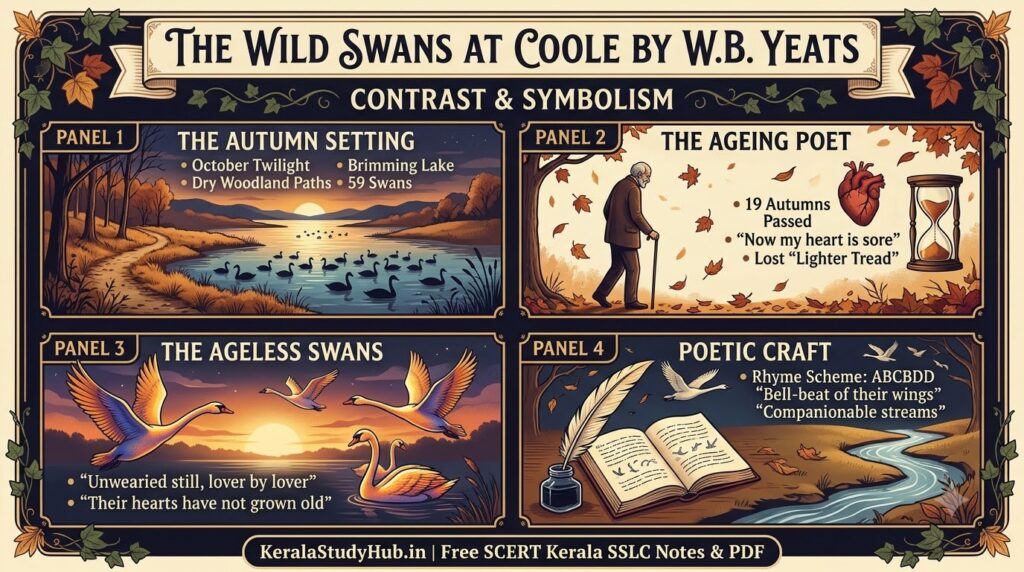
- Poem, Poet & Setting: The Wild Swans at Coole (composed October 1916, published 1917/1919) by William Butler Yeats (1865–1939), Irish poet and 1923 Nobel Prize Laureate; set at Coole Park (the estate of Lady Augusta Gregory in County Galway, Ireland) during October twilight in Autumn.
- Two Key Numbers in the Poem:•
59 Swans(“Nine-and-fifty swans”): Since swans mate for life and swim in pairs (“lover by lover”), the odd number59leaves one solitary swan without a partner—mirroring the lonely, heartbroken poet!•
19 Years(“The nineteenth autumn”): Nineteen years have passed since the poet first counted the swans at Coole Park in his youth (when he walked with a “lighter tread”). - Core Contrast & Symbolism: Autumn & Twilight = the poet’s ageing, fading youth, and approaching winter of life | The Wild Swans = eternal youth, unwearied passion, companionship, and the timeless permanence of Nature.
- Stanza Structure & Poetic Devices: 5 Stanzas of 6 lines each (30 lines total) with Rhyme Scheme
ABCBDD. Uses Symbolism, Metaphor (“bell-beat of their wings”, “wheeling in great broken rings”), Transferred Epithet / Personification (“companionable streams”), Alliteration, Assonance, and a closing Rhetorical Question.
1. Stanza-by-Stanza Summary & Line-by-Line Classroom Analysis
| Stanza & Key Lines | Meaning, Symbolism & Poetic Devices |
|---|---|
| Stanza 1 (The Autumn Twilight Setting): “The trees are in their autumn beauty, / The woodland paths are dry, / Under the October twilight the water / Mirrors a still sky; / Upon the brimming water among the stones / Are nine-and-fifty swans.” |
The poem opens with serene Visual Imagery at Coole Park in October twilight during autumn—a dual symbol of the evening of the day and the autumn (ageing phase) of the poet’s own life. While the woodland paths are “dry” (reflecting the poet’s emotional dryness and fatigue), the lake is “brimming” with life and water, mirroring a calm sky and holding fifty-nine (59) wild swans. |
| Stanza 2 (Nineteen Years & the Sudden Flight): “The nineteenth autumn has come upon me / Since I first made my count; / I saw, before I had well finished, / All suddenly mount / And scatter wheeling in great broken rings / Upon their clamorous wings.” |
The poet recalls that nineteen years have passed since he first visited Coole Park and counted the swans. He remembers how, nineteen years ago, before he had even finished counting them, all the swans suddenly rose into the air and scattered “wheeling in great broken rings / Upon their clamorous wings” (vivid Kinesthetic and Auditory Imagery of noisy, beating wings). |
| Stanza 3 (The Poet’s Sore Heart & Changed Life): “I have looked upon those brilliant creatures, / And now my heart is sore. / All’s changed since I, hearing at twilight, / The first time on this shore, / The bell-beat of their wings above my head, / Trod with a lighter tread.” |
Gazing at those “brilliant creatures” today makes the poet’s heart sore (heavy with grief and nostalgia). Everything in his life has changed over these nineteen years! When he first heard the musical “bell-beat of their wings” (Metaphor & Alliteration) nineteen years ago, he was young, hopeful, and walked with a “lighter tread” (carefree step), whereas now he is weighed down by age and heartbreak. |
| Stanza 4 (The Unwearied Swans — Eternal Youth): “Unwearied still, lover by lover, / They paddle in the cold / Companionable streams or climb the air; / Their hearts have not grown old; / Passion or conquest, wander where they will, / Attend upon them still.” |
In stark contrast to the aging, solitary poet, the swans remain “unwearied still” (tireless). Swimming in pairs (“lover by lover”) in the cold “companionable streams” (Transferred Epithet / Personification), “their hearts have not grown old.” Wherever they fly, youthful passion, romance, and energy (“Passion or conquest”) still accompany them. |
| Stanza 5 (Mystery, Transience & Final Question): “But now they drift on the still water, / Mysterious, beautiful; / Among what rushes will they build, / By what lake’s edge or pool / Delight men’s eyes when I awake some day / To find they have flown away?” |
As the swans drift peacefully on the still water—“Mysterious, beautiful”—the poet ends with a wistful Rhetorical Question. He wonders among what reeds (rushes) and by what distant lake they will build their nests and delight future generations’ eyes when he wakes up some day to find they have flown away (symbolizing both the departure of youth/inspiration and the poet’s own mortality). |
മലയാളം സംഗ്രഹം (Malayalam Summary — “The Wild Swans at Coole” by W.B. Yeats):
ഐറിഷ് കവിയും നൊബേൽ സമ്മാന ജേതാവുമായ ഡബ്ല്യു. ബി. യേറ്റ്സ് (W.B. Yeats) രചിച്ച മനോഹരമായ ഒരു ഭാവഗീതമാണ് ‘The Wild Swans at Coole’. അയർലൻഡിലെ കൂൾ പാർക്കിലെ (Coole Park) തടാകക്കരയിൽ ഒരു ഒക്ടോബർ സന്ധ്യയിൽ (ശരത്കാലത്ത് / Autumn) നിൽക്കുന്ന കവി, തടാകത്തിൽ നീന്തിത്തുടിക്കുന്ന അമ്പത്തിയൊമ്പത് (59) കാട്ടുഹംസങ്ങളെ (Wild Swans) കാണുന്നു. പത്തൊമ്പത് വർഷങ്ങൾക്ക് (19 years) മുൻപാണ് കവി ആദ്യമായി ഇവിടെ വെച്ച് ഈ ഹംസങ്ങളെ എണ്ണിയത്. അന്ന് കവി യുവാവും ഉന്മേഷവാനുമായിരുന്നു (“Trod with a lighter tread”). എന്നാൽ പത്തൊമ്പത് വർഷങ്ങൾക്കിപ്പുറം കവിയുടെ ജീവിതത്തിൽ എല്ലാം മാറിമറിഞ്ഞിരിക്കുന്നു; വാർദ്ധക്യവും ഏകാന്തതയും നിരാശയും കവിയുടെ ഹൃദയത്തെ വേദനിപ്പിക്കുന്നു (“And now my heart is sore”). എന്നാൽ ഹംസങ്ങൾക്കാകട്ടെ ഇന്നും ഒട്ടും ക്ഷീണമില്ല (“Unwearied still”); ഇണകളായി (“lover by lover”) നീന്തുന്ന അവയുടെ ഹൃദയങ്ങൾക്ക് ഇന്നും വാർദ്ധക്യം ബാധിച്ചിട്ടില്ല (“Their hearts have not grown old”)! മനുഷ്യജീവിതത്തിലെ നശ്വരതയും പ്രകൃതിയുടെ നിത്യയൗവനവും തമ്മിലുള്ള അന്തരമാണ് ഈ കവിതയുടെ കാതൽ.
2. Complete Critical Appreciation of “The Wild Swans at Coole” (6-Mark SSLC Question)
Introduction: “The Wild Swans at Coole” by Irish Nobel Laureate William Butler Yeats (W.B. Yeats) is a deeply reflective, melancholic lyric poem that meditates on the passage of time, the sorrow of human ageing, and the unchanging vitality and permanence of Nature.
Setting and Theme: Set in the tranquil autumn landscape of Coole Park in Ireland under an October twilight, the poem opens with the speaker observing fifty-nine wild swans floating on the brimming lake. This visit marks the nineteenth autumn since he first counted the swans. While watching these “brilliant creatures”, the poet confesses, “And now my heart is sore.” Nineteen years ago, when he first heard the musical “bell-beat of their wings”, he walked with a “lighter tread”, full of youthful hope. Now, weighed down by age, loneliness, and emotional disappointment, he contrasts his own tired mortality with the eternal youth of the swans. Swimming “lover by lover” in the cold “companionable streams”, the swans remain “unwearied still” and “their hearts have not grown old.”
Symbolism and Poetic Devices: The poem is a masterpiece of Symbolism. Autumn and October twilight symbolize the approaching winter of the poet’s life, while the “dry woodland paths” reflect his inner barrenness in contrast to the “brimming water” of nature. The fifty-nine swans symbolize timeless beauty, artistic inspiration, and enduring passion (with the odd 59th swan subtly mirroring the solitary poet). Yeats uses vivid Visual Imagery (“autumn beauty”, “water mirrors a still sky”, “wheeling in great broken rings”), Auditory Imagery & Metaphor (“clamorous wings”, “bell-beat of their wings”), Alliteration (“bell-beat”, “trod with a lighter tread”, “wander where they will”), and a Transferred Epithet in “companionable streams”. The poem concludes with a poignant Rhetorical Question wondering whose eyes the swans will delight when they eventually fly away.
Structure and Tone: Structured in five six-line stanzas (sestets) following the regular rhyme scheme ABCBDD, the poem blends nostalgic melancholy with serene admiration for the immortal grace of the natural world.
3. Complete Textbook Solutions & Extra Exam Questions (16 Fully Solved Q&As)
Q1: What is the season and time of day pictured in the opening stanza of “The Wild Swans at Coole”? What is their symbolic significance?
Answer: The season pictured is Autumn (October) and the time of day is twilight (just after sunset). Symbolically, both autumn and twilight represent the transition from vibrant youth and daylight toward old age, fading vitality, and the approaching night of life.
Q2: Contrast the “dry woodland paths” with the “brimming water” in the first stanza.
Answer: The “dry woodland paths” on which the ageing poet walks symbolize the emotional dryness, exhaustion, and waning vitality of human life, whereas the “brimming water” on which the swans float symbolizes the fullness, abundance, and undiminished energy of Nature.
Q3: How many swans does the poet count on the lake, and why is the odd number (59) significant?
Answer: The poet counts fifty-nine (“nine-and-fifty”) swans. Since swans are monogamous birds that pair for life (“lover by lover”), 58 swans form 29 pairs, leaving one odd, solitary swan without a companion—which subtly mirrors the lonely, heartbroken poet himself!
Q4: What does the poet mean by “The nineteenth autumn has come upon me / Since I first made my count”?
Answer: He means that nineteen years have passed since his first visit to Coole Park in 1897, when he first counted the wild swans on the lake. The phrase “has come upon me” suggests that time and old age have crept up on him almost like a burden.
Q5: What did the swans do nineteen years ago before the poet had finished counting them?
Answer: Before he had finished counting them, all the swans suddenly rose into the air (“mounted”) and scattered across the sky, wheeling in great broken circles upon their noisy (“clamorous”) wings.
Q6: Why does the poet say, “I have looked upon those brilliant creatures, / And now my heart is sore”?
Answer: Looking at the radiant, energetic swans makes the poet’s heart ache with sorrow and nostalgia because their unchanging youth and companionship painfully remind him of all that he has lost over the past nineteen years—his youth, his lighthearted joy, and his unfulfilled love.
Q7: Explain the contrast in the lines: “All’s changed since I, hearing at twilight, / The first time on this shore, / The bell-beat of their wings above my head, / Trod with a lighter tread.”
Answer: Nineteen years ago, when the young poet first heard the resonant, rhythmic “bell-beat” of the swans’ wings overhead, he walked with a “lighter tread”—meaning his step was energetic and his heart was carefree. Today, “all’s changed”: his steps and heart have grown heavy with age and sorrow.
Q8: How does Yeats describe the eternal youth and companionship of the swans in Stanza 4?
Answer: Yeats describes the swans as “unwearied still” (never growing tired). Moving “lover by lover” in pairs, they paddle together in the cold “companionable streams” or soar into the sky. Unlike the ageing human speaker, “their hearts have not grown old”; passion and the spirit of adventure (“conquest”) still follow them wherever they go.
Q9: Why are the streams called “companionable streams”? Name the figure of speech.
Answer: Although the water of the stream is physically cold, it feels warm and friendly (“companionable”) because the swans swim in it together in loving pairs (“lover by lover”). Transferring the human quality of companionship from the paired swans to the inanimate stream is an example of a Transferred Epithet (and Personification).
Q10: What question troubles the poet in the final stanza of the poem?
Answer: Watching the mysterious, beautiful swans drifting on the still water, the poet wonders where they will build their nests next and whose eyes they will delight by some other lake or pool when he wakes up some day to find they have flown away—expressing his awareness of his own mortality and the permanence of beauty in nature.
Q11: What do the wild swans symbolize in the poem?
Answer: The wild swans symbolize eternal youth, unchanging beauty, tireless vitality, faithful love/companionship, and the immortal spirit of Nature and Art, which outlive individual human generations.
Q12: Identify the Visual, Auditory, and Tactile images in “The Wild Swans at Coole”.
Answer:
• Visual Images: “trees are in their autumn beauty”, “water mirrors a still sky”, “nine-and-fifty swans”, “wheeling in great broken rings”.
• Auditory Images: “clamorous wings”, “The bell-beat of their wings above my head”.
• Tactile Images: “woodland paths are dry”, “paddle in the cold / Companionable streams”.
Q13: Pick out three examples of Alliteration from the poem.
Answer:
1. “The bell-beat of their wings” (/b/ sound)
2. “Trod with a lighter tread” (/t/ sound)
3. “wander where they will” (/w/ sound) and “cold / Companionable” (/k/ sound).
Q14: What is the stanza pattern and rhyme scheme of “The Wild Swans at Coole”?
Answer: The poem consists of five six-line stanzas (sestets), and each stanza follows the rhyme scheme ABCBDD (where lines 2 and 4 rhyme, and lines 5 and 6 form a rhyming couplet, e.g., dry/sky and stones/swans).
Q15: Compare the portrayal of birds in Dr. Salim Ali’s “Trills and Thrills” (Chapter 11) and W.B. Yeats’s “The Wild Swans at Coole” (Chapter 12).
Answer: In Trills and Thrills, Dr. Salim Ali observes birds through the eyes of a field naturalist and scientist, finding joy and excitement in their real-life nesting habits. In The Wild Swans at Coole, W.B. Yeats gazes at the swans through the eyes of a lyric poet, seeing them as timeless symbols of beauty, youth, and passion contrasted against human mortality.
Q16: Give the meanings of these poetic words from Chapter 12: (i) Twilight, (ii) Brimming, (iii) Clamorous, (iv) Tread, (v) Rushes.
Answer:
• (i) Twilight: The soft, dim light in the sky just after sunset (dusk).
• (ii) Brimming: Filled to the very top edge / overflowing.
• (iii) Clamorous: Making a loud, resonant, and confused noise.
• (iv) Tread: Manner or sound of walking / footsteps.
• (v) Rushes: Tall, grass-like marsh/waterside reed plants where waterbirds build nests.
Teacher’s Classroom Note & Student Discussion Question:
“The Wild Swans at Coole” by W.B. Yeats is a top-priority poem for the 6-Mark Poem Appreciation in the SSLC board exam. Always mention the two numbers (59 swans and 19 years), the rhyme scheme (ABCBDD), and the central contrast between the ageing poet (“my heart is sore”) and the ageless swans (“their hearts have not grown old”)!
Quick Challenge for You (Drop Your Answer in the Comments Below!): How many wild swans did W.B. Yeats count on the lake at Coole Park, and how many autumns (years) had passed since he first counted them? Comment both numbers below!


Latest SCERT & DHSE Kerala Study Notes
- Kerala Class 9 Physics Chapter 2 Notes: Equations of Motion (ചലനസമവാക്യങ്ങൾ) Std 9 Let Us Assess Questions and Answers PDF
- Kerala SSLC Christmas Exam Question Paper 2025-27: All Subjects Second Term & Model Question Papers with Solved Answer Keys PDF (New SCERT Syllabus)
- Kerala SSLC English Christmas Exam Question Paper 2025-27: Second Term & Model Solved 80-Mark Answer Key, Discourses & Grammar PDF
- Kerala SSLC Social Science Christmas Exam Question Paper 2025-27: Second Term & Model Solved 80-Mark Answer Key, Weightage & Map Study PDF
- Kerala SSLC Maths Christmas Exam Question Paper 2025-27: Second Term & Model Solved Answer Key, Weightage & Formula Sheet PDF (New SCERT Syllabus)
- Kerala SSLC Biology Christmas Exam Question Paper 2025-27: Second Term & Model Solved Answer Key, Weightage & Flowcharts PDF (New SCERT Syllabus)
- Kerala SSLC Chemistry Christmas Exam Question Paper 2025-27: Second Term & Model Solved Answer Key, Weightage & Sure A+ Questions PDF (New SCERT Syllabus)
- Kerala SSLC Physics Christmas Exam Question Paper 2025-27: Second Term & Model Solved Answer Key, Weightage & Formula Sheet PDF (New SCERT Syllabus)