
Kerala SSLC Physics Chapter 1 Notes on Sound Waves (Malayalam Medium: ശബ്ദതരംഗങ്ങൾ) cover the opening unit of the newly revised Class 10 (Std 10) Physics textbook published by the State Council of Educational Research and Training (SCERT Kerala). In the updated syllabus for the Kerala Pareeksha Bhavan SSLC Public Examination, SCERT has replaced the old electricity chapter at the start of Part 1 with Sound Waves—carrying 5 to 6 marks across wave equations (v = fλ), natural frequency and resonance, minimum distance for hearing an echo (17 m), and ultrasonic applications (SONAR).
- 1. Kerala SSLC Physics Chapter 1 Notes: Oscillation, Transverse vs Longitudinal Waves & Wave Speed
- Key Wave Parameters and Mathematical Formulas
- 2. Natural Frequency, Forced Vibration & Resonance (Sonometer Experiment)
- 3. Reflection of Sound, Echo (17 m Rule), Reverberation, Acoustics & Ultrasonic Waves (SONAR)
- 4. Class 10 Physics Chapter 1 Let Us Assess Questions and Answers & Solved Numericals
- 5. Class 10 Physics Chapter 1 Malayalam Medium Notes (ശബ്ദതരംഗങ്ങൾ – ചോദ്യോത്തരങ്ങൾ)
As a High School Physical Science teacher, I have compiled this complete bilingual study guide so that students and teachers searching for Class 10 Physics Chapter 1 Let Us Assess questions and answers, solved wave numericals, or Malayalam Medium notes have every concept clearly explained in one place.
Quick Navigation Across SSLC Physics: Continue to Chapter 2: Lenses, Chapter 3: The World of Colours and Vision, or visit our complete Kerala SSLC Physics All 7 Chapters Master Notes Hub.
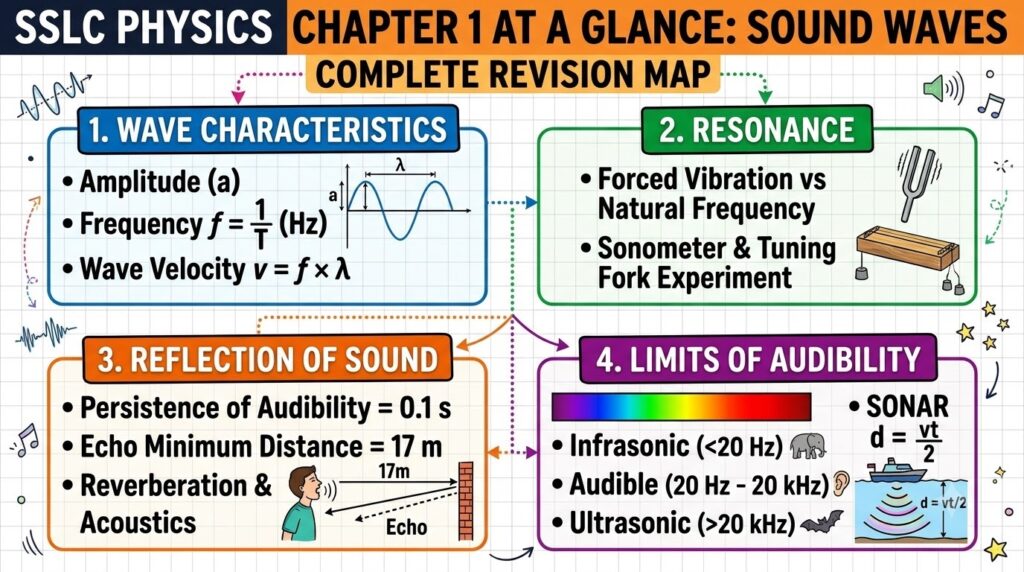
CHAPTER 1 AT A GLANCE: CLASS 10 PHYSICS QUICK REVISION BLUEPRINT
- Chapter 1 Title (EM & MM): Sound Waves (ശബ്ദതരംഗങ്ങൾ)
- Expected SSLC Exam Weightage: 5 to 6 Marks (Out of 40 Theory Marks)
- Core Wave Equations: Frequency
f = n / t = 1 / T(in Hz) | Wave Velocityv = f × λ(in m/s) - Persistence of Audibility & Echo: Persistence =
0.1 s| Minimum distance for distinct echo in air (at340 m/s) =17 m| Echo distance formula:d = (v × t) / 2 - Limits of Audibility in Humans:
20 Hz to 20,000 Hz (20 kHz)(Below 20 Hz = Infrasonic; Above 20 kHz = Ultrasonic)
1. Kerala SSLC Physics Chapter 1 Notes: Oscillation, Transverse vs Longitudinal Waves & Wave Speed
A periodic back-and-forth motion of a body about its mean equilibrium position is called an Oscillation (ദോലനം), and a rapid oscillation is called a Vibration (കമ്പനം). A disturbance that propagates through a medium transferring energy from one point to another without the bulk movement of particles of the medium is called a Wave (തരംഗം).
| Feature | Transverse Waves (അനുപ്രസ്ഥ തരംഗങ്ങൾ) | Longitudinal Waves (അനുദൈർഘ്യ തരംഗങ്ങൾ) |
|---|---|---|
| Direction of Particle Vibration | Particles vibrate perpendicular to the direction of wave propagation. | Particles vibrate parallel to the direction of wave propagation. |
| Wave Pattern Formed | Travels as alternate Crests (ശൃംഗങ്ങൾ) and Troughs (ഗർത്തങ്ങൾ). | Travels as alternate Compressions (ഉച്ചമർദ്ദ മേഖലകൾ – C) and Rarefactions (നീചമർദ്ദ മേഖലകൾ – R). |
| Examples | Ripples on the surface of water, waves on a stretched string, electromagnetic waves (light). | Sound waves in air, vibrations in a slinky spring pushed lengthwise. |
Key Wave Parameters and Mathematical Formulas
- Amplitude (
a/ ആയതി): The maximum displacement of a vibrating particle from its mean equilibrium position. SI unit: metre (m). Loudness of sound depends on amplitude. - Period (
T/ ആവർത്തനകാലം): The time taken to complete one oscillation or one wave cycle. SI unit: second (s). - Frequency (
f/ ആവൃത്തി): The number of oscillations or cycles completed in one second:f = n / t = 1 / T. SI unit: hertz (Hz). Pitch (shrillness) of sound depends on frequency. - Wavelength (
λ/ തരംഗദൈർഘ്യം): The distance travelled by a wave during one time periodT(or the distance between two consecutive crests, two consecutive troughs, two consecutive compressions, or two consecutive rarefactions). SI unit: metre (m). - Wave Velocity (
v/ തരംഗപ്രവേഗം): Distance travelled by a wave in one second:
v = λ / T = f × λ(SI unit:m/s).
2. Natural Frequency, Forced Vibration & Resonance (Sonometer Experiment)
- Natural Frequency (സ്വാഭാവിക ആവൃത്തി): When a body is set into free vibration, it vibrates with a characteristic frequency of its own called its natural frequency. Factors affecting natural frequency include length of the body, tension, thickness (area of cross-section), and nature of the material.
- Forced Vibration (പ്രേരിത കമ്പനം): The vibration of a body under the continuous influence of an external periodic force (e.g., when the stem of a vibrating tuning fork is pressed against a wooden table, the table undergoes forced vibration and produces a louder sound).
- Resonance (അനുനാദം): If the natural frequency of the body undergoing forced vibration matches the frequency of the external forcing object, the body vibrates with maximum amplitude. This phenomenon is called Resonance. Applications include acoustic musical instruments (guitar, violin, mridangam), stethoscope, radio/TV tuning circuits, and MRI scanners. (Soldiers are instructed to break step while marching across suspension bridges to prevent destructive resonance).
3. Reflection of Sound, Echo (17 m Rule), Reverberation, Acoustics & Ultrasonic Waves (SONAR)
- Persistence of Audibility (ശ്രവണസ്ഥിരത): The sensation of hearing produced by a sound persists in the human ear/brain for
0.1 second (1/10 s). - Echo (പ്രതിധ്വനി) and Why Minimum Distance in Air is 17 m: An echo is the distinct repetition of the original sound heard after reflection from a distant obstacle after the persistence of the original sound (
0.1 s) has ceased. Taking the speed of sound in air at room temperature asv = 340 m/s, total distance travelled by sound in0.1 sis340 m/s × 0.1 s = 34 m. Since sound travels to the reflector and returns (2d = 34 m), the minimum distance to hear a clear echo in air isd = 34 / 2 = 17 m. - Reverberation (അനുരണനം) & Acoustics of Buildings: The persistence or booming of sound in a large hall due to repeated multiple reflections from walls, ceiling, and floor is called Reverberation. To reduce excessive reverberation in cinema halls and auditoriums, walls and ceilings are covered with sound-absorbing materials like carpets, heavy curtains, fibreboards, andrough plaster.
- Infrasonic vs Audible vs Ultrasonic Sound:
– Audible Range for Humans:20 Hz to 20,000 Hz (20 kHz).
– Infrasonic Sound (< 20 Hz): Produced by earthquakes, volcanoes, elephants, and whales.
– Ultrasonic Sound (> 20,000 Hz): Produced and heard by bats and dolphins. Used in SONAR (Sound Navigation and Ranging) to measure sea depth (d = vt / 2), in Ultrasonography (scanning internal organs) and Echocardiography (heart scan), for crushing kidney stones, and for cleaning delicate spiral tubes.
4. Class 10 Physics Chapter 1 Let Us Assess Questions and Answers & Solved Numericals
Q1. A sound wave of frequency 680 Hz travels through air with a speed of 340 m/s. Calculate its (a) Wavelength (λ) and (b) Time Period (T).
Answer:
(a) From v = f × λ, Wavelength λ = v / f = 340 / 680 = 0.5 m.
(b) Time Period T = 1 / f = 1 / 680 = 0.00147 s.
Q2. Ultrasonic waves sent from a SONAR transmitter fitted at the bottom of a ship return from the seabed after 4 seconds. If the speed of ultrasonic sound in seawater is 1500 m/s, calculate the depth of the sea.
Answer: Depth of the sea d = (v × t) / 2 = (1500 m/s × 4 s) / 2 = 6000 / 2 = 3000 m (3 km).
Q3. Why are the walls and floors of cinema halls and auditoriums covered with rough plaster, thick curtains, and carpets?
Answer: Smooth hard walls reflect sound repeatedly, causing excessive reverberation (booming of sound) that makes speech and music unclear. Rough plaster, curtains, carpets, and cushioned seats act as good sound absorbers and reduce reverberation.
5. Class 10 Physics Chapter 1 Malayalam Medium Notes (ശബ്ദതരംഗങ്ങൾ – ചോദ്യോത്തരങ്ങൾ)
പത്താം ക്ലാസ് ഫിസിക്സ് അദ്ധ്യായം 1: ശബ്ദതരംഗങ്ങൾ (മലയാളം മീഡിയം നോട്ടുകൾ)
- അനുപ്രസ്ഥ തരംഗങ്ങളും അനുദൈർഘ്യ തരംഗങ്ങളും: മാധ്യമത്തിലെ കണികകൾ തരംഗത്തിന്റെ സഞ്ചാരദിശയ്ക്ക് ലംബമായി കമ്പനം ചെയ്യുന്നത് അനുപ്രസ്ഥ തരംഗങ്ങൾ (Transverse waves) (ഉദാ: പ്രകാശം, ജലോപരിതലത്തിലെ ഓളങ്ങൾ). കണികകൾ സഞ്ചാരദിശയ്ക്ക് സമാന്തരമായി കമ്പനം ചെയ്യുന്നത് അനുദൈർഘ്യ തരംഗങ്ങൾ (Longitudinal waves) (ഉദാ: വായുവിലൂടെയുള്ള ശബ്ദതരംഗങ്ങൾ).
- പ്രധാന സൂത്രവാക്യങ്ങൾ: ആവൃത്തി
f = n / t = 1 / T(യൂണിറ്റ്: ഹെർട്സ് – Hz); തരംഗപ്രവേഗംv = f × λ(യൂണിറ്റ്: m/s). - പ്രേരിത കമ്പനവും അനുനാദവും (Forced Vibration & Resonance): ബാഹ്യബലത്തിന്റെ സ്വാധീനത്താൽ ഒരു വസ്തു കമ്പനം ചെയ്യുന്നത് പ്രേരിത കമ്പനം. പ്രേരിത കമ്പനത്തിന് വിധേയമാകുന്ന വസ്തുവിന്റെ സ്വാഭാവിക ആവൃത്തിയും ബാഹ്യവസ്തുവിന്റെ ആവൃത്തിയും തുല്യമാകുമ്പോൾ വസ്തു കൂടിയ ആയതിയിൽ കമ്പനം ചെയ്യുന്ന പ്രതിഭാസമാണ് അനുനാദം (Resonance).
- ശ്രവണസ്ഥിരതയും പ്രതിധ്വനിയും: മനുഷ്യന്റെ ശ്രവണസ്ഥിരത
0.1 സെക്കൻഡ്ആണ്. വായുവിൽ പ്രതിധ്വനി (Echo) വ്യക്തമായി കേൾക്കാനുള്ള കുറഞ്ഞ ദൂരം17 മീറ്റർആണ് (d = vt / 2). - ശ്രവണപരിധിയും അൾട്രാസോണിക് തരംഗങ്ങളും: മനുഷ്യന്റെ ശ്രവണപരിധി
20 Hz മുതൽ 20,000 Hz (20 kHz) വരെആണ്.20 kHz-ൽ കൂടുതൽ ആവൃത്തിയുള്ള അൾട്രാസോണിക് ശബ്ദം SONAR (കടലിന്റെ ആഴം അളക്കാൻ), എക്കോ കാർഡിയോഗ്രാഫി, അൾട്രാസോണോഗ്രാഫി എന്നിവയിൽ ഉപയോഗിക്കുന്നു.
Teacher’s Classroom Note & Student Discussion Question:
Dear SSLC Students, while preparing Chapter 1 (Sound Waves) for your Christmas and Public Exams, remember to divide by 2 whenever you calculate echo or SONAR depth using d = (v × t) / 2! Quick Question for You: Can a person standing 12 metres away from a tall wall in air hear a distinct echo? Why or why not? Write your answer in the comments below!