
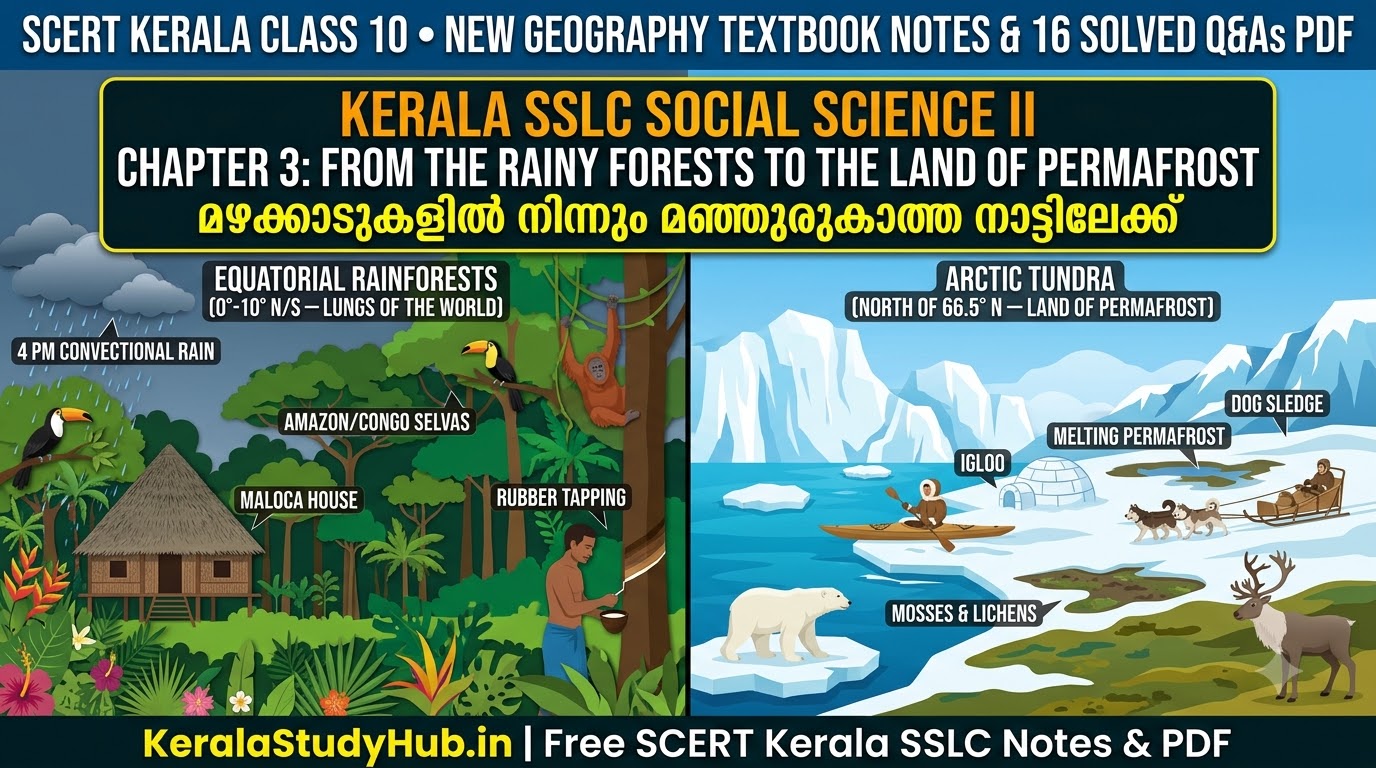
Kerala SSLC Social Science 2 Chapter 3 Notes on From the Rainy Forests to the Land of Permafrost (Malayalam Medium: മഴക്കാടുകളിൽ നിന്നും മഞ്ഞുരുകാത്ത നാട്ടിലേക്ക്) welcome you to the third unit of the newly revised Class 10 (Std 10) Social Science II (Geography) textbook published by the State Council of Educational Research and Training (SCERT Kerala). In my Geography classes, I tell students to imagine travelling from the Earth’s hottest, wettest biodiversity hotspot—the Equatorial Evergreen Rainforests (“Lungs of the World”) along the Equator—all the way to the icy edge of the Arctic Ocean—the Tundra (“Land of Permafrost”). In the Kerala Pareeksha Bhavan SSLC Public Examination, this comparative geography chapter carries 6 to 8 marks, including a regular 6-Mark comparative essay!
- 1. The Equatorial Climatic Region: “The Rainy Forests” (ഭൂമധ്യരേഖാ മഴക്കാടുകൾ — 0° to 10° N & S)
- 2. The Tundra Climatic Region: “The Land of Permafrost” (തുന്ദ്ര മേഖല — മഞ്ഞുരുകാത്ത നാട്)
- 3. Complete SCERT Textbook “Let Us Assess” Solutions + 16 Extra Exam Questions & Answers
- Part A: SCERT Textbook “Let Us Assess” Questions and Answers (All Solved)
- Part B: Extra Sure-Shot Board Exam Questions and Answers (Q7 to Q16)
As your Social Science teacher, I have prepared this complete classroom notebook with detailed tables comparing the climate, flora, fauna, indigenous tribes, and modern transformations of the Equatorial and Tundra regions, along with all solved SCERT Textbook Let Us Assess exercises and 16 Full Textbook + Extra Exam Questions and Answers.
Quick SSLC Social Science II Navigation: Revise Chapter 1: Weather and Climate | Chapter 2: Climatic Regions and Climate Change | Next: Chapter 4: Consumer: Rights and Protection | SSLC Social Science I (History) All 9 Chapters Hub.
CHAPTER 3 AT A GLANCE: CLASS 10 SOCIAL SCIENCE II (EQUATORIAL vs TUNDRA) BLUEPRINT
- Equatorial Climatic Region (
0° to 10° N & S): Spreads across South America (Amazon Basin, Brazil, Ecuador), Africa (Congo Basin, Guinea Coast), and Southeast Asia (Malaysia, Indonesia). High temperature (~27°C) and daily afternoon Convectional Rainfall all year. - “Lungs of the World” (Selvas): Equatorial evergreen rainforests absorb huge amounts of
CO2and produceO2. Trees: Mahogany, Ebony, Rosewood, Rubber, Cinchona. Tribes: Pygmies (Congo), Yanomami/Amazonians (Amazon), Semang & Orang Asli (Malaysia). - Tundra Region (North of Taiga / Arctic Circle
66½° N): 2 Types: Arctic Tundra (Alaska, N. Canada, Greenland, N. Scandinavia, Siberia) & Alpine Tundra (high mountain tops). Long freezing winters (-25°C to -35°C), snowstorms called Blizzards, and permanently frozen subsoil (Permafrost). - Tundra Tribes & Adaptations: Inuit / Eskimos (Greenland, N. Canada, Alaska — winter snow houses: Igloos; summer skin tents: Tupiq; skin boats: Kayaks & Umiaks; dog-drawn Sledges), Lapps / Sami (N. Finland & Scandinavia), Samoyeds, Yakuts & Chuckchis (Siberia).
1. The Equatorial Climatic Region: “The Rainy Forests” (ഭൂമധ്യരേഖാ മഴക്കാടുകൾ — 0° to 10° N & S)
The Equatorial Climatic Region extends between 0° and 10° North and South of the Equator across three continents: (1) South America: Amazon River Basin (Brazil, Peru, Colombia, Ecuador); (2) Africa: Congo (Zaire) Basin and Guinea Coast; and (3) Asia: Malaysia, Indonesia, and Singapore.
- Climatic Features: Because the Sun’s rays fall almost vertically throughout the year, the region experiences uniformly high temperatures (mean annual temperature around
27 °C) and a very small annual range of temperature (less than3 °C). There is no winter or dry season. Intense daytime heating causes strong convection currents, resulting in heavy afternoon Convectional Rainfall (“4 O’Clock Rain”) with thunder and lightning almost every day (annual rainfall:175 cm to 250 cm). - Natural Vegetation — “Lungs of the World” (ഭൂമിയുടെ ശ്വാസകോശം): High heat and abundant rainfall support luxuriant, multi-layered Tropical Evergreen Rainforests (known as Selvas in the Amazon Basin). Thousands of plant species grow together in layered canopies (emergent trees, main canopy, undergrowth, woody climbers called Lianas, and epiphytes like orchids). Because these evergreen forests never shed their leaves all at once and absorb massive amounts of carbon dioxide while releasing oxygen at a high rate, they are called the “Lungs of the World”.
• Major Hardwood Trees: Mahogany, Ebony, Rosewood, Greenheart, Ironwood, Cinchona (source of quinine for malaria), and Rubber. - Fauna (Animal Life): Since the forest floor is dark and swampy, most animals are arboreal (tree-dwelling)—such as Orangutans, Chimpanzees, Howler Monkeys, Lemurs, Sloths, Toucans, and Macaws—alongside reptiles like Anacondas, Pythons, Crocodiles, and Alligators, and disease-carrying insects like the Tsetse fly (causes sleeping sickness).
- Human Life, Agriculture & Challenges in the Equatorial Region:
- Indigenous Tribes: Pygmies (Congo Basin in Africa), Amazonian Indians / Yanomami (Amazon Basin in South America), and Semang / Orang Asli (Malaysia). They traditionally live by hunting, fishing, gathering forest produce, and practicing Shifting Cultivation (Slash-and-Burn Agriculture), building steep-roofed thatched houses (like Malocas in the Amazon) to shed heavy rain.
- Plantation Agriculture: Introduced by Europeans; Malaysia and Indonesia are the world’s leading producers of Natural Rubber; Cocoa is widely grown in West Africa (Ghana), alongside Oil Palm, Coffee, Tea, Sugarcane, Bananas, and Pineapples.
- Why Commercial Logging & Development Are Difficult: (1) Hundreds of different tree species grow mixed together (no pure stands of a single timber species); (2) Hardwood logs are heavy and cannot float on rivers; (3) Dense undergrowth and marshy swamps hinder road and railway construction; (4) Hot, humid climate promotes rapid spread of bacteria, pests, and tropical diseases (malaria, yellow fever, sleeping sickness); and (5) Heavy daily rain leaches nutrients from the soil.

2. The Tundra Climatic Region: “The Land of Permafrost” (തുന്ദ്ര മേഖല — മഞ്ഞുരുകാത്ത നാട്)
Located to the north of the Taiga belt along the Arctic Circle (66½° N), the Tundra Region is divided into two categories: (1) Arctic Tundra: Spreads across the Arctic coastal fringes of North America (Alaska, Northern Canada), Greenland, and Eurasia (Northern Norway, Sweden, Finland, and Siberia in Russia); and (2) Alpine Tundra: Found on high mountain summits above the tree line across the world (such as the Himalayas, Alps, and Andes).
| Feature of Tundra Region | Detailed Explanation & SCERT Textbook Points |
|---|---|
| 1. Climate, Blizzards & Permafrost | Characterized by long, bitterly cold winters (-25°C to -35°C) and very short, cool summers (mean temperature of the warmest month July is below 10°C, e.g., 6.4°C). Precipitation is low (< 25 cm), falling mainly as snow. Violent, freezing snowstorms blowing over the Tundra are called Blizzards (ഹിമവാതങ്ങൾ). The subsoil remains permanently frozen throughout the year—known as Permafrost. |
| 2. Apparent Movement of the Sun (6 Months Day & Night) | • March 21 to September 23: Apparent position of the Sun is in the Northern Hemisphere → Arctic Tundra experiences continuous daylight (Summer). • September 23 to March 21: Apparent position of the Sun is in the Southern Hemisphere → Arctic Tundra experiences continuous darkness/twilight (Winter). |
| 3. Scanty Flora & Arctic Fauna | Flora: Due to insufficient sunlight, freezing cold, and permafrost, tall trees cannot grow. Only Mosses, Lichens, Sedges, and dwarf flowering shrubs sprout during the brief summer thaw. Fauna: Thick fur/blubber-protected animals: Polar Bear, Reindeer, Caribou, Musk Ox, Arctic Fox, Arctic Hare, Walrus, Seal, Whale, and Snowy Owl. |
| 4. Nomadic Tribes of the Tundra (1-Mark Match Question!) | • Greenland, Northern Canada & Alaska: Eskimos (Inuit). • Northern Finland & Scandinavia (Norway/Sweden): Lapps (Sami). • Siberia (Northern Russia): Samoyeds, Yakuts, Chuckchis, and Tungus. |
| 5. Traditional vs Modern Life of the Inuit (Eskimos) | Traditional Life: Hunted seals, whales, and walruses using bone/ivory Harpoons; wore fur/skin garments; lived in dome-shaped snow blocks called Igloos in winter and animal-skin tents (Tupiq) in summer; travelled on dog-drawn Sledges and narrow skin boats called Kayaks (and larger Umiaks). Modern Changes: Now live in permanent heated coastal houses, use motorized speedboats instead of kayaks and snowmobiles instead of dog sledges, rear fur-bearing animals and reindeer on a commercial scale, work in Arctic oil/mineral mining towns, and send children to modern schools. |
3. Complete SCERT Textbook “Let Us Assess” Solutions + 16 Extra Exam Questions & Answers
Part A: SCERT Textbook “Let Us Assess” Questions and Answers (All Solved)
Q1. (Textbook) Why are the Equatorial Evergreen Rainforests called the “Lungs of the World”?
Answer: The dense Tropical Evergreen Rainforests of the Equatorial region (such as the Amazon Selvas, Congo forests, and Indonesian rainforests) contain millions of evergreen trees that perform photosynthesis year-round. Because they absorb a massive volume of atmospheric Carbon Dioxide (CO2) and release a huge amount of life-sustaining Oxygen (O2) into the global atmosphere, they are known as the “Lungs of the World”.
Q2. (Textbook) Although the Equatorial region is blessed with dense hardwood forests, commercial lumbering is not well developed there. Why?
Answer: Commercial logging is hindered in the Equatorial rainforests due to four major factors:
1. Mixed Species: Trees do not grow in pure stands of a single species; hundreds of different species are scattered across every hectare.
2. Heavy Hardwood: Trees like mahogany, ebony, and rosewood have very dense, heavy timber that sinks in water and cannot be floated down rivers.
3. Inaccessibility: Thick undergrowth, woody creepers (lianas), and marshy ground make constructing transport roads and railways extremely difficult.
4. Unhealthy Climate: Oppressive heat, high humidity, and deadly insect-borne diseases make heavy labour hazardous.
Q3. (Textbook) Why is natural vegetation and diversity of fauna very scanty in the Tundra region?
Answer: The Tundra region experiences 8 to 9 months of severe sub-zero winter temperatures (-25°C to -35°C), very low precipitation, violent snowstorms (blizzards), insufficient sunlight for half the year, and permanently frozen subsoil (Permafrost) that prevents deep root penetration. Consequently, tall trees cannot survive, and only mosses, lichens, and dwarf shrubs grow during the brief summer, supporting only cold-adapted animals like reindeer, polar bears, arctic foxes, seals, and walruses.
Q4. (Textbook) What changes have occurred in the traditional lifestyle of the Eskimos (Inuit) in modern times?
Answer: Through contact with Europeans and North American modernization, the lifestyle of the Inuit has transformed:
• Instead of temporary winter Igloos and summer skin tents, most now live in permanent coastal villages in houses equipped with modern electricity and heating.
• Instead of paddling narrow skin Kayaks and using bone harpoons, they use motorized speedboats and modern rifles.
• Instead of dog-drawn sledges, they use motorized snowmobiles (skidoos).
• They rear fur-bearing animals and reindeer on a commercial scale, work in oil/mineral mining settlements, and educate their children in modern schools.
Q5. (Textbook) How does Global Warming and Climate Change adversely affect the Tundra ecosystem?
Answer: The Arctic Tundra is warming at more than twice the global average rate. Rising temperatures cause the Permafrost (permanently frozen subsoil) to thaw and melt, which destabilizes the ground, destroys coastal settlements and roads, releases huge quantities of trapped greenhouse gases (methane and carbon dioxide), shrinks sea-ice habitats needed by Polar Bears and Seals for survival, and disrupts the entire Arctic food web.
Q6. (Textbook) Prepare a comparative table contrasting the Equatorial Climatic Region and the Tundra Climatic Region.
Answer:
1. Location: Equatorial lies between 0°–10° N/S; Tundra lies north of the Arctic Circle (66½° N).
2. Climate: Equatorial is hot (~27°C) and wet (175–250 cm convectional rain) all year with no winter; Tundra has freezing winters (-25°C to -35°C), brief cool summers (<10°C), blizzards, and low snowfall (<25 cm).
3. Vegetation: Equatorial has dense multi-layered Tropical Evergreen Rainforests (Selvas); Tundra is treeless with only mosses, lichens, and dwarf shrubs.
4. Tribes: Equatorial is home to Pygmies, Yanomami, and Semang; Tundra is home to Inuit (Eskimos), Lapps, Samoyeds, and Yakuts.
Part B: Extra Sure-Shot Board Exam Questions and Answers (Q7 to Q16)
Q7. Across which three continents does the Equatorial Climatic Region spread? Name the key regions in each.
Answer: (1) South America: Amazon Basin (Brazil, Ecuador, Colombia, Peru); (2) Africa: Congo Basin and Guinea Coast; (3) Asia (Southeast Asia): Malaysia, Indonesia, and Singapore.
Q8. What is “Slash-and-Burn” (Shifting) Agriculture, and what crops are grown by indigenous tribes in the Equatorial region?
Answer: Indigenous tribes clear a small patch of forest by cutting and burning the trees, and cultivate crops like tapioca (cassava/manioc), yam, maize, and bananas in the ash-enriched soil for 2–3 years until the soil loses fertility, after which they shift to a new plot.
Q9. Which countries in the Equatorial region are the world’s leading producers of Natural Rubber, and where is Cocoa extensively cultivated?
Answer: Malaysia and Indonesia are the leading producers of Natural Rubber (originally brought as seeds from the Amazon Basin), while Cocoa is extensively cultivated as a plantation crop in West Africa (especially Ghana and Ivory Coast).
Q10. Distinguish between Arctic Tundra and Alpine Tundra.
Answer: Arctic Tundra is located in the high latitudes of the Northern Hemisphere north of the Taiga belt along the Arctic Ocean coast (Alaska, Northern Canada, Greenland, Northern Scandinavia, Siberia) and features continuous permafrost. Alpine Tundra occurs at very high altitudes on tall mountain ranges worldwide (such as the Himalayas, Alps, and Andes) above the tree line where cold temperatures prevent tree growth.
Q11. In which months is the apparent position of the Sun in the Northern Hemisphere and in the Southern Hemisphere?
Answer: The apparent position of the Sun is in the Northern Hemisphere from March 21 to September 23 (April, May, June, July, August — bringing summer and continuous daylight to the Arctic Tundra), and in the Southern Hemisphere from September 23 to March 21 (October, November, December, January, February — bringing winter and polar night to the Arctic Tundra).
Q12. In a Tundra weather station, the maximum monthly mean temperature is 6.4 °C in July and the minimum monthly mean temperature is -23.4 °C in February. Calculate the Annual Range of Temperature.
Answer: Annual Range of Temperature = Maximum Monthly Mean Temp − Minimum Monthly Mean Temp = 6.4 °C − (-23.4 °C) = 6.4 + 23.4 = 29.8 °C.
Q13. What are Blizzards?
Answer: Fierce, freezing polar snowstorms accompanied by gale-force winds and heavy powdery snowfall that blow across the Tundra region during winter are called Blizzards.
Q14. Match the Tundra Tribes with Their Regions: (a) Eskimos / Inuit, (b) Lapps / Sami, (c) Samoyeds & Yakuts.
Answer: (a) Eskimos / Inuit: Greenland, Northern Canada, and Alaska; (b) Lapps / Sami: Northern Finland and Scandinavia (Norway & Sweden); (c) Samoyeds, Yakuts, and Chuckchis: Siberia (Northern Russia).
Q15. Define the terms associated with Eskimo life: (a) Igloo, (b) Kayak, (c) Sledge.
Answer: (a) Igloo: Temporary dome-shaped winter house built out of blocks of hard-packed snow; (b) Kayak: Small, narrow hunting boat made of wooden/whalebone frames covered with stretched seal skin; (c) Sledge: Wheelless vehicle pulled by Husky dogs or reindeer over snow and ice.
Q16. Why are well-planned modern cities like Singapore and Manaus exceptions in the Equatorial region?
Answer: Although most of the Equatorial region is sparsely populated due to dense forests and humid heat, cities like Singapore (SE Asia), Manaus and Belém (Amazon Basin), and Quito (Ecuador) have developed into thriving modern urban and tourist centres through systematic urban planning, scientific sanitation, vector control, and international trade routes.
പത്താം ക്ലാസ് സാമൂഹ്യശാസ്ത്രം II അദ്ധ്യായം 3: മഴക്കാടുകളിൽ നിന്നും മഞ്ഞുരുകാത്ത നാട്ടിലേക്ക് (മലയാളം മീഡിയം നോട്ടുകൾ)
- ഭൂമധ്യരേഖാ കാലാവസ്ഥാ മേഖല (0°–10° N/S): തെക്കേ അമേരിക്ക (ആമസോൺ തടം), ആഫ്രിക്ക (കോംഗോ തടം), തെക്കുകിഴക്കൻ ഏഷ്യ (മലേഷ്യ, ഇന്തോനേഷ്യ). ഉയർന്ന താപനിലയും നിത്യേനയുള്ള ഉച്ചതിരിഞ്ഞ സംവഹന മഴയും (4 O’Clock Rain). കാർബൺ ഡൈ ഓക്സൈഡ് ആഗിരണം ചെയ്ത് വൻതോതിൽ ഓക്സിജൻ പുറത്തുവിടുന്നതിനാൽ ഇവിടുത്തെ നിത്യഹരിത വനങ്ങളെ (സെൽവാസ്) ‘ഭൂമിയുടെ ശ്വാസകോശം’ (Lungs of the World) എന്ന് വിളിക്കുന്നു. ഗോത്രവർഗ്ഗക്കാർ: പിഗ്മികൾ (ആഫ്രിക്ക), ആമസോൺ ഇന്ത്യൻ ഗോത്രങ്ങൾ, സെമാങ് / ഒറാങ് അസ്ലി (മലേഷ്യ). മലേഷ്യയും ഇന്തോനേഷ്യയും ലോകത്തിലെ മുൻനിര റബ്ബർ ഉൽപ്പാദകരാണ്.
- തുന്ദ്ര മേഖല (മഞ്ഞുരുകാത്ത നാട് / Permafrost): ടൈഗ മേഖലയ്ക്ക് വടക്കായി ആർട്ടിക് സമുദ്രതീരങ്ങളിൽ (ഗ്രീൻലാൻഡ്, അലാസ്ക, വടക്കൻ കാനഡ, സ്കാൻഡിനേവിയ, സൈബീരിയ) സ്ഥിതിചെയ്യുന്നു (ആർട്ടിക് തുന്ദ്ര & ആൽപൈൻ തുന്ദ്ര). അതിശൈത്യമുള്ള നീണ്ട ശൈത്യകാലം (
-25°C മുതൽ -35°C വരെ), വീശിയടിക്കുന്ന ഹിമക്കൊടുങ്കാറ്റുകൾ (ബ്ലിസാർഡുകൾ / Blizzards), ഹ്രസ്വമായ വേനൽക്കാലം (10°C-ൽ താഴെ). സസ്യങ്ങൾ: മോസുകൾ, ലൈക്കനുകൾ. - തുന്ദ്രയിലെ ഗോത്രവർഗ്ഗക്കാർ: ഗ്രീൻലാൻഡ്, വടക്കൻ കാനഡ, അലാസ്ക — എസ്കിമോകൾ (ഇന്യൂട്ടുകൾ) (മഞ്ഞുകട്ടകൾ കൊണ്ടുള്ള താൽക്കാലിക വീടുകൾ: ഇഗ്ലൂ; തോൽവള്ളങ്ങൾ: കയാക്; നായ്ക്കൾ വലിക്കുന്ന വാഹനം: സ്ലെഡ്ജ്); വടക്കൻ ഫിൻലാൻഡ്, സ്കാൻഡിനേവിയ — ലാപ്പുകൾ (Lapps); സൈബീരിയ — സമോയിഡുകൾ, യാക്കൂട്ടുകൾ, ചക്ചികൾ.
Teacher’s Classroom Note & Student Discussion Question:
Dear SSLC Students, the 6-Mark comparative essay between the Equatorial Climatic Region and the Tundra Climatic Region is one of the highest-probability questions in SSLC Geography! Quick Question for You: What are the strong winter snowstorms in the Tundra called, and which nomadic tribe lives in Northern Finland and Scandinavia? Write your answer in the comments below!



Latest SCERT & DHSE Kerala Study Notes
- Kerala Class 9 Physics Chapter 2 Notes: Equations of Motion (ചലനസമവാക്യങ്ങൾ) Std 9 Let Us Assess Questions and Answers PDF
- Kerala SSLC Christmas Exam Question Paper 2025-27: All Subjects Second Term & Model Question Papers with Solved Answer Keys PDF (New SCERT Syllabus)
- Kerala SSLC English Christmas Exam Question Paper 2025-27: Second Term & Model Solved 80-Mark Answer Key, Discourses & Grammar PDF
- Kerala SSLC Social Science Christmas Exam Question Paper 2025-27: Second Term & Model Solved 80-Mark Answer Key, Weightage & Map Study PDF
- Kerala SSLC Maths Christmas Exam Question Paper 2025-27: Second Term & Model Solved Answer Key, Weightage & Formula Sheet PDF (New SCERT Syllabus)
- Kerala SSLC Biology Christmas Exam Question Paper 2025-27: Second Term & Model Solved Answer Key, Weightage & Flowcharts PDF (New SCERT Syllabus)
- Kerala SSLC Chemistry Christmas Exam Question Paper 2025-27: Second Term & Model Solved Answer Key, Weightage & Sure A+ Questions PDF (New SCERT Syllabus)
- Kerala SSLC Physics Christmas Exam Question Paper 2025-27: Second Term & Model Solved Answer Key, Weightage & Formula Sheet PDF (New SCERT Syllabus)
