Kerala SSLC Social Science 2 Chapter 6 Notes on The Changing Earth (Malayalam Medium: മാറുന്ന ഭൂമി) welcome you to the sixth unit of the newly revised Class 10 (Std 10) Social Science II (Geography) textbook published by the State Council of Educational Research and Training (SCERT Kerala). In my classroom, I always start this lesson by asking students: “Why is the Earth’s surface never flat—why do we have towering mountains like the Himalayas, deep rift valleys, volcanic eruptions, earthquakes, and sudden landslides (Urul Pottal) in the Western Ghats of Kerala?” The answer lies in the constant tug-of-war between internal (Endogenic) and external (Exogenic) Earth movements!
- 1. Earth Movements: Endogenic Movements (Diastrophic & Sudden) vs Exogenic Movements
- 2. Volcanoes, Earthquakes & Tsunamis: Causes, Waves & Disaster Preparedness
- 3. Weathering (Physical, Chemical & Biological) and Mass Wasting (അപക്ഷയവും ബൃഹത് സഞ്ചലനവും)
- 4. Complete SCERT Textbook “Let Us Assess” Solutions + 16 Extra Exam Questions & Answers
- Part A: SCERT Textbook “Let Us Assess” Questions and Answers (All Solved)
- Part B: Extra Sure-Shot Board Exam Questions and Answers (Q6 to Q16)
Prepared strictly for the Kerala Pareeksha Bhavan SSLC Public Examination, this complete classroom guide covers Endogenic vs Exogenic Movements (Diastrophic & Sudden), Volcanoes (Intrusive vs Extrusive), Earthquakes (P, S, and Surface Waves) & Tsunamis, Physical, Chemical & Biological Weathering, Mass Wasting, and 16 Full Solved Textbook + Extra Exam Questions and Answers.
Quick SSLC Social Science II Navigation: Revise Chapter 4: Consumer: Rights and Protection | Chapter 5: Money and Economy | SSLC Social Science I (History) All 9 Chapters Hub | SSLC Biology All 6 Chapters Hub.
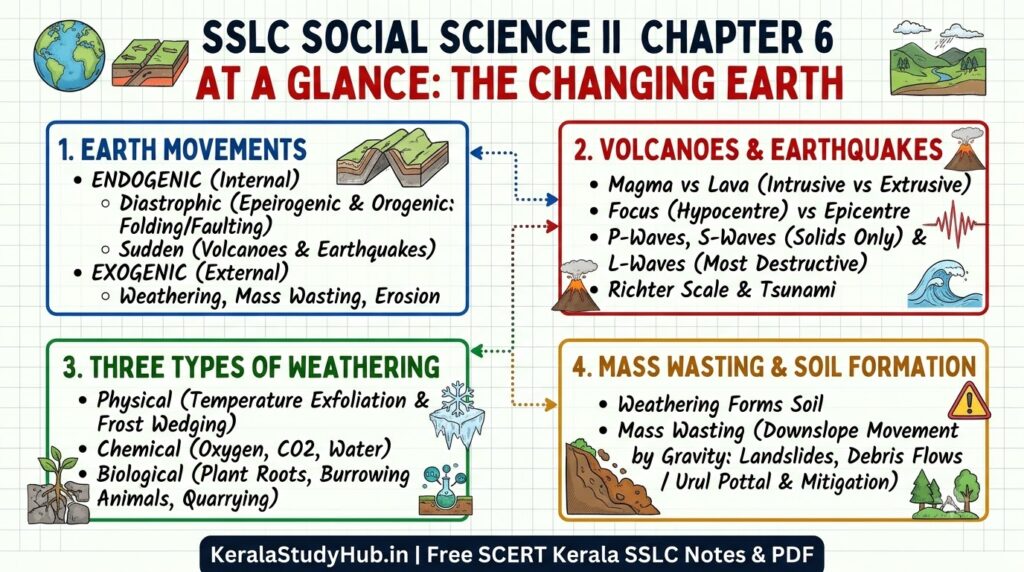
CHAPTER 6 AT A GLANCE: CLASS 10 SOCIAL SCIENCE II (GEOMORPHOLOGY) BLUEPRINT
- 2 Types of Earth Movements: Endogenic Movements (originate inside the Earth due to mantle convection/radioactivity — build up landforms) vs Exogenic Movements (operate on the Earth’s surface via Weathering, Mass Wasting & Erosion — wear down landforms).
- Endogenic Classification: (1) Diastrophic (Slow) Movements: Epeirogenic (Continent-building vertical movements) & Orogenic (Mountain-building horizontal movements: Folding & Faulting); (2) Sudden Movements: Volcanoes & Earthquakes.
- Volcanoes & Earthquakes: Intrusive (magma solidifies inside crust) vs Extrusive (lava erupts on surface via Vent & Crater). Earthquake origin = Focus (Hypocentre); surface point above = Epicentre. Seismic waves: P-Waves, S-Waves, and Surface Waves (L-Waves — most destructive!).
- 3 Types of Weathering: (1) Physical / Mechanical (Temperature changes & Frost Action), (2) Chemical (Oxygen, Carbon dioxide, Water), and (3) Biological (Plant roots, burrowing animals, human activities).
1. Earth Movements: Endogenic Movements (Diastrophic & Sudden) vs Exogenic Movements
The diverse relief features (mountains, plateaus, plains, valleys, and trenches) on the Earth’s surface are created and continuously modified by Earth Movements (ഭൗമചലനങ്ങൾ), classified into two broad groups based on the source of the force:
| Category & Sub-Type | Driving Forces & Resulting Landforms |
|---|---|
| 1A. Endogenic — Diastrophic (Slow) Movements (രൂപാന്തര ചലനങ്ങൾ) | Driven by internal heat, radioactivity, and plate tectonics: • Epeirogenic Movements (ഭൂഖണ്ഡ രൂപീകരണ ചലനങ്ങൾ): Slow vertical (upward/upliftment or downward/subsidence) movements that raise or submerge large continental areas. • Orogenic Movements (പർവ്വത രൂപീകരണ ചലനങ്ങൾ): Horizontal movements acting tangentially on the crust—causing Folding (compressional forces forming Fold Mountains like the Himalayas and Alps) and Faulting (tensional forces creating Block Mountains and Rift Valleys). |
| 1B. Endogenic — Sudden Movements (പെട്ടെന്നുള്ള ചലനങ്ങൾ) | Rapid, violent release of internal energy along plate boundaries causing Volcanic Eruptions (അഗ്നിപർവ്വത സ്ഫോടനങ്ങൾ) and Earthquakes (ഭൂകമ്പങ്ങൾ). |
| 2. Exogenic (External) Movements (ബാഹ്യ ചലനങ്ങൾ) | Operate on the surface of the Earth through Weathering (അപക്ഷയം), Mass Wasting (ബൃഹത് സഞ്ചലനം), and Erosion & Deposition by running water (rivers), wind, glaciers, groundwater, and sea waves. |
2. Volcanoes, Earthquakes & Tsunamis: Causes, Waves & Disaster Preparedness
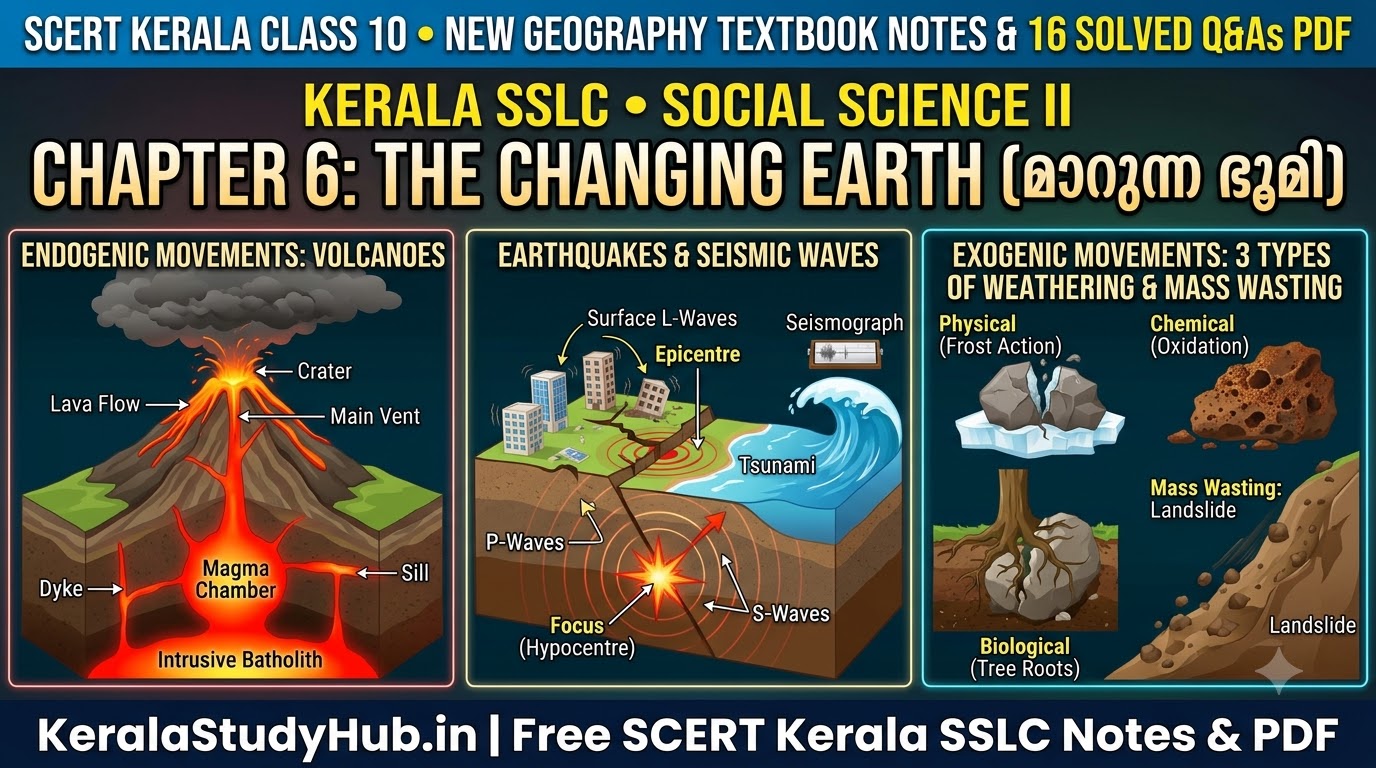
- Volcanoes (അഗ്നിപർവ്വതങ്ങൾ): A volcano is a vent or fissure in the Earth’s crust through which molten rock (Magma inside the crust; called Lava once it reaches the surface), volcanic ash, pyroclastic debris, steam, and gases (sulphur dioxide, carbon dioxide) erupt.
• Crater: The bowl-shaped depression at the top of the volcano surrounding the main vent.
• Intrusive vs Extrusive Vulcanicity: When rising magma cools and solidifies inside the layers of the Earth’s crust without reaching the surface, it forms Intrusive Landforms (batholiths, laccoliths, sills, dykes). When magma erupts onto the surface as lava, it forms Extrusive Landforms (volcanic cones and lava plateaus like the Deccan Plateau).
• Why People Live Near Volcanoes (Beneficial Effects): Weathering of volcanic lava produces extremely fertile Black Soil (Regur soil) ideal for cotton and sugarcane; volcanic eruptions bring valuable metallic minerals to the surface; volcanic ash enriches soil fertility; and Geysers and Hot Springs in volcanic zones are used to generate Geothermal Energy and attract medical/eco-tourism. - Earthquakes (ഭൂകമ്പങ്ങൾ) & 3 Types of Seismic Waves:
- Focus (Hypocentre) vs Epicentre: The point deep inside the Earth where the energy is released and the earthquake originates is the Focus (Hypocentre). The point on the Earth’s surface vertically above the focus—where seismic waves reach first and cause maximum impact—is the Epicentre (പ്രഭവകേന്ദ്രം).
- Primary Waves (P-Waves): Fastest longitudinal (compressional) waves that reach the surface first; can travel through solid, liquid, and gaseous media.
- Secondary Waves (S-Waves): Transverse (shear) waves that arrive after P-waves; can travel ONLY through solid media (cannot pass through the liquid outer core!).
- Surface Waves (L-Waves): High-amplitude waves that travel along the Earth’s surface; they are the most destructive seismic waves, collapsing buildings, bridges, and dams.
- Measurement: Seismic waves are recorded by a Seismograph, and the magnitude (energy released) of an earthquake is measured on the Richter Scale.
- Tsunami (സുനാമി): Giant, high-velocity sea waves triggered by powerful underwater earthquakes (usually exceeding
7.0on the Richter Scale), submarine volcanic eruptions, or underwater landslides. Safety Measures: If the sea suddenly recedes unusually far from the shore or an earthquake tremor is felt along the coast, move immediately to higher ground inland and follow official tsunami warnings.
3. Weathering (Physical, Chemical & Biological) and Mass Wasting (അപക്ഷയവും ബൃഹത് സഞ്ചലനവും)
Weathering (അപക്ഷയം) is the mechanical disintegration (breaking up) or chemical decomposition (decay) of rocks in situ (at their original place) due to atmospheric and biological agents.
| Type of Weathering | Agents & How It Disintegrates Rocks (4-Mark Exam Table!) |
|---|---|
| 1. Physical / Mechanical Weathering (ഭൗതിക അപക്ഷയം) | • Temperature Changes (Thermal Expansion & Contraction): In hot deserts and rocky regions, rocks expand due to intense daytime heat and contract at night. Repeated expansion and contraction peel off the outer rock layers like onion skins (Exfoliation) and shatter the rock. • Frost Action (Frost Wedging): In cold regions, water seeps into rock crevices during the day. At night, when it freezes into ice, its volume expands by ~9%, exerting tremendous pressure that wedges and splits the rock apart. |
| 2. Chemical Weathering (രാസ അപക്ഷയം) | Atmospheric gases and water react chemically with rock minerals, altering their chemical composition: • Oxygen (Oxidation): Reacts with iron-bearing rocks, rusting and weakening them. • Carbon Dioxide (Carbonation): Rainwater absorbs CO2 to form weak carbonic acid, which dissolves limestone rocks.• Water (Solution & Hydration): Dissolves rock-forming soluble minerals. |
| 3. Biological Weathering (ജൈവിക അപക്ഷയം) | • Plants: Growing roots of trees penetrate deep into rock cracks, widen them, and break the rocks apart. • Animals: Burrowing animals (rats, rabbits, termites, earthworms) loosen and expose rock surfaces to air and water. • Human Activities: Unscientific quarrying, mining, blasting, deforestation, and hill-cutting for road/building construction accelerate rock disintegration. |
Mass Wasting (ബൃഹത് സഞ്ചലനം): The downward movement of weathered rock debris, mud, and soil along a mountain slope under the direct pull of Gravity is called Mass Wasting. It ranges from very slow movements (Soil Creep) to sudden, catastrophic movements such as Landslides, Rockfalls, Mudflows, and Debris Flows (Urul Pottal / ഉരുൾപൊട്ടൽ in the Western Ghats of Kerala).
4. Complete SCERT Textbook “Let Us Assess” Solutions + 16 Extra Exam Questions & Answers
Part A: SCERT Textbook “Let Us Assess” Questions and Answers (All Solved)
Q1. (Textbook) Why does the Earth’s surface have so many ups and downs? Differentiate between Endogenic and Exogenic movements.
Answer: The diverse ups and downs (mountains, plateaus, plains, valleys) on the Earth’s crust are caused by continuous Earth Movements.
• Endogenic Movements: Originate inside the Earth due to internal heat, radioactivity, and mantle convection currents (e.g., mountain building, earthquakes, volcanic eruptions). They are constructive forces that create relief features and elevations.
• Exogenic Movements: Operate on the surface of the Earth through external agents like solar heat, gravity, rivers, wind, glaciers, and waves (e.g., weathering, mass wasting, erosion). They wear down and level the elevations created by endogenic forces.
Q2. (Textbook) How are Endogenic Movements classified? Explain Diastrophic and Sudden movements with examples.
Answer: Endogenic movements are classified into two:
1. Diastrophic (Slow) Movements: Move very slowly over millions of years. They include (a) Epeirogenic (Continent-building) movements causing vertical uplift or subsidence of continents, and (b) Orogenic (Mountain-building) movements causing horizontal folding (Fold Mountains like the Himalayas) and faulting (Block Mountains and Rift Valleys).
2. Sudden Movements: Occur abruptly and cause instant destruction and landform changes—namely Volcanic Eruptions and Earthquakes.
Q3. (Textbook) “Volcanic eruptions are destructive, yet volcanoes are useful to human beings in many ways.” Substantiate the statement.
Answer: Although volcanic eruptions destroy life, settlements, and forests, volcanoes benefit humanity in several ways:
1. The weathering of solidified lava (basalt) forms highly fertile Black Soil (Regur soil), ideal for growing cotton and sugarcane.
2. Volcanic ash acts as a natural mineral fertilizer that enriches surrounding agricultural lands.
3. Valuable metallic minerals (gold, copper, nickel, diamonds) are brought close to the Earth’s surface.
4. Geysers and Hot Springs formed in volcanic regions are harnessed to generate clean Geothermal Energy and serve as therapeutic health spas and tourist centres.
Q4. (Textbook) Explain the three types of Weathering and how Weathering is beneficial to the biosphere.
Answer:
1. Physical (Mechanical) Weathering: Disintegration of rocks without chemical change due to temperature variations (expansion/contraction) and frost wedging.
2. Chemical Weathering: Decomposition of rocks due to chemical reactions with oxygen (oxidation), carbon dioxide (carbonation), and water.
3. Biological Weathering: Breaking up of rocks by penetrating plant roots, burrowing animals, and human activities (quarrying/mining).
Benefits of Weathering: Weathering breaks down parent rocks into fine regolith, which is the primary step in Soil Formation (Pedogenesis); it releases essential minerals (potassium, phosphorus, calcium, iron) into the soil for plant growth, increases rock porosity to aid groundwater recharge, and makes mineral extraction easier.
Q5. (Textbook) What is Mass Wasting? Why have landslides and debris flows (Urul Pottal) become frequent in the Western Ghats of Kerala, and how can we mitigate them?
Answer: Mass Wasting is the rapid or slow downslope movement of weathered rock debris and soil under the direct force of gravity.
Causes in Kerala’s Western Ghats: Steep hill slopes combined with extreme cloudbursts/intense monsoon rainfall, unscientific hill-cutting for roads and multi-storey buildings, rampant rock quarrying in ecologically fragile zones, deforestation, and blocking of natural mountain streams.
Mitigation & Preparedness: Strictly ban unscientific quarrying and construction on steep slopes (`> 30°`), preserve natural forest cover and deep-rooted native trees, maintain natural drainage channels, use early warning systems (IMD/KSDMA alerts), and relocate families from landslide-prone red zones during heavy rains.
Part B: Extra Sure-Shot Board Exam Questions and Answers (Q6 to Q16)
Q6. Distinguish between Epeirogenic Movements and Orogenic Movements.
Answer: Epeirogenic movements are slow vertical (upward or downward) movements of the Earth’s crust that uplift or subside large continental landmasses (Continent-building movements). Orogenic movements are slow horizontal (compressional or tensional) movements that fold or fault crustal rocks to form mountains (Mountain-building movements).
Q7. Differentiate between Magma and Lava, and between Intrusive and Extrusive Igneous Rocks.
Answer: Molten rock material while still inside the interior of the Earth is called Magma; when it erupts onto the Earth’s surface and loses its gases, it is called Lava. When magma cools and solidifies beneath the surface inside the crust, it forms Intrusive Igneous Rocks (e.g., Granite); when lava cools on the surface, it forms Extrusive Igneous Rocks (e.g., Basalt).
Q8. What is a Volcanic Crater and a Caldera?
Answer: A Crater is the funnel- or bowl-shaped depression at the mouth of a volcano surrounding the main vent. If a violent eruption blows off the top of the cone or the magma chamber collapses inward, a much larger depression called a Caldera is formed (which often fills with water to form a Crater Lake).
Q9. Distinguish between the “Focus (Hypocentre)” and the “Epicentre” of an Earthquake.
Answer: The Focus (Hypocentre) is the exact point deep inside the Earth’s lithosphere where the rock ruptures and seismic energy is first released. The Epicentre is the point on the Earth’s surface located vertically (at a 90° angle) above the focus, where the earthquake waves arrive first and cause the severest shaking.
Q10. Compare Primary Waves (P-Waves), Secondary Waves (S-Waves), and Surface Waves (L-Waves).
Answer: (1) P-Waves: Fastest longitudinal waves; first to reach the epicentre; can travel through solids, liquids, and gases.
(2) S-Waves: Transverse waves; arrive after P-waves; can travel only through solids.
(3) Surface Waves (L-Waves): Travel along the Earth’s outer surface; slowest but have the highest amplitude and cause the greatest destruction.
Q11. Name the instrument used to record seismic waves and the scale used to measure the magnitude of an earthquake.
Answer: Instrument: Seismograph | Scale for Magnitude: Richter Scale (while the intensity of damage is measured on the Mercalli Scale).
Q12. How does “Frost Action” cause physical weathering of rocks in cold climates?
Answer: In cold and mountainous regions, water enters small cracks and joints of rocks during the daytime. At night, when the temperature drops below freezing (0 °C), the water freezes into ice and expands in volume by about 9%. This expansion exerts immense outward pressure on the walls of the cracks, widening them repeatedly until the rock splits apart.
Q13. What is “Exfoliation” (Onion-peeling weathering)?
Answer: In arid and semi-arid regions with a high diurnal range of temperature, the outer layers of exposed rocks expand rapidly during hot days and contract rapidly during cold nights. Because rock is a poor conductor of heat, stresses build up between the outer layer and the inner core, causing the outer rock sheets to peel off layer by layer like an onion—known as Exfoliation.
Q14. How do Oxidation and Carbonation cause chemical weathering?
Answer: In Oxidation, atmospheric oxygen dissolved in rainwater reacts with iron-bearing minerals in rocks, forming iron oxide (rust) that weakens and crumbles the rock. In Carbonation, atmospheric carbon dioxide dissolves in rainwater to form weak carbonic acid, which reacts with and dissolves calcium carbonate in limestone rocks (forming karst caves).
Q15. What precautionary steps should students and citizens take during an Earthquake?
Answer: (1) Follow the “Drop, Cover, and Hold On” rule—take shelter under a sturdy desk or table away from glass windows and heavy cupboards; (2) Never use elevators/lifts during an earthquake; (3) If outdoors, move to an open area away from buildings, trees, and electric poles; (4) Switch off gas and main electricity switches once shaking stops.
Q16. Distinguish between Weathering and Erosion.
Answer: Weathering is a static process involving the disintegration and decomposition of rocks in situ (at their original place without transportation). Erosion is a dynamic mobile process involving the wearing away and transportation of weathered rock debris from one place to another by moving agents like rivers, wind, glaciers, and waves.
പത്താം ക്ലാസ് സാമൂഹ്യശാസ്ത്രം II അദ്ധ്യായം 6: മാറുന്ന ഭൂമി (മലയാളം മീഡിയം നോട്ടുകൾ)
- ഭൗമചലനങ്ങൾ (Earth Movements): രണ്ട് തരം — (1) ആന്തരിക ചലനങ്ങൾ (Endogenic Movements): ഭൂമിയുടെ ഉള്ളിൽ നിന്നുള്ള ബലങ്ങൾ മൂലം ഉണ്ടാകുന്നവ. ഇവയെ രൂപാന്തര ചലനങ്ങൾ (Diastrophic / സാവധാനത്തിലുള്ള ചലനങ്ങൾ: ഭൂഖണ്ഡ രൂപീകരണ ചലനങ്ങളും പർവ്വത രൂപീകരണ ചലനങ്ങളും) എന്നും പെട്ടെന്നുള്ള ചലനങ്ങൾ (Sudden Movements: അഗ്നിപർവ്വത സ്ഫോടനങ്ങൾ, ഭൂകമ്പങ്ങൾ) എന്നും തരംതിരിക്കുന്നു. (2) ബാഹ്യ ചലനങ്ങൾ (Exogenic Movements): ഭൂമിയുടെ ഉപരിതലത്തിൽ നടക്കുന്ന അപക്ഷയം (Weathering), ബൃഹത് സഞ്ചലനം (Mass Wasting), അപരദനം (Erosion).
- ഭൂകമ്പ തരംഗങ്ങളും സുനാമിയും: ഭൂകമ്പം ഉത്ഭവിക്കുന്ന ഭൂമിക്കടിയിലെ കേന്ദ്രം ഫോക്കസ് (ഹൈപ്പോസെന്റർ) എന്നും അതിന് തൊട്ടുമുകളിലുള്ള ഭൗമോപരിതല കേന്ദ്രം പ്രഭവകേന്ദ്രം (Epicentre) എന്നും അറിയപ്പെടുന്നു. 3 തരം ഭൂകമ്പ തരംഗങ്ങൾ: പ്രാഥമിക തരംഗങ്ങൾ (P-Waves), ദ്വിതീയ തരംഗങ്ങൾ (S-Waves — ഖരമാധ്യമത്തിലൂടെ മാത്രം സഞ്ചരിക്കുന്നു), ഉപരിതല തരംഗങ്ങൾ (L-Waves — ഏറ്റവും കൂടുതൽ നാശനഷ്ടം ഉണ്ടാക്കുന്നു). ഭൂകമ്പ തീവ്രത അളക്കുന്ന തോത്: റിക്ടർ സ്കെയിൽ (ഉപകരണം: സീസ്മോഗ്രാഫ്).
- അപക്ഷയവും (Weathering) 3 വിഭാഗങ്ങളും: (1) ഭൗതിക അപക്ഷയം (താപനിലയിലെ വ്യതിയാനം, മഞ്ഞുറയൽ / Frost action), (2) രാസ അപക്ഷയം (ഓക്സിജൻ, കാർബൺ ഡൈ ഓക്സൈഡ്, ജലം), (3) ജൈവിക അപക്ഷയം (സസ്യങ്ങളുടെ വേരുകൾ, മാളങ്ങളുണ്ടാക്കുന്ന ജീവികൾ, മനുഷ്യന്റെ ഖനന പ്രവർത്തനങ്ങൾ). ഗുരുത്വാകർഷണ ബലത്താൽ ശിലാവശിഷ്ടങ്ങളും മണ്ണും കുന്നിൻചരിവുകളിലൂടെ താഴേക്ക് പതിക്കുന്നതാണ് ബൃഹത് സഞ്ചലനം (Mass Wasting — ഉരുൾപൊട്ടൽ, മണ്ണിടിച്ചിൽ).
Teacher’s Classroom Note & Student Discussion Question:
Dear SSLC Students, make sure you can clearly distinguish between Endogenic vs Exogenic movements and explain the 3 types of Weathering with examples — both are top-scoring questions in SSLC Geography! Quick Question for You: Which seismic wave can travel ONLY through solid media, and which seismic wave causes the maximum destruction on the Earth’s surface? Write your answer in the comments below!


Latest SCERT & DHSE Kerala Study Notes
- Kerala Class 9 Physics Chapter 2 Notes: Equations of Motion (ചലനസമവാക്യങ്ങൾ) Std 9 Let Us Assess Questions and Answers PDF
- Kerala SSLC Christmas Exam Question Paper 2025-27: All Subjects Second Term & Model Question Papers with Solved Answer Keys PDF (New SCERT Syllabus)
- Kerala SSLC English Christmas Exam Question Paper 2025-27: Second Term & Model Solved 80-Mark Answer Key, Discourses & Grammar PDF
- Kerala SSLC Social Science Christmas Exam Question Paper 2025-27: Second Term & Model Solved 80-Mark Answer Key, Weightage & Map Study PDF
- Kerala SSLC Maths Christmas Exam Question Paper 2025-27: Second Term & Model Solved Answer Key, Weightage & Formula Sheet PDF (New SCERT Syllabus)
- Kerala SSLC Biology Christmas Exam Question Paper 2025-27: Second Term & Model Solved Answer Key, Weightage & Flowcharts PDF (New SCERT Syllabus)
- Kerala SSLC Chemistry Christmas Exam Question Paper 2025-27: Second Term & Model Solved Answer Key, Weightage & Sure A+ Questions PDF (New SCERT Syllabus)
- Kerala SSLC Physics Christmas Exam Question Paper 2025-27: Second Term & Model Solved Answer Key, Weightage & Formula Sheet PDF (New SCERT Syllabus)
