
Kerala SSLC Social Science 2 Chapter 8 Notes on Towards Sustainability (Malayalam Medium: സുസ്ഥിരതയിലേക്ക്) welcome you to the eighth and final unit of the newly revised Class 10 (Std 10) Social Science II (Geography) textbook published by the State Council of Educational Research and Training (SCERT Kerala). In my classroom, I always introduce this concluding chapter by reminding students of Mahatma Gandhi’s timeless words: “The Earth provides enough to satisfy every man’s need, but not every man’s greed.” How do we classify our planet’s resources, minerals, and energy sources, and how can we transition from exhausting fossil fuels to Sustainable Development?
- 1. What Is a Resource? Complete Classification of Resources (വിഭവങ്ങളുടെ വർഗ്ഗീകരണം)
- 2. Classification of Minerals & Energy Resources (ധാതുക്കളും ഊർജ്ജ സ്രോതസ്സുകളും)
- 3. Complete SCERT Textbook “Let Us Assess” Solutions + 16 Extra Exam Questions & Answers
- Part A: SCERT Textbook “Let Us Assess” Questions and Answers (All Solved)
- Part B: Extra Sure-Shot Board Exam Questions and Answers (Q7 to Q16)
Prepared strictly for the Kerala Pareeksha Bhavan SSLC Public Examination, this complete classroom guide covers Resource Classification (Biotic/Abiotic, Renewable/Non-Renewable, Potential, Developed, Stock & Reserves), Metallic (Ferrous vs Non-Ferrous) & Non-Metallic Minerals, Conventional vs Non-Conventional Energy Sources, and 16 Full Solved Textbook + Extra Exam Questions and Answers.
Quick SSLC Social Science II Navigation: SSLC Social Science II All 8 Chapters Master Hub | Chapter 6: The Changing Earth | Chapter 7: Indian Economy: Growth and Transformation | SSLC Social Science I (History) All 9 Chapters Hub.
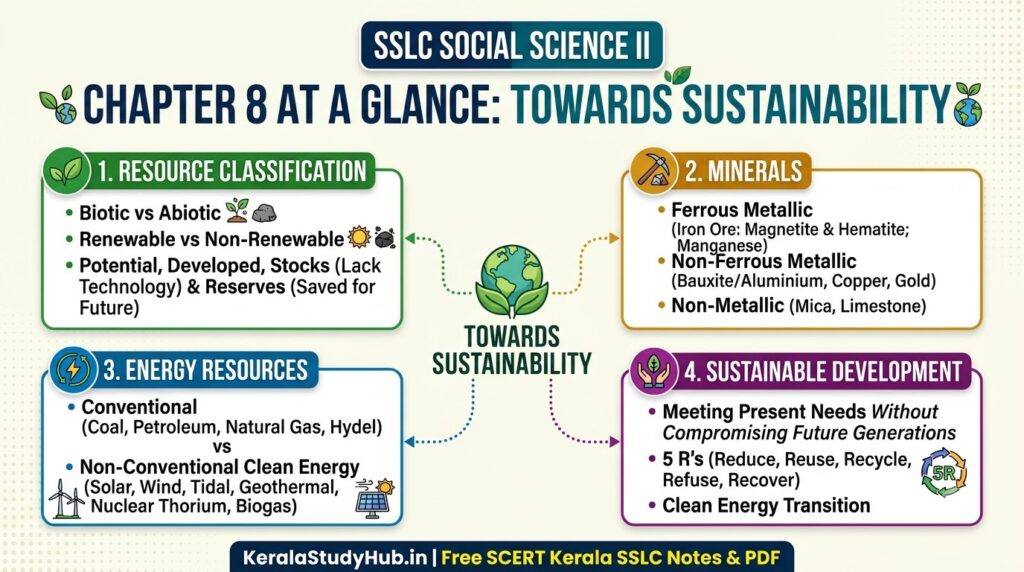
CHAPTER 8 AT A GLANCE: CLASS 10 SOCIAL SCIENCE II (RESOURCES & SUSTAINABILITY) BLUEPRINT
- Classification of Resources: (1) Origin: Biotic vs Abiotic; (2) Renewability: Renewable vs Non-Renewable; (3) Stage of Development: Potential Resources, Developed Resources, Stocks (lack technology to use now, e.g.,
H2fromH2O), and Reserves (saved for future use). - Classification of Minerals: Metallic: Ferrous (contain iron: Iron Ore, Manganese, Chromite) vs Non-Ferrous (no iron: Bauxite/Aluminium, Copper, Gold, Lead, Zinc) | Non-Metallic: Mica, Limestone, Gypsum.
- Energy Resources: Conventional (Mostly Non-Renewable Fossil Fuels): Coal, Petroleum, Natural Gas, Firewood, Hydel power vs Non-Conventional (Clean & Renewable): Solar, Wind, Tidal, Geothermal, Biogas, Nuclear, and Green Hydrogen.
- Sustainable Development: Meeting the needs of the present generation without compromising the ability of future generations to meet their own needs.
1. What Is a Resource? Complete Classification of Resources (വിഭവങ്ങളുടെ വർഗ്ഗീകരണം)
Anything available in our environment that can be used to satisfy human needs—provided it is technologically accessible, economically feasible, and culturally acceptable—is called a Resource (വിഭവം). Gifts of nature become usable resources only through human knowledge, skill, and technology.
| Basis of Classification | Types, Definitions & Textbook Examples |
|---|---|
| 1. Based on Origin (ഉത്ഭവത്തിന്റെ അടിസ്ഥാനത്തിൽ) | • Biotic Resources (ജൈവ വിഭവങ്ങൾ): Obtained from the biosphere and have life (e.g., human beings, flora/forests, fauna/wildlife, fisheries, livestock). • Abiotic Resources (അജൈവ വിഭവങ്ങൾ): Composed of non-living things (e.g., rocks, soil, water, air, minerals, and metals). |
| 2. Based on Replenishment / Renewability (പുനഃസ്ഥാപന ശേഷി) | • Renewable Resources (പുനഃസ്ഥാപിക്കാൻ കഴിയുന്നവ): Can be renewed or reproduced by physical, chemical, or mechanical processes within a short time (e.g., solar energy, wind energy, water, forests, wildlife). • Non-Renewable Resources (പുനഃസ്ഥാപിക്കാൻ കഴിയാത്തവ): Occur over millions of geological years and get exhausted with use (e.g., fossil fuels like Coal and Petroleum, and minerals like Iron ore and Bauxite). Note: Metals are recyclable, whereas fossil fuels cannot be recycled! |
| 3. Based on Stage of Development (വികസന ഘട്ടത്തിന്റെ അടിസ്ഥാനത്തിൽ — 4-Mark Question!) | • Potential Resources (സാധ്യതാ വിഭവങ്ങൾ): Resources found in a region whose full potential has not yet been utilized due to high cost or lack of infrastructure (e.g., enormous wind and solar energy potential in Rajasthan and Gujarat). • Developed Resources (വികസിത വിഭവങ്ങൾ): Resources that have been surveyed, their quantity and quality determined, and are currently being utilized with available technology (e.g., coal mines in Jharia, oilfields in Mumbai High). • Stocks (ശേഖരങ്ങൾ): Materials in the environment that have the potential to satisfy human needs, but human beings currently do not have the required technology to access and utilize them (e.g., water H2O is a compound of two inflammable gases, Hydrogen and Oxygen; Hydrogen is a rich source of energy, but we lack cheap mass technology to extract it as fuel).• Reserves (കരുതൽ ശേഖരങ്ങൾ): A subset of stock that can be used with existing technical know-how, but their utilization has been intentionally kept in reserve for meeting future needs (e.g., water stored in dams, protected forest reserves). |
2. Classification of Minerals & Energy Resources (ധാതുക്കളും ഊർജ്ജ സ്രോതസ്സുകളും)
| Category of Mineral / Energy | Examples & Industrial Uses |
|---|---|
| 1A. Metallic — Ferrous Minerals (ഇരുമ്പയിര് അടങ്ങിയ ലോഹധാതുക്കൾ) | Minerals containing iron: Iron Ore (Magnetite — highest iron content up to 70% with magnetic properties; Hematite — most important industrial iron ore), Manganese (used to manufacture steel and ferro-manganese alloys), Chromite, and Nickel. Form the backbone of metallurgical industries. |
| 1B. Metallic — Non-Ferrous Minerals (ഇരുമ്പേതര ലോഹധാതുക്കൾ) | Metallic minerals that do not contain iron: Bauxite (ore of Aluminium — light, malleable, good conductor used in aircraft and utensils), Copper (malleable, ductile electrical conductor used in cables and electronics), Gold, Silver, Lead, Tin, and Zinc. |
| 2. Non-Metallic Minerals (അലോഹ ധാതുക്കൾ) | Do not contain extractable metals: Mica (splits into thin sheets, high dielectric strength — indispensable in electrical and electronic industries), Limestone (essential raw material for the cement industry and smelting iron ore), Gypsum, Dolomite, and Potash. |
| 3. Conventional Energy Resources (പാരമ്പര്യ ഊർജ്ജ സ്രോതസ്സുകൾ) | Traditional energy sources in use for a long time (mostly exhaustible fossil fuels): Coal (4 grades: Anthracite [highest quality], Bituminous, Lignite, Peat), Petroleum (crude oil), Natural Gas, Firewood, Cattle dung cake, and Hydroelectric Power. |
| 4. Non-Conventional Energy Resources (പാരമ്പര്യേതര ഊർജ്ജ സ്രോതസ്സുകൾ) | Clean, eco-friendly, inexhaustible modern energy sources: Solar Energy (photovoltaic cells), Wind Energy, Tidal & Wave Energy, Geothermal Energy (heat from Earth’s interior: Puga Valley in Ladakh & Manikaran in HP), Biogas / Biomass, Nuclear/Atomic Energy (Uranium & Thorium found in Monazite sands of Kerala), and Green Hydrogen. |
3. Complete SCERT Textbook “Let Us Assess” Solutions + 16 Extra Exam Questions & Answers
Part A: SCERT Textbook “Let Us Assess” Questions and Answers (All Solved)
Q1. (Textbook) What is the distinction between Biotic and Abiotic resources, and what role do humans play in the formation of resources?
Answer: Biotic Resources are living resources obtained from the biosphere (such as forests, wildlife, fishes, livestock, and human beings), whereas Abiotic Resources are non-living physical substances (such as land, water, air, rocks, and metallic/non-metallic minerals).
Role of Humans: Materials in nature remain neutral stuff until human beings interact with nature through technology, scientific knowledge, and institutions to convert them into useful resources. Hence, humans are the creators as well as consumers of resources.
Q2. (Textbook) In what ways can “Potential Resources” and “Stocks” evolve into “Developed Resources”, and what challenges are involved?
Answer: Potential Resources (like untapped solar/wind energy) and Stocks (materials like Hydrogen in water for which we currently lack cheap commercial technology) can evolve into Developed Resources through: (1) Breakthroughs in scientific research and engineering technology; (2) Geological surveys and mapping; (3) Large-scale capital investment in infrastructure (such as solar parks, smart power grids, and green-hydrogen electrolyzers); and (4) Skilled human resources. The main challenges are high initial capital cost, technological complexity, and ensuring minimal environmental impact.
Q3. (Textbook) Discuss the importance of classifying metallic minerals into Ferrous and Non-Ferrous categories and their industrial applications.
Answer: Classifying metallic minerals into Ferrous and Non-Ferrous helps industries select the right raw materials based on strength, weight, conductivity, and corrosion resistance:
• Ferrous Minerals (Iron ore, Manganese, Chromite): Provide high tensile strength and durability, forming the foundation for heavy engineering, construction, railways, shipbuilding, and machinery.
• Non-Ferrous Minerals (Bauxite/Aluminium, Copper, Gold, Zinc): Provide lightweight strength, malleability, and high electrical conductivity, making them indispensable in electrical cables, electronics, aircraft manufacturing, and telecommunications.
Q4. (Textbook) Evaluate the role of Fossil Fuels in modern society and the consequences of their over-exploitation.
Answer: Fossil fuels (Coal, Petroleum, and Natural Gas) power thermal electricity generation, transportation, petrochemicals, fertilizers, and heavy industries. However, because they are non-renewable and take millions of years to form, rapid over-exploitation is leading to their imminent exhaustion, severe air pollution, acid rain, greenhouse gas emissions, and catastrophic Global Warming.
Q5. (Textbook) What are the key differences between Conventional and Non-Conventional energy resources, and how does shifting to Non-Conventional energy promote sustainability?
Answer:
• Conventional Energy Resources (Coal, Petroleum, Natural Gas, Firewood): Traditional sources that are mostly exhaustible (except hydel power), cause heavy carbon emissions and environmental pollution, and require high fuel-extraction costs.
• Non-Conventional Energy Resources (Solar, Wind, Tidal, Geothermal, Biogas): Modern, renewable, inexhaustible, and pollution-free clean energy sources.
Shifting to non-conventional energy conserves finite fossil fuels for future generations, reduces greenhouse gas emissions, lowers oil import bills, and ensures long-term energy security and Sustainable Development.
Q6. (Textbook) Define “Sustainable Development” and list practical measures for Resource Conservation.
Answer: Sustainable Development is economic development that meets the needs of the present generation without compromising the ability of future generations to meet their own needs, while protecting the environment.
Resource Conservation Measures: (1) Practicing the 5 R’s (Reduce, Reuse, Recycle, Refuse, Recover); (2) Transitioning to solar, wind, and electric mobility; (3) Recycling scrap metals (iron, aluminium, copper); (4) Rainwater harvesting, watershed management, and afforestation; and (5) Avoiding wasteful consumption of electricity, water, and food.
Part B: Extra Sure-Shot Board Exam Questions and Answers (Q7 to Q16)
Q7. Distinguish between Renewable Resources and Non-Renewable Resources with examples.
Answer: Renewable Resources are inexhaustible resources that can be regenerated or replenished naturally within a short timeframe (e.g., solar energy, wind, water, forests). Non-Renewable Resources have a fixed geological stock, take millions of years to form, and get permanently depleted upon consumption (e.g., coal, petroleum, natural gas, iron ore).
Q8. Differentiate between “Stocks” and “Reserves” with examples.
Answer: Stocks are materials in nature that can potentially satisfy human wants, but humans do not yet possess the technology to utilize them economically (e.g., extracting Hydrogen from water as a mass fuel). Reserves are a part of the stock that can be utilized using existing technology, but their extraction has been saved for future use (e.g., water in reservoirs, reserved forests).
Q9. Name the four varieties of Coal in descending order of carbon content and quality.
Answer: (1) Anthracite (highest quality hard coal with >80% carbon), (2) Bituminous (most widely used metallurgical coal), (3) Lignite (brown coal, e.g., Neyveli in Tamil Nadu), and (4) Peat (lowest carbon content and high moisture).
Q10. Name the two main types of Iron Ore found in India and their characteristics.
Answer: (1) Magnetite: Finest quality iron ore containing up to 70% iron with excellent magnetic qualities, highly valued in the electrical industry; (2) Hematite: Most abundant industrial iron ore in India containing 50% to 60% iron.
Q11. Which mineral is the ore of Aluminium, and why is Aluminium widely used in aircraft manufacturing?
Answer: Bauxite is the ore of Aluminium. Aluminium is widely used in aircraft and automobile manufacturing because it combines the strength of metals like iron with extreme lightness, malleability, corrosion resistance, and good conductivity.
Q12. Why is Mica indispensable in the electrical and electronic industries?
Answer: Mica is a non-metallic mineral that can be split easily into extremely thin sheets and possesses high dielectric strength, low power loss factor, insulating properties, and resistance to high voltage and heat.
Q13. Which nuclear mineral is abundantly found in the Monazite beach sands of Kerala?
Answer: Thorium (used for generating nuclear/atomic energy) is abundantly found in the Monazite sands of the Chavara coast in Kollam district, Kerala.
Q14. What is Geothermal Energy, and name two experimental geothermal sites in India?
Answer: Geothermal Energy refers to heat and electricity produced by using the internal heat of the Earth (hot springs and geysers). Two major sites in India are the Puga Valley in Ladakh and Manikaran (Parvati Valley) in Himachal Pradesh.
Q15. Why is Natural Gas considered the cleanest among fossil fuels?
Answer: Compared to coal and petroleum, Natural Gas (CNG/PNG) emits significantly less carbon dioxide and leaves no ash or particulate residue upon combustion, making it a cleaner transition fuel for power generation, fertilizer plants, and transport.
Q16. Why is India ideally suited for harnessing Solar Energy?
Answer: Being a tropical country bisected by the Tropic of Cancer, India receives abundant bright sunlight for nearly 300 days a year. Using photovoltaic (PV) technology, solar energy can be converted directly into pollution-free electricity for homes, street lighting, irrigation pumps, and industries.
പത്താം ക്ലാസ് സാമൂഹ്യശാസ്ത്രം II അദ്ധ്യായം 8: സുസ്ഥിരതയിലേക്ക് (മലയാളം മീഡിയം നോട്ടുകൾ)
- വിഭവങ്ങളുടെ വർഗ്ഗീകരണം: (1) ഉത്ഭവത്തിന്റെ അടിസ്ഥാനത്തിൽ: ജൈവ വിഭവങ്ങൾ (Biotic) & അജൈവ വിഭവങ്ങൾ (Abiotic); (2) പുനഃസ്ഥാപന ശേഷിയുടെ അടിസ്ഥാനത്തിൽ: പുനഃസ്ഥാപിക്കാൻ കഴിയുന്നവ (Renewable) & പുനഃസ്ഥാപിക്കാൻ കഴിയാത്തവ (Non-Renewable); (3) വികസന ഘട്ടത്തിന്റെ അടിസ്ഥാനത്തിൽ: സാധ്യതാ വിഭവങ്ങൾ (Potential), വികസിത വിഭവങ്ങൾ (Developed), ശേഖരങ്ങൾ (Stocks), കരുതൽ ശേഖരങ്ങൾ (Reserves).
- ധാതുക്കളുടെ വർഗ്ഗീകരണം: ലോഹ ധാതുക്കൾ രണ്ട് തരം — ഇരുമ്പയിര് അടങ്ങിയവ (Ferrous: ഇരുമ്പയിര്, മാംഗനീസ്, ക്രോമൈറ്റ്) & ഇരുമ്പേതര ലോഹങ്ങൾ (Non-Ferrous: ബോക്സൈറ്റ്/അലുമിനിയം, ചെമ്പ്, സ്വർണ്ണം, സിങ്ക്). അലോഹ ധാതുക്കൾ (Non-Metallic): മൈക്ക, ചുണ്ണാമ്പുകല്ല് (Limestone), ജിപ്സം.
- ഊർജ്ജ സ്രോതസ്സുകളും സുസ്ഥിര വികസനവും: പാരമ്പര്യ ഊർജ്ജ സ്രോതസ്സുകൾ (കൽക്കരി, പെട്രോളിയം, പ്രകൃതിവാതകം, ജലവൈദ്യുതി) vs പാരമ്പര്യേതര ഊർജ്ജ സ്രോതസ്സുകൾ (സൗരോർജ്ജം, കാറ്റിൽ നിന്നുള്ള ഊർജ്ജം, വേലിയേറ്റ ഊർജ്ജം, ഭൗമതാപ ഊർജ്ജം, ആണവോർജ്ജം, ബയോഗ്യാസ്). വരുംതലമുറയുടെ ആവശ്യങ്ങൾക്ക് കോട്ടം തട്ടാതെ വർത്തമാനകാല ആവശ്യങ്ങൾ നിറവേറ്റുന്ന വികസനമാണ് സുസ്ഥിര വികസനം (Sustainable Development).
Teacher’s Classroom Note & Student Discussion Question:
Dear SSLC Students, congratulations on completing all 8 chapters of the revised Class 10 Social Science II (Geography & Economics) textbook! Quick Question for You: What is the difference between “Stocks” and “Reserves” in resource classification, and which nuclear mineral is found in the Monazite sands of Kerala? Write your answer in the comments below!


Latest SCERT & DHSE Kerala Study Notes
- Kerala Class 9 Physics Chapter 2 Notes: Equations of Motion (ചലനസമവാക്യങ്ങൾ) Std 9 Let Us Assess Questions and Answers PDF
- Kerala SSLC Christmas Exam Question Paper 2025-27: All Subjects Second Term & Model Question Papers with Solved Answer Keys PDF (New SCERT Syllabus)
- Kerala SSLC English Christmas Exam Question Paper 2025-27: Second Term & Model Solved 80-Mark Answer Key, Discourses & Grammar PDF
- Kerala SSLC Social Science Christmas Exam Question Paper 2025-27: Second Term & Model Solved 80-Mark Answer Key, Weightage & Map Study PDF
- Kerala SSLC Maths Christmas Exam Question Paper 2025-27: Second Term & Model Solved Answer Key, Weightage & Formula Sheet PDF (New SCERT Syllabus)
- Kerala SSLC Biology Christmas Exam Question Paper 2025-27: Second Term & Model Solved Answer Key, Weightage & Flowcharts PDF (New SCERT Syllabus)
- Kerala SSLC Chemistry Christmas Exam Question Paper 2025-27: Second Term & Model Solved Answer Key, Weightage & Sure A+ Questions PDF (New SCERT Syllabus)
- Kerala SSLC Physics Christmas Exam Question Paper 2025-27: Second Term & Model Solved Answer Key, Weightage & Formula Sheet PDF (New SCERT Syllabus)
