

Kerala SSLC English Chapter 11 Notes on Trills and Thrills: Birdwatching in India by world-renowned ornithologist Dr. Salim Ali (1896–1987), fondly remembered as the “Birdman of India”, welcome you to the second lesson of Unit IV (Woodland Whispers) in the newly revised Class 10 (Std 10) Kerala Reader English textbook published by the State Council of Educational Research and Training (SCERT Kerala). In my classroom, when we read this delightful autobiographical essay (adapted from Dr. Salim Ali’s autobiography The Fall of a Sparrow), I ask my students: “Most people think watching birds is a quiet, sleepy hobby without any danger. Then how did Dr. Salim Ali end up crouching inside a tiny canvas ‘hide’ in the elephant-infested jungles of South India, coming face to face with rogue wild elephants and venomous cobras—and what did he mean by his famous humorous remark that ‘the birds had not read the textbooks’?”
- 1. Detailed Section-by-Section Summary (English & Malayalam)
- 2. Biographical Profile of Dr. Salim Ali & Solved Exam Discourses
- Biographical Profile & Character Sketch of Dr. Salim Ali (6 Marks)
- Discourse 1: Memorial Speech Honouring Dr. Salim Ali (“Birdman of India”) and Induchoodan / K.K. Neelakantan (“Birdman of Kerala”) (6 Marks)
- Discourse 2: Diary Entry of Dr. Salim Ali After a Narrow Escape from a Wild Elephant in a South Indian Jungle (5 Marks)
- 3. Complete Textbook Solutions & Extra Exam Questions (16 Fully Solved Q&As)
Prepared strictly for the Kerala Pareeksha Bhavan SSLC Public Examination, this complete classroom guide covers the Detailed Essay Summary (English & Malayalam), Biographical Profile & Character Sketch of Dr. Salim Ali, Meaning of “Trills” and “Thrills” in Ornithology, Solved Discourses (Memorial Lecture on Induchoodan / K.K. Neelakantan & Dr. Salim Ali, Bird Sanctuary Travelogue & Diary Entry), and 16 Solved Textbook & Exam Questions and Answers.
Quick SSLC English Navigation: SSLC English All 15 Chapters Master Hub | Previous: Chapter 10: Shākuntalam (Kālidāsa) | Next: Chapter 12: The Wild Swans at Coole (W.B. Yeats).
CHAPTER 11 AT A GLANCE: TRILLS AND THRILLS: BIRDWATCHING IN INDIA (BLUEPRINT)
- Title, Author & Source: Trills and Thrills: Birdwatching in India by Dr. Salim Moizuddin Abdul Ali (1896–1987), the “Birdman of India” (excerpted from his autobiography The Fall of a Sparrow).
- Wordplay in the Title: “Trills” refers to the melodious, warbling songs and calls of birds; “Thrills” refers to the unexpected adventures, hair-raising wildlife encounters, and scientific discoveries experienced by a field ornithologist in Indian jungles.
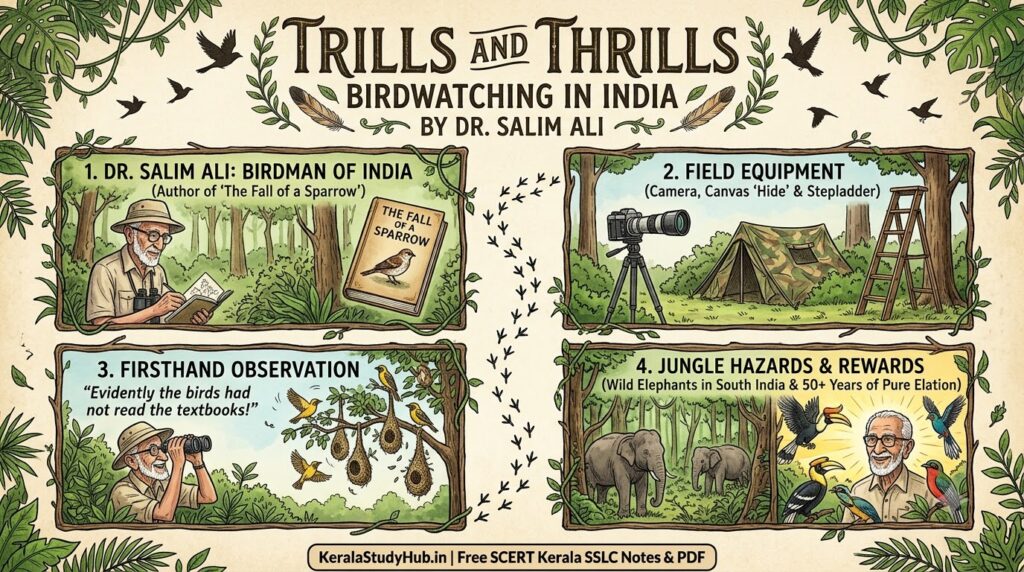
- Equipment Used in Field Bird Photography: A camera, a canvas “hide” (blind)—a small camouflaged tent used to conceal the observer near a nest—and a stepladder or machan.
- Key Anecdotes & Insights: (1) Why India is a paradise for birdwatchers (vast unexplored scope for amateur discoveries), (2) Real-life bird behaviour vs books (“The birds had not read the textbooks!”), (3) Narrow escapes from wild elephants (especially rogue elephants and mothers with calves) in the jungles of South India, and (4) Why fifty+ years of birdwatching needs no justification beyond the pure joy, peace, and elation it gives.
1. Detailed Section-by-Section Summary (English & Malayalam)
| Section of the Essay | Key Observations & Classroom Analysis |
|---|---|
| 1. A Peaceful Pursuit with Unexpected Thrills | When reporters and friends ask Dr. Salim Ali about the most hair-raising adventures of his career, he modestly admits that ornithology (the scientific study of birds) is fundamentally a peaceful, quiet pursuit. Yet, watching birds in their natural habitats across India brings its own share of genuine excitement, disappointments, rewards, and physical thrills! |
| 2. Why India Is a Birdwatcher’s Paradise & “The Birds Had Not Read the Textbooks” | India possesses one of the richest and most varied bird faunas in the world, yet so much remains unrecorded that even an ordinary amateur birdwatcher can make original scientific discoveries. Working alongside his friend Loke Wan Tho with a camera, a stepladder, and a canvas “hide” (a small tent used to conceal the photographer close to a bird’s nest), Salim Ali repeatedly noticed that real birds in the wild often behaved completely differently from what earlier manuals claimed—humourously remarking that “evidently the birds had not read the textbooks!” |
| 3. Hazards in the Wild: Rogue Elephants & Cobras in South Indian Jungles | Field ornithology in India is far from risk-free. While walking silently along narrow game trails with eyes glued to the treetops through binoculars in the dense, elephant-ridden jungles of South India (such as Kerala, Mysore, and the Western Ghats), a birdwatcher can suddenly stumble upon a solitary rogue elephant or a mother elephant with a young calf, or step close to a basking king cobra or tiger! Similarly, sitting cooped up inside a fragile canvas hide when a herd of wild elephants passes within a few yards provides all the heart-pounding “thrills” anyone could ask for. |
| 4. Growing Popularity of Birdwatching & Half a Century of Joy | Dr. Salim Ali expresses deep satisfaction that birdwatching is becoming increasingly popular among young Indians, replacing the old destructive habit of shooting birds with guns. Looking back over more than half a century (50+ years) of watching birds, he concludes that he pursued it chiefly for the pure pleasure, peace, and elation birds afforded him—a healthy form of escapism into nature that needs no other justification. |
മലയാളം സംഗ്രഹം (Malayalam Summary — “Trills and Thrills: Birdwatching in India” by Dr. Salim Ali):
‘ഇന്ത്യയുടെ പക്ഷിമനുഷ്യൻ’ (Birdman of India) എന്നറിയപ്പെടുന്ന പ്രശസ്ത പക്ഷിനിരീക്ഷകൻ ഡോ. സാലിം അലിയുടെ (Dr. Salim Ali) ‘The Fall of a Sparrow’ എന്ന ആത്മകഥയിൽ നിന്നുള്ള രസകരമായ പാഠഭാഗമാണ് ‘Trills and Thrills: Birdwatching in India’. പക്ഷിനിരീക്ഷണം (Ornithology) പൊതുവെ ശാന്തമായ ഒരു വിനോദമാണെങ്കിലും ഇന്ത്യൻ കാടുകളിലെ പക്ഷിനിരീക്ഷണം സാഹസികതയും ഉദ്വേഗവും (Thrills) നിറഞ്ഞതാണെന്ന് അദ്ദേഹം വിവരിക്കുന്നു. ക്യാമറയും മറച്ചിലയും (Hide — പക്ഷികളുടെ കൂടിനടുത്ത് ഒളിച്ചിരിക്കാനുള്ള ചെറിയ കൂടാരം) ഉപയോഗിച്ച് പക്ഷികളെ നിരീക്ഷിക്കുമ്പോൾ, പുസ്തകങ്ങളിൽ എഴുതിവെച്ചിട്ടുള്ളതിൽ നിന്നും തികച്ചും വ്യത്യസ്തമായി പക്ഷികൾ പെരുമാറുന്നത് കണ്ട് “പക്ഷികൾ പാഠപുസ്തകങ്ങൾ വായിച്ചിട്ടില്ല!” (“The birds had not read the textbooks”) എന്ന് അദ്ദേഹം നർമ്മത്തോടെ പറയുന്നു. ദക്ഷിണേന്ത്യയിലെ ആനക്കാടുകളിലൂടെ മുകളിലേക്ക് ബൈനോക്കുലറുമായി നടക്കുമ്പോൾ ഒറ്റയാനകളുടെയോ കുട്ടിയാനയുള്ള പിടിയാനകളുടെയോ മുന്നിൽ പെട്ടുപോകുന്നതാണ് ഏറ്റവും വലിയ സാഹസികത. അമ്പത് വർഷത്തിലേറെ നീണ്ട തന്റെ പക്ഷിനിരീക്ഷണ ജീവിതം തനിക്ക് നൽകിയത് പറഞ്ഞറിയിക്കാനാവാത്ത ആനന്ദവും മനസ്സമാധാനവുമാണെന്ന് ഡോ. സാലിം അലി വ്യക്തമാക്കുന്നു.
2. Biographical Profile of Dr. Salim Ali & Solved Exam Discourses
Biographical Profile & Character Sketch of Dr. Salim Ali (6 Marks)
Dr. Salim Moizuddin Abdul Ali (1896–1987), universally revered as the “Birdman of India”, was India’s greatest ornithologist and natural conservationist. Born in Mumbai on 12 November 1896, his lifelong passion for birds began in childhood when he shot a curious yellow-throated sparrow and was guided by W.S. Millard at the Bombay Natural History Society (BNHS) to study living birds instead of hunting them. He was the first Indian to conduct systematic bird surveys across the length and breadth of India. In Trills and Thrills: Birdwatching in India, Dr. Salim Ali emerges as a patient, observant, humble, and humorous scientist. He insists on firsthand field observation over blind reliance on books, wittily noting that “the birds had not read the textbooks.” Fearless in the field, he braved rogue elephants and dense jungles inside fragile canvas hides to photograph nesting birds. Author of classic works such as The Book of Indian Birds, Handbook of the Birds of India and Pakistan (with S. Dillon Ripley), and his autobiography The Fall of a Sparrow, he was honoured with the Padma Bhushan (1958) and the Padma Vibhushan (1976) before passing away on 20 June 1987.
Discourse 1: Memorial Speech Honouring Dr. Salim Ali (“Birdman of India”) and Induchoodan / K.K. Neelakantan (“Birdman of Kerala”) (6 Marks)
Respected Principal, beloved teachers, and my dear friends,
Good morning to one and all! Today, as we gather to celebrate National Birdwatching Day, it is my privilege to pay tribute to two legendary pioneers who taught us to listen to the music of the woods: Dr. Salim Ali, the Birdman of India, and Prof. K.K. Neelakantan (fondly known by his pen name Induchoodan), the Birdman of Kerala.
In his famous essay “Trills and Thrills: Birdwatching in India”, Dr. Salim Ali showed us that ornithology is not dry textbook memorization, but a living adventure in the lap of nature. Armed only with a pair of binoculars, a notebook, and a canvas hide, Dr. Salim Ali spent over half a century documenting India’s rich birdlife across elephant-ridden jungles and mountain peaks. Likewise, in Kerala, Prof. K.K. Neelakantan (Induchoodan) opened the eyes of generations of Malayalis to the beauty of our feathered neighbours through his immortal classic, Keralathile Pakshikal (Birds of Kerala).
Both great naturalists taught us that protecting birds means protecting our forests, wetlands, and the ecological balance of our planet. Let us put down our screens, step outdoors with curiosity and patience, and become guardians of nature! Thank you!
Discourse 2: Diary Entry of Dr. Salim Ali After a Narrow Escape from a Wild Elephant in a South Indian Jungle (5 Marks)
18 November, Camp in the Western Ghats
8:30 PM
People in the city often ask me if a quiet hobby like birdwatching ever offers any real excitement—I wish they had been with me in the jungle this afternoon! I was creeping silently along a narrow bamboo trail with my head tilted back and my binoculars focused on a rare Malabar Trogon perched high in the canopy. Suddenly, a loud snapping of bamboo made me freeze in my tracks. Less than twenty yards ahead stood a massive mother elephant with her young calf! For a few breathless minutes, I stood as motionless as a tree trunk while my heart pounded against my ribs, until she calmly led her calf away into the thicket. Truly, the trills of Indian birds come with unforgettable thrills!
3. Complete Textbook Solutions & Extra Exam Questions (16 Fully Solved Q&As)
Q1: What is “Ornithology”, and why does Dr. Salim Ali say his answer to people seeking “hair-raising adventures” may seem disappointing at first?
Answer: Ornithology is the scientific study of birds. Dr. Salim Ali says his answer may seem disappointing to sensation-seekers because birdwatching is fundamentally a peaceful, quiet pursuit rather than a violent blood sport like big-game hunting, though it has its own quiet rewards, disappointments, and genuine thrills in the wild.
Q2: Why does Dr. Salim Ali consider India an exciting paradise for amateur birdwatchers?
Answer: India possesses an extraordinarily rich and varied bird life spread across diverse habitats. Unlike Europe, where almost every detail of bird behaviour has already been documented, so much about Indian birds remains unknown that any observant amateur birdwatcher can make exciting new scientific discoveries.
Q3: What is a “hide” in birdwatching and wildlife photography, and how is it used?
Answer: A “hide” (or blind) is a small, camouflaged canvas tent or screen erected on the ground or on a stepladder/platform near a bird’s nest. It conceals the birdwatcher and camera inside so that shy parent birds return to their nest and behave naturally without feeling threatened by human presence.
Q4: What does Dr. Salim Ali mean by his humorous remark, “evidently the birds had not read the textbooks”?
Answer: While observing nesting birds closely from inside a canvas hide with his friend Loke Wan Tho, Salim Ali frequently noticed that the actual behaviour of birds in nature contradicted what earlier ornithological textbooks had stated as fixed rules. His witty remark means that living nature is dynamic and unpredictable, and firsthand field observation is more reliable than mere bookish knowledge.
Q5: What dangers and hazards did Dr. Salim Ali face while watching birds in the jungles of South India?
Answer: In the dense, elephant-ridden jungles of South India, walking silently along narrow forest paths while staring up into the treetops makes a birdwatcher vulnerable to sudden, close-range encounters with wild elephants—which are especially dangerous if they happen to be solitary rogue elephants or female elephants with young calves—as well as tigers, bears, and venomous snakes.
Q6: Explain the significance of the title “Trills and Thrills: Birdwatching in India”.
Answer: The title uses clever rhyme and wordplay: “Trills” refers to the sweet, warbling musical notes of birds that delight the listener’s ear, while “Thrills” refers to both the intellectual excitement of discovering new bird habits and the heart-throbbing adventures of encountering wild animals in Indian forests.
Q7: Who was Loke Wan Tho, and how did he collaborate with Dr. Salim Ali?
Answer: Loke Wan Tho was a devoted bird photographer and close friend of Dr. Salim Ali. Together, using cameras, hides, and stepladders, they spent hours observing and photographing nesting birds across India, uncovering many new facts about breeding behaviour and parental care in birds.
Q8: How does Dr. Salim Ali view the growing popularity of birdwatching in India?
Answer: Dr. Salim Ali finds the growing interest in birdwatching among the younger generation deeply refreshing and satisfying, as it shifts people away from shooting birds with guns toward observing, photographing, and conserving wildlife and habitats.
Q9: How does Dr. Salim Ali sum up his motivation for watching birds for “half a century and more”?
Answer: In the concluding lines, he states that he has watched birds for more than half a century “chiefly for the pleasure and elation they have afforded—a form of escapism maybe, but one that hardly needs justification.”
Q10: Why does Dr. Salim Ali call birdwatching “a form of escapism that hardly needs justification”?
Answer: Stepping away from the noise, stress, and artificiality of city life into the quiet beauty of forests and wetlands to watch birds rejuvenates the human mind and spirit, while simultaneously contributing to scientific knowledge and environmental conservation.
Q11: What qualities are essential for a good birdwatcher according to Dr. Salim Ali’s experiences?
Answer: A good birdwatcher needs infinite patience, silence, keen observation, curiosity, physical endurance, and deep respect for the birds’ safety and comfort (never disturbing a nest for the sake of a photograph).
Q12: Which famous Bird Sanctuary in Kerala is named in honour of Dr. Salim Ali?
Answer: The Thattekad Bird Sanctuary in Ernakulam district, Kerala—which Dr. Salim Ali himself described as the richest bird habitat in peninsular India during his historic Travancore-Cochin ornithological survey—is officially named the Salim Ali Bird Sanctuary.
Q13: Who is known as the “Birdman of Kerala”, and what is his most famous Malayalam book on birds?
Answer: Prof. K.K. Neelakantan (1923–1992), who wrote under the pen name Induchoodan, is known as the “Birdman of Kerala”. His most famous work is Keralathile Pakshikal (Birds of Kerala).
Q14: What is the title of Dr. Salim Ali’s autobiography from which this lesson is adapted, and what inspired its title?
Answer: His autobiography is titled The Fall of a Sparrow (1985), inspired by the childhood incident when the fall of a yellow-throated sparrow shot with his airgun awakened his lifelong curiosity in ornithology (and echoing the line from Shakespeare’s Hamlet: “There is special providence in the fall of a sparrow”).
Q15: How do “Shākuntalam” (Chapter 10) and “Trills and Thrills” (Chapter 11) complement each other in Unit IV?
Answer: While Shākuntalam presents the ancient poetic and spiritual ideal of non-violence and kinship with forest creatures, Trills and Thrills presents the modern scientific and observational passion for studying and conserving wildlife in their natural habitats without harming them.
Q16 (Grammar & Vocabulary — One-Word Substitutes & Word Meanings from Chapter 11):
Give the meanings of: (i) Ornithology, (ii) Trill, (iii) Elation, (iv) Escapism, (v) Rogue elephant.
Answer:
• (i) Ornithology: The scientific study of birds.
• (ii) Trill: A quavering or warbling musical bird call.
• (iii) Elation: Great happiness, exhilaration, and pride.
• (iv) Escapism: Seeking distraction and relief from unpleasant realities or routine stress.
• (v) Rogue elephant: A fierce, solitary wild elephant living apart from the herd and prone to unprovoked attacks.
Teacher’s Classroom Note & Student Discussion Question:
In your SSLC English exam, remember the two famous “Birdmen” for Speech and Profile questions from this chapter: Dr. Salim Ali (“Birdman of India”, author of The Fall of a Sparrow and The Book of Indian Birds) and Prof. K.K. Neelakantan / Induchoodan (“Birdman of Kerala”, author of Keralathile Pakshikal)!
Quick Challenge for You (Drop Your Answer in the Comments Below!): What is the name of the small camouflaged tent used by birdwatchers and wildlife photographers to hide near a bird’s nest? Write the one-word term in the comments!


Latest SCERT & DHSE Kerala Study Notes
- Kerala Class 9 Physics Chapter 2 Notes: Equations of Motion (ചലനസമവാക്യങ്ങൾ) Std 9 Let Us Assess Questions and Answers PDF
- Kerala SSLC Christmas Exam Question Paper 2025-27: All Subjects Second Term & Model Question Papers with Solved Answer Keys PDF (New SCERT Syllabus)
- Kerala SSLC English Christmas Exam Question Paper 2025-27: Second Term & Model Solved 80-Mark Answer Key, Discourses & Grammar PDF
- Kerala SSLC Social Science Christmas Exam Question Paper 2025-27: Second Term & Model Solved 80-Mark Answer Key, Weightage & Map Study PDF
- Kerala SSLC Maths Christmas Exam Question Paper 2025-27: Second Term & Model Solved Answer Key, Weightage & Formula Sheet PDF (New SCERT Syllabus)
- Kerala SSLC Biology Christmas Exam Question Paper 2025-27: Second Term & Model Solved Answer Key, Weightage & Flowcharts PDF (New SCERT Syllabus)
- Kerala SSLC Chemistry Christmas Exam Question Paper 2025-27: Second Term & Model Solved Answer Key, Weightage & Sure A+ Questions PDF (New SCERT Syllabus)
- Kerala SSLC Physics Christmas Exam Question Paper 2025-27: Second Term & Model Solved Answer Key, Weightage & Formula Sheet PDF (New SCERT Syllabus)