
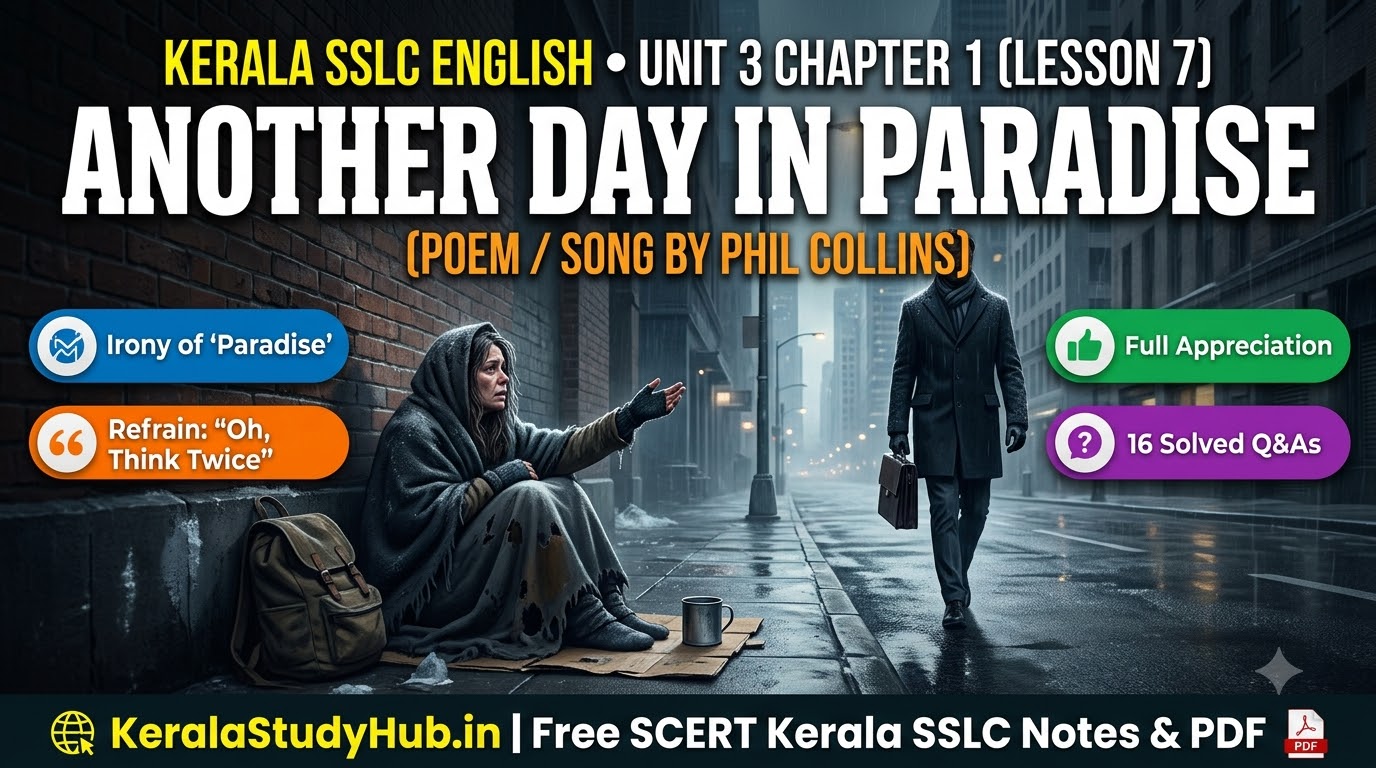
Kerala SSLC English Chapter 7 Notes on the Grammy Award-winning song Another Day in Paradise by British musician and songwriter Phil Collins welcome you to the first lesson of Unit III (The Trumpets of Change) in the newly revised Class 10 (Std 10) Kerala Reader English textbook published by the State Council of Educational Research and Training (SCERT Kerala). In my classroom, when we read the lyrics of this world-famous 1989 social-protest ballad, I ask my students: “Have you ever seen a well-dressed person on a busy city street pretend not to hear a homeless woman or child begging for help, cross over to the other side of the road, and walk away whistling? Why does Phil Collins ironically call such a cold, indifferent world ‘Paradise’?”
Prepared strictly for the Kerala Pareeksha Bhavan SSLC Public Examination, this complete classroom guide covers the Stanza-by-Stanza Summary & Line-by-Line Analysis (English & Malayalam), Full 6-Mark Critical Appreciation of the Song/Poem, Biting Irony of the Title “Another Day in Paradise”, Poetic Devices (Irony, Refrain, Visual/Auditory/Tactile Imagery, Alliteration & Apostrophe), Solved Discourses, and 16 Solved Textbook & Exam Questions and Answers.
Quick SSLC English Navigation: SSLC English All 15 Chapters Master Hub | Previous: Chapter 5: A Phoenix Rises & Chapter 6: The Seedling | Next: Chapter 8: War (Luigi Pirandello).
CHAPTER 7 AT A GLANCE: ANOTHER DAY IN PARADISE BY PHIL COLLINS (POETIC BLUEPRINT)
- Song/Poem & Lyricist: Another Day in Paradise (1989) by British singer-songwriter and drummer Phil Collins (from his album …But Seriously; winner of the 1991 Grammy Award for Record of the Year).
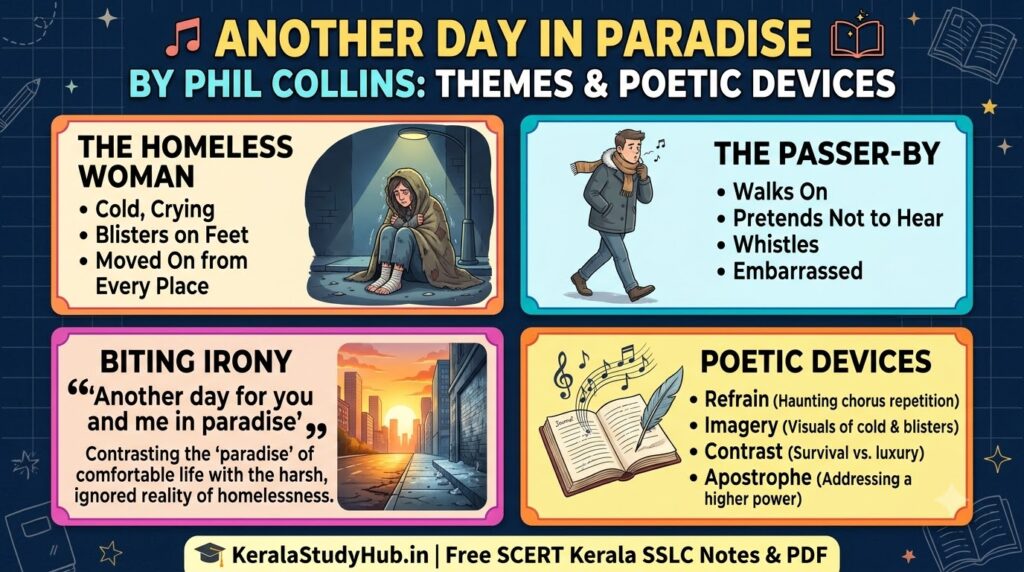
- Two Contrasting Characters: (1) The Homeless Woman: Destitute, shivering in the cold street, with “blisters on the soles of her feet”, crying in tears because there is nowhere she can sleep; and (2) The Affluent Passer-by (The Man): Comfortable, self-absorbed, embarrassed to be seen talking to her, who pretends not to hear, crosses the street, and walks away whistling.
- Irony of the Title (“Another Day in Paradise”): For the wealthy, comfortable man who has a warm home, food, and security, every day is “another day in paradise”—yet right beside him on the pavement, a homeless fellow human being is living in a freezing hell of poverty and neglect!
- Key Poetic Devices: Verbal & Situational Irony (“It’s just another day for you and me in paradise”), Refrain/Chorus (“Oh, think twice…”), Apostrophe / Invocation (“Oh Lord, is there nothing more anybody can do?”), Visual, Auditory & Tactile Imagery, and Alliteration.
1. Stanza-by-Stanza Summary & Line-by-Line Classroom Analysis
| Stanza & Key Lines | Meaning, Social Message & Poetic Devices |
|---|---|
| Stanza 1 (The Plea & The Cold Refusal): “She calls out to the man on the street / ‘Sir, can you help me? / It’s cold and I’ve nowhere to sleep, / Is there somewhere you can tell me?’ / He walks on, doesn’t look back / He pretends he can’t hear her / Starts to whistle as he crosses the street / Seems embarrassed to be there.” |
A destitute, homeless woman on a freezing city street polite calls out to a passing gentleman, begging not even for money, but simply for a warm place to sleep. Instead of showing basic human kindness, the man walks on without looking back, pretends he cannot hear her, whistles casually to mask his awkwardness, and crosses to the other side of the street because he feels embarrassed to be seen near a beggar. |
| Chorus / Refrain (The Ironic Wake-Up Call): “Oh, think twice, ’cause it’s another day for you and me in paradise / Oh, think twice, ’cause it’s another day for you / You and me in paradise / Think about it.” |
The singer directly addresses the privileged listener (“you and me”), urging us to “think twice” before ignoring the poor. Calling our comfortable daily existence “paradise” is sharp Irony: while the privileged enjoy the comforts of “paradise”, they remain blind to the suffering of the homeless on the very same street. |
| Stanza 2 (Her Physical Suffering & Tears): “She calls out to the man on the street / He can see she’s been crying / She’s got blisters on the soles of her feet / She can’t walk but she’s trying.” |
The poet uses vivid Visual and Tactile Imagery to depict the woman’s agony: her face is stained with tears, and she has painful blisters on the soles of her feet from wandering endlessly on hard pavements without shelter. She can barely walk, yet she keeps trying to survive—and still the man notices her tears and walks away! |
| Stanza 3 (The Prayer & Moral Question): “Oh Lord, is there nothing more anybody can do? / Oh Lord, there must be something you can say / You can tell from the lines on her face / You can see that she’s been there / Probably been moved on from every place / ‘Cause she didn’t fit in there.” |
Heartbroken by human apathy, the speaker cries out to God in an anguished Apostrophe / Prayer: “Oh Lord, is there nothing more anybody can do?” The deep wrinkles (“lines on her face”) tell the story of her prolonged suffering and social exclusion—she has been chased away (“moved on”) from every prosperous neighbourhood simply because a poor, homeless woman “didn’t fit in there.” |
മലയാളം സംഗ്രഹം (Malayalam Summary — “Another Day in Paradise” by Phil Collins):
പ്രശസ്ത ബ്രിട്ടീഷ് ഗായകനും ഗാനരചയിതാവുമായ ഫിൽ കോളിൻസ് (Phil Collins) രചിച്ച ലോകപ്രശസ്തമായ ഒരു ഗാനമാണ് ‘Another Day in Paradise’. സമൂഹത്തിലെ ഭവനരഹിതരായ പാവപ്പെട്ട മനുഷ്യരോട് സമ്പന്നവർഗ്ഗം കാണിക്കുന്ന നിസ്സംഗതയെയും (Social Indifference) അവഗണനയെയുമാണ് ഈ കവിത തുറന്നുകാട്ടുന്നത്. കൊടുംതണുപ്പുള്ള ഒരു തെരുവിൽ കിടന്നുറങ്ങാൻ ഒരിടമില്ലാതെ വിഷമിക്കുന്ന ഒരു പാവം സ്ത്രീ, വഴിയിലൂടെ പോകുന്ന മാന്യനായ ഒരാളോട് സഹായം അഭ്യർത്ഥിക്കുന്നു. എന്നാൽ അയാൾ അത് കേൾക്കാത്തതുപോലെ നടക്കുകയും, ചൂളമടിച്ചുകൊണ്ട് (Whistling) റോഡിന്റെ മറുവശത്തേക്ക് മാറിപ്പോവുകയും ചെയ്യുന്നു. അവളുടെ കണ്ണുനീരും കാൽപ്പാദങ്ങളിലെ കുമിളകളും (blisters on the soles of her feet) കണ്ടിട്ടും അയാളുടെ മനസ്സ് അലിയുന്നില്ല. സുഖസൗകര്യങ്ങളിൽ ജീവിക്കുന്ന നമുക്ക് ഓരോ ദിവസവും ‘പറുദീസയിലെ’ (Paradise) മറ്റൊരു സുന്ദരദിനമായിരിക്കാം; എന്നാൽ തെരുവിൽ നരകിക്കുന്ന സഹജീവികളെ കാണുമ്പോൾ രണ്ടുവട്ടം ചിന്തിക്കൂ (“Oh, think twice”) എന്ന് കവി നമ്മുടെ മനസ്സാക്ഷിയെ തൊട്ടുണർത്തുന്നു.
2. Complete Critical Appreciation of “Another Day in Paradise” (6-Mark SSLC Question)
Introduction: “Another Day in Paradise” by Grammy Award-winning British musician Phil Collins is a deeply moving social-protest ballad that serves as a mirror to modern urban society. Included in Unit III (The Trumpets of Change), the song exposes the cold indifference of affluent people toward the plight of the homeless and marginalized.
Theme and Narrative Contrast: The poem revolves around a brief, heartbreaking encounter on a cold city street between a destitute, homeless woman and a privileged male passer-by. Shivering in the cold with nowhere to sleep and painful “blisters on the soles of her feet”, the woman humbly asks the man for help. Although he sees her tears, he refuses to look back, pretends not to hear her, starts whistling to hide his guilt, and crosses the street because he feels “embarrassed to be there.” Through the lines on her weathered face, the poet reveals how society repeatedly chases the poor away from every place simply because they “didn’t fit in there.”
Irony and Poetic Devices: The title and recurring chorus—“Oh, think twice, ’cause it’s another day for you and me in paradise”—employ biting Verbal and Situational Irony. While privileged citizens enjoy a comfortable “paradise”, their refusal to share even a word of kindness turns the same street into a living hell for the homeless. The repeated Refrain (“Oh, think twice”, “Think about it”) acts as a moral wake-up call to the reader’s conscience. Collins uses poignant Visual Imagery (“she’s been crying”, “blisters on the soles of her feet”, “lines on her face”), Auditory Imagery (“She calls out”, “Starts to whistle”), and Tactile Imagery (“It’s cold”). The anguished prayer—“Oh Lord, is there nothing more anybody can do?”—is a powerful example of Apostrophe and Rhetorical Question.
Conclusion: Written in simple, conversational everyday language with a hauntingly melancholic rhythm, “Another Day in Paradise” urges humanity to replace apathy and embarrassment with empathy, compassion, and social justice.
3. Complete Textbook Solutions & Extra Exam Questions (16 Fully Solved Q&As)
Q1: Why does the woman call out to the man on the street, and what does she ask him?
Answer: The woman is homeless, destitute, and shivering in the freezing cold. She calls out politely to the man on the street—“Sir, can you help me?”—because she has nowhere to sleep and wants to know if he can tell her of any shelter where she can spend the night.
Q2: How does the man on the street react to the woman’s plea for help?
Answer: The man reacts with cold indifference and awkwardness. He keeps walking without looking back, pretends he cannot hear her voice, starts whistling casually as he crosses to the other side of the street, and feels embarrassed to be seen near a homeless beggar.
Q3: Why does the man start whistling as he crosses the street?
Answer: His whistling is a psychological defence mechanism—an artificial show of casualness to mask his inner guilt, discomfort, and embarrassment at ignoring a crying, helpless woman right in front of him.
Q4: Explain the irony in the title and refrain: “It’s another day for you and me in paradise.”
Answer: The word “paradise” is used with biting irony. For wealthy and privileged people who have warm beds, food, and security, everyday life feels like “paradise”. Yet this so-called paradise is built on willful blindness toward the homeless poor who suffer in freezing misery on the very same streets.
Q5: What physical details in the second stanza reveal the severity of the woman’s suffering?
Answer: The poet notes that “she’s been crying”, she has painful “blisters on the soles of her feet”, and “she can’t walk but she’s trying.” These details show that she has been walking endlessly in the cold without proper footwear or shelter until her feet are raw and blistered, yet she struggles on to survive.
Q6: What do “the lines on her face” tell the observer about her past life?
Answer: The deep lines and wrinkles etched on her face are the scars of prolonged hardship, hunger, sorrow, and rejection. They show that her homelessness is not a momentary accident—she has endured a long life of suffering and neglect on the streets.
Q7: What does the poet mean by “Probably been moved on from every place / ‘Cause she didn’t fit in there”?
Answer: It means that authorities, shopkeepers, and wealthy residents repeatedly drive homeless people away (“moved on”) from affluent streets and public spaces because a ragged, impoverished person is treated as an eyesore who “doesn’t fit in” with the glamorous image of the city.
Q8: Why does the speaker cry out, “Oh Lord, is there nothing more anybody can do? / Oh Lord, there must be something you can say”?
Answer: Filled with anguish and helplessness at the heartlessness of human beings who walk past suffering without lifting a finger, the speaker appeals directly to God (Apostrophe), asking if divine intervention alone can awaken human conscience.
Q9: Who are meant by “you and me” in the refrain, and why does the poet repeat “Oh, think twice”?
Answer: “You and me” refers to the poet and the readers/listeners—all of us who are fortunate enough to have a roof over our heads. By repeating the refrain “Oh, think twice” and “Think about it”, the poet compels us to pause, reflect on our privilege, and feel empathy for the less fortunate instead of walking away.
Q10: Identify the Visual, Auditory, and Tactile images used in “Another Day in Paradise”.
Answer:
• Visual Images: “He walks on, doesn’t look back”, “crosses the street”, “she’s been crying”, “blisters on the soles of her feet”, “lines on her face”.
• Auditory Images: “She calls out to the man”, “Starts to whistle”.
• Tactile Images: “It’s cold”, “blisters on the soles of her feet”.
Q11: Why is the man described as “embarrassed to be there” rather than ashamed of his selfishness?
Answer: The word “embarrassed” reveals his superficial, status-conscious mindset: he is more worried about the social awkwardness of being approached by a beggar in public than about the moral shame of leaving a fellow human being to freeze in the cold!
Q12: How does “Another Day in Paradise” fit the theme of Unit III, “The Trumpets of Change”?
Answer: Unit III, The Trumpets of Change, sounds a call for social awakening against injustice, war, and cruelty. Phil Collins’s song blows the trumpet of moral change by shaking us out of our comfortable apathy and challenging us to build a compassionate society where no one is left homeless on the street.
Q13 (Discourse — Diary Entry): Imagine the man on the street feels guilty after reaching his warm home that night. Write his likely Diary Entry.
Answer:
14 November, 11:00 PM
I am sitting in my warm living room tonight, yet my conscience gives me no peace. On my way home this evening, a poor, shivering woman with blisters on the soles of her feet and tears in her eyes begged me to tell her where she could find shelter from the freezing cold. Instead of helping her, I felt embarrassed, pretended I couldn’t hear her, whistled like a coward, and crossed the street! While I enjoy another comfortable night in my “paradise”, where is that poor woman sleeping tonight? Tomorrow morning, I will go back to that street, find her, and make sure she gets food and a safe shelter.
Q14: Compare the treatment of the homeless woman in “Another Day in Paradise” with the treatment of the winged old man in Chapter 1.
Answer: Both characters are vulnerable outsiders who suffer from human callousness. In Chapter 1, the winged old man is exploited as a circus spectacle for money and then treated as an annoyance when he is no longer profitable. In Chapter 7, the homeless woman is rendered completely invisible—ignored and pushed out of sight because she does not fit into affluent society.
Q15: What is the tone of the poem “Another Day in Paradise”?
Answer: The tone of the poem is empathetic, melancholic, ironic, and apelative (pleading/reflective)—evoking deep sympathy for the homeless woman while gently yet firmly pricking the conscience of the privileged reader.
Q16 (Grammar — Question Tags & Reported Speech from Chapter 7):
(a) Add suitable Question Tags:
(i) She calls out to the man on the street, ______?
(ii) He doesn’t look back, ______?
(iii) It’s another day in paradise, ______?
(b) Report the lines: The woman said to the man, “Sir, can you help me? It’s cold and I have nowhere to sleep.”
Answer:
• (a) Question Tags: (i) doesn't she? | (ii) does he? | (iii) isn't it?
• (b) Reported Speech: The woman respectfully asked the man if he could help her and added that it was cold and she had nowhere to sleep.
Teacher’s Classroom Note & Student Discussion Question:
When writing the 6-Mark Appreciation of “Another Day in Paradise” in your SSLC exam, always explain the Irony of the word “Paradise” and how the poet contrasts the comfortable life of the passer-by with the painful reality of the woman with “blisters on the soles of her feet”!
Quick Challenge for You (Drop Your Answer in the Comments Below!): What are the two things the man on the street does to pretend he has not noticed the homeless woman calling out to him? Comment your answer below!


Latest SCERT & DHSE Kerala Study Notes
- Kerala Class 9 Physics Chapter 2 Notes: Equations of Motion (ചലനസമവാക്യങ്ങൾ) Std 9 Let Us Assess Questions and Answers PDF
- Kerala SSLC Christmas Exam Question Paper 2025-27: All Subjects Second Term & Model Question Papers with Solved Answer Keys PDF (New SCERT Syllabus)
- Kerala SSLC English Christmas Exam Question Paper 2025-27: Second Term & Model Solved 80-Mark Answer Key, Discourses & Grammar PDF
- Kerala SSLC Social Science Christmas Exam Question Paper 2025-27: Second Term & Model Solved 80-Mark Answer Key, Weightage & Map Study PDF
- Kerala SSLC Maths Christmas Exam Question Paper 2025-27: Second Term & Model Solved Answer Key, Weightage & Formula Sheet PDF (New SCERT Syllabus)
- Kerala SSLC Biology Christmas Exam Question Paper 2025-27: Second Term & Model Solved Answer Key, Weightage & Flowcharts PDF (New SCERT Syllabus)
- Kerala SSLC Chemistry Christmas Exam Question Paper 2025-27: Second Term & Model Solved Answer Key, Weightage & Sure A+ Questions PDF (New SCERT Syllabus)
- Kerala SSLC Physics Christmas Exam Question Paper 2025-27: Second Term & Model Solved Answer Key, Weightage & Formula Sheet PDF (New SCERT Syllabus)