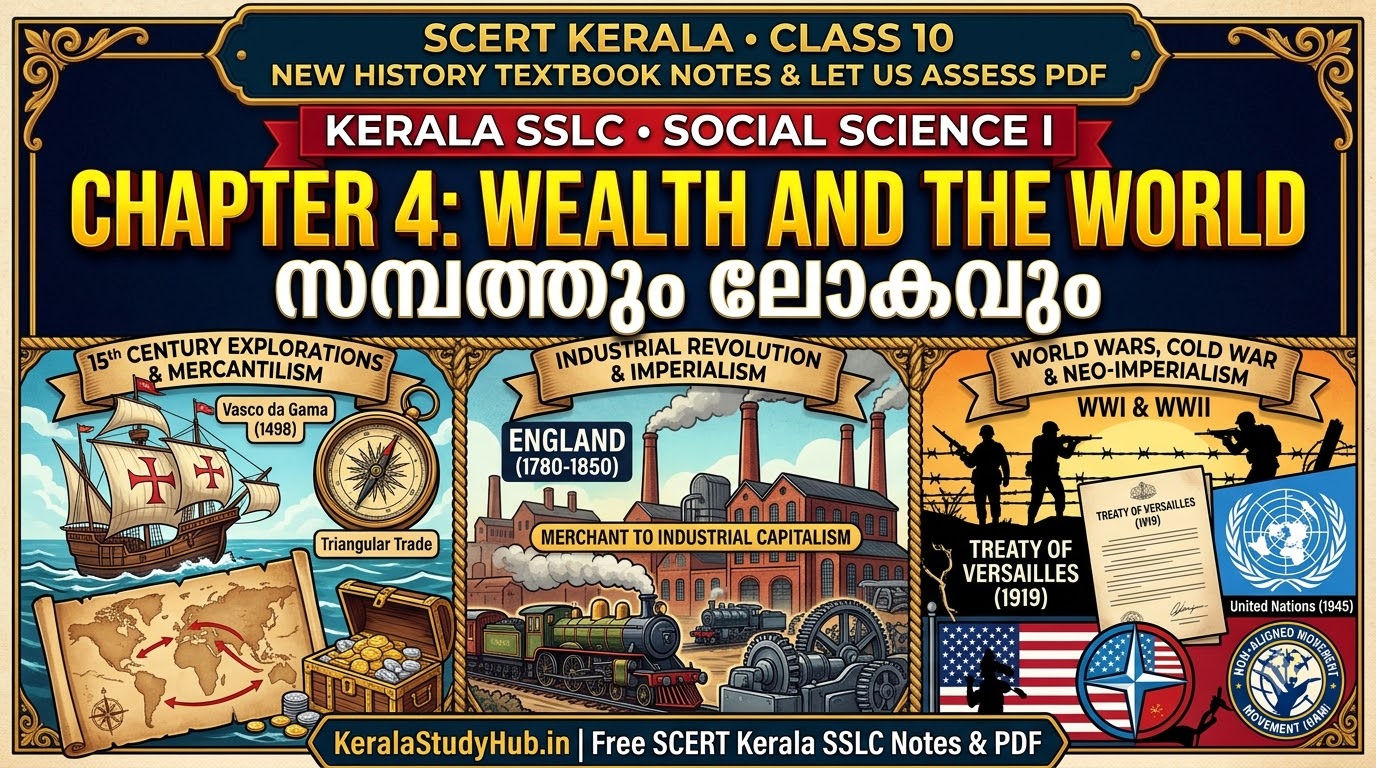
Kerala SSLC Social Science 1 Chapter 4 Notes for Wealth and the World (Malayalam Medium: സമ്പത്തും ലോകവും) cover the fourth unit of the newly revised Class 10 (Std 10) Social Science I (History) textbook published by the State Council of Educational Research and Training (SCERT Kerala). In the Kerala Pareeksha Bhavan SSLC Public Examination, this major world-history chapter carries 7 to 9 marks, covering 15th-Century Geographical Explorations, Mercantilism, Merchant Capitalism vs Industrial Capitalism, the Industrial Revolution, Imperialism, World War I, Fascism & Nazism, World War II, the Cold War, and Neo-Imperialism.
- 1. 15th-Century Geographical Explorations, Triangular Trade & Mercantilism (ഭൂമിശാസ്ത്രപരമായ പര്യവേക്ഷണങ്ങളും മെർക്കന്റലിസവും)
- 1.1 Consequences of Geographical Explorations & Features of Mercantilism (4-Mark Question)
- 2. Merchant Capitalism to Industrial Capitalism, Industrial Revolution (1780–1850) & Imperialism
- 3. First World War (1914–1918), Fascism & Nazism, Second World War (1939–1945) & Neo-Imperialism
- 3.1 Causes and Results of the First World War (1914–1918)
- 3.2 Comparison: Fascism in Italy vs Nazism in Germany (Totalitarianism — 4-Mark Table)
- 3.3 Second World War (1939–1945), Cold War, NAM & Neo-Imperialism
- 4. SCERT Textbook Let Us Assess Questions and Answers & Malayalam Medium Notes
As a High School Social Science teacher, I have compiled this complete English and Malayalam Medium guide with a master table of maritime explorers, comparison charts of Merchant vs Industrial vs Finance Capitalism, Causes and Results of Both World Wars, and all solved Let Us Assess textbook questions.
Quick SSLC Social Science I Navigation: Revise Chapter 1: Humanism | Chapter 2: Liberty, Equality, Fraternity | Chapter 3: Social Analysis | SSLC Biology All 6 Chapters Hub.
CHAPTER 4 AT A GLANCE: CLASS 10 SOCIAL SCIENCE I (WORLD HISTORY) REVISION BLUEPRINT
- 2 Triggers of Geographical Explorations (15th Century): (1) Capture of Constantinople by the Ottoman Turks in 1453 (blocking overland spice trade); (2) Arrival of the Portuguese at the Guinea Coast in Africa.
- Pioneers: Portugal & Spain (followed by the Netherlands, England, and France). Vasco da Gama landed at Kappad, Kozhikode in 1498; Christopher Columbus reached the Bahamas/Americas in 1492.
- Economic Evolution: Mercantilism (wealth measured in Gold & Silver bullion) → Merchant Capitalism (trade profit) → Industrial Capitalism (Industrial Revolution 1780–1850 in England) → Imperialism → Finance Capitalism & Neo-Imperialism.
- First World War (1914–1918): Triple Alliance (Germany, Austria-Hungary, Italy) vs Triple Entente (Britain, France, Russia). Immediate Cause: Assassination of Archduke Franz Ferdinand at Sarajevo (June 28, 1914). Ended with the Treaty of Versailles (1919) & League of Nations (1920).
- Second World War (1939–1945) & Cold War: Axis Powers (Germany, Italy, Japan) vs Allied Powers (Britain, France, USSR, USA). Led to the United Nations (1945), decolonization, the Cold War (USA vs USSR), and the Non-Aligned Movement (NAM).
1. 15th-Century Geographical Explorations, Triangular Trade & Mercantilism (ഭൂമിശാസ്ത്രപരമായ പര്യവേക്ഷണങ്ങളും മെർക്കന്റലിസവും)
Two decisive 15th-century events launched the Age of Geographical Explorations: (1) The conquest of Constantinople by the Ottoman Turks in 1453, which obstructed the traditional Mediterranean trade routes through which Asian pepper and spices reached Europe; and (2) The arrival of Portuguese navigators at the Guinea Coast of West Africa in search of gold and ivory.
- Factors That Helped European Explorers Succeed: Advancement in shipbuilding (sturdy Caravel ships), invention of the Mariner’s Compass and Astrolabe, accurate maps and portolan charts, gunpowder weapons, and royal patronage (such as Prince Henry the Navigator of Portugal).
| Explorer (നാവികൻ) | Sponsoring Country | Historic Maritime Achievement |
|---|---|---|
| 1. Bartolomeu Dias (1488) | Portugal | Reached the southern tip of Africa, named the Cape of Good Hope. |
| 2. Christopher Columbus (1492) | Spain | Crossed the Atlantic and reached the Bahamas/Caribbean islands (the “New World”, later named America after Amerigo Vespucci). |
| 3. Vasco da Gama (1498) | Portugal | Sailed around the Cape of Good Hope and landed at Kappad in Kozhikode (Calicut), Kerala in May 1498, opening the direct sea route from Europe to India. |
| 4. Pedro Alvares Cabral (1500) | Portugal | Reached the coast of Brazil in South America. |
| 5. Ferdinand Magellan (1519–1522) | Spain | Led the first expedition to circumnavigate (sail completely around) the Earth, proving the Earth is spherical. |
| 6. John Cabot (1497) | England | Explored Newfoundland on the coast of North America. |
1.1 Consequences of Geographical Explorations & Features of Mercantilism (4-Mark Question)
- Far-Reaching Consequences of Explorations:
- The centre of global trade shifted from the Mediterranean Sea to the Atlantic Ocean (decline of Italian cities; rise of Portugal, Spain, Holland, England, and France).
- Large parts of Asia, Africa, and the Americas came under European Colonization; indigenous civilizations in America (Aztec, Maya, Inca) were destroyed and native populations enslaved.
- Development of the Triangular Trade System (ത്രികോണ വ്യാപാരം) connecting Europe (exported manufactured goods like textiles and firearms to Africa), Africa (transported millions of enslaved Africans across the Atlantic to American plantations), and the Americas (shipped sugar, cotton, tobacco, gold, and silver back to Europe).
- What is Mercantilism (മെർക്കന്റലിസം)? The economic policy pursued by European colonial powers between the 16th and 18th centuries:
• Measured a nation’s wealth strictly by the amount of Gold and Silver (Bullion) it possessed.
• Aimed to maximize exports and minimize imports to accumulate bullion from other countries.
• Exploited colonies as exclusive suppliers of cheap raw materials and captive markets for the mother country’s goods.
• Why England & Holland overtook Spain & Portugal: While Spain and Portugal spent colonial gold on royal luxuries and palaces, England and the Netherlands formed Joint-Stock Companies and reinvested their trade profits into manufacturing and banking, paving the way for the Industrial Revolution.

2. Merchant Capitalism to Industrial Capitalism, Industrial Revolution (1780–1850) & Imperialism
| Stage of Capitalism | Core Characteristics (സവിശേഷതകൾ) |
|---|---|
| 1. Merchant Capitalism (വാണിജ്യ മുതലാളിത്തം) | Wealthy merchants supplied raw materials to rural artisans, collected finished goods, and earned huge profits through long-distance colonial trade. |
| 2. Industrial Capitalism (വ്യാവസായിക മുതലാളിത്തം) | Wealth accumulated from colonial trade was invested in large steam-powered factories (Industrial Revolution, 1780–1850, starting in England). |
| 3. Finance Capitalism (ധനകാര്യ മുതലാളിത്തം) | Banks, stock markets, and financial institutions dominate the economy; huge profits are accumulated through capital investment, loans, interest, and speculation rather than direct production. |
- Major Changes & Effects of the Industrial Revolution (England, 1780–1850):
- Replacement of hand tools and domestic cottage production with machine-based factory production powered by coal and steam engines; rapid expansion of railways and steamships.
- Social Consequences: Growth of industrial cities (urbanization), emergence of two distinct classes—Industrial Capitalists (Bourgeoisie) and the exploited Wage-Labour Class (Proletariat) working 14–16 hours in harsh conditions, including women and children.
- Rise of Socialism: Thinkers like Karl Marx and Friedrich Engels criticized capitalist exploitation and advocated Socialism (collective ownership of the means of production and a classless society).
- How Industrialization Led to Imperialism (സാമ്രാജ്യത്വം): Industrial capitalists maximized production while keeping domestic workers’ wages low, which reduced domestic purchasing power. To secure cheap raw materials for their factories, new overseas markets to sell surplus manufactured goods, and safe territories to invest surplus capital, European powers conquered Asian and African nations politically and economically—a policy known as Imperialism.
3. First World War (1914–1918), Fascism & Nazism, Second World War (1939–1945) & Neo-Imperialism
3.1 Causes and Results of the First World War (1914–1918)
- 4 Causes of World War I:
- Imperialist Rivalry: Newly unified industrial powers like Germany and Italy competed fiercely with Britain and France for colonies (e.g., Germany’s Berlin-Baghdad Railway project alarmed Britain, France, and Russia).
- Formation of Hostile Military Alliances: Europe split into two armed camps: Triple Alliance (Germany, Austria-Hungary, Italy) vs Triple Entente (Britain, France, Russia).
- Aggressive (Extreme) Nationalism: Movements like Pan-Slavism (led by Russia/Serbia) and Pan-Germanism (led by Germany) fueled ethnic tensions in the Balkans.
- Immediate Cause (June 28, 1914): Assassination of Austro-Hungarian heir Archduke Franz Ferdinand and his wife at Sarajevo (capital of Bosnia) by Serbian nationalist youth Gavrilo Princip, leading Austria-Hungary to declare war on Serbia on July 28, 1914.
- Results of WWI & Treaty of Versailles (1919): Millions perished; European economies collapsed; the League of Nations was founded on January 10, 1920 to preserve peace. Under the harsh Treaty of Versailles (1919) imposed on Germany, Germany was blamed for the war, stripped of all its colonies, forced to disarm its military, and ordered to pay massive war reparations—sowing the seeds of World War II.
3.2 Comparison: Fascism in Italy vs Nazism in Germany (Totalitarianism — 4-Mark Table)
| Feature | Fascism in Italy (ഫാസിസം) | Nazism in Germany (നാസിസം) |
|---|---|---|
| Founder / Dictator | Benito Mussolini (seized power after the March on Rome, 1922). | Adolf Hitler (became Chancellor in 1933; leader of the Nazi Party). |
| Private Militia | Blackshirts (കരിങ്കുപ്പായക്കാർ) | Brownshirts (തവിട്ടുകുപ്പായക്കാർ) & Gestapo secret police |
| Core Ideology & Actions | Glorified war and the ancient Roman Empire; banned all non-Fascist parties; crushed socialist, labour, and peasant movements; invaded Ethiopia. | Preached Aryan racial supremacy; exterminated millions of Jews (the Holocaust), Communists, Socialists, and Democrats; invaded Poland on September 1, 1939. |
3.3 Second World War (1939–1945), Cold War, NAM & Neo-Imperialism
- Second World War (Sept 1, 1939 – 1945): Triggered when Hitler’s Germany invaded Poland on September 1, 1939. Fought between the Axis Powers (Germany, Italy, Japan) and the Allied Powers (Britain, France, USSR, USA). Ended in 1945 after the defeat of Germany and Italy and the US atomic bombings of Hiroshima (Aug 6, 1945) and Nagasaki (Aug 9, 1945).
- Results of World War II: Collapse of European colonial empires and independence of Asian and African nations (including India); fall of Fascist/Nazi dictatorships; establishment of the United Nations Organization (UNO) on October 24, 1945; and emergence of the USA (Capitalist bloc) and USSR (Socialist bloc) as rival superpowers.
- Cold War (1945–1991) & Non-Aligned Movement (NAM): The ideological, political, and nuclear arms rivalry between the US-led capitalist bloc and the Soviet-led socialist bloc without direct war was called the Cold War. Newly independent nations led by Jawaharlal Nehru (India), Tito (Yugoslavia), and Nasser (Egypt) formed the Non-Aligned Movement (NAM) to stay independent of military blocs and promote world peace.
- Neo-Imperialism / Neo-Colonialism (നവസാമ്രാജ്യത്വം): After World War II, instead of direct military occupation, wealthy capitalist nations and Multinational Corporations (MNCs) began controlling and exploiting newly independent developing countries through economic means (foreign debt, trade restrictions, and Finance Capitalism)—known as Neo-Imperialism.
4. SCERT Textbook Let Us Assess Questions and Answers & Malayalam Medium Notes
Q1. Why did England succeed in starting the Industrial Revolution while Spain and Portugal, which pioneered geographical explorations, lagged behind?
Answer: Spain and Portugal spent the enormous gold and silver extracted from their colonies on royal luxuries and palaces. In contrast, England and the Netherlands conducted colonial trade through Joint-Stock Companies and reinvested their colonial profits directly into banking, scientific inventions, coal/iron mining, railways, and textile factories, enabling England to pioneer the Industrial Revolution.
Q2. How did the harsh provisions of the Treaty of Versailles (1919) pave the way for the Second World War?
Answer: Under the Treaty of Versailles (1919), Germany lost all its colonies and resource-rich territories, its army was severely restricted, and it was forced to pay crushing war reparations. The resulting economic ruin and national humiliation in Germany were exploited by Adolf Hitler and the Nazi Party to whip up extreme nationalism and military aggression, directly leading to World War II in 1939.
പത്താം ക്ലാസ് സാമൂഹ്യശാസ്ത്രം I അദ്ധ്യായം 4: സമ്പത്തും ലോകവും (മലയാളം മീഡിയം നോട്ടുകൾ)
- ഭൂമിശാസ്ത്രപരമായ പര്യവേക്ഷണങ്ങൾ: 1453-ൽ തുർക്കികൾ കോൺസ്റ്റാന്റിനോപ്പിൾ കീഴടക്കിയതും പോർച്ചുഗീസുകാർ ആഫ്രിക്കയിലെ ഗിനിയ തീരത്ത് എത്തിയതുമാണ് പര്യവേക്ഷണങ്ങൾക്ക് തുടക്കമിട്ടത്. വാസ്കോ ഡ ഗാമ (1498) കോഴിക്കോട് കാപ്പാട് കപ്പലിറങ്ങി; ക്രിസ്റ്റഫർ കൊളംബസ് (1492) അമേരിക്കൻ ഭൂഖണ്ഡത്തിൽ എത്തി.
- മെർക്കന്റലിസവും മുതലാളിത്തവും: ഒരു രാജ്യത്തിന്റെ സമ്പത്ത് അളക്കുന്നത് ആ രാജ്യത്തിന്റെ കൈവശമുള്ള സ്വർണ്ണത്തിന്റെയും വെള്ളിയുടെയും അളവിലാണെന്ന് കരുതിയ സാമ്പത്തിക നയമാണ് മെർക്കന്റലിസം. വാണിജ്യ മുതലാളിത്തത്തിൽ നിന്ന് വ്യാവസായിക വിപ്ലവത്തിലൂടെ (ഇംഗ്ലണ്ട്, 1780–1850) വ്യാവസായിക മുതലാളിത്തവും സാമ്രാജ്യത്വവും രൂപംകൊണ്ടു.
- ലോകമഹായുദ്ധങ്ങളും ശീതസമരവും: ഒന്നാം ലോകമഹായുദ്ധം (1914–1918: ത്രികക്ഷി സഖ്യം vs ത്രികക്ഷി സൗഹൃദം; വേഴ്സായ് ഉടമ്പടി 1919). ഇറ്റലിയിൽ മുസ്സോളിനിയുടെ ഫാസിസവും (കരിങ്കുപ്പായക്കാർ) ജർമ്മനിയിൽ ഹിറ്റ്ലറുടെ നാസിസവും (തവിട്ടുകുപ്പായക്കാർ) രണ്ടാം ലോകമഹായുദ്ധത്തിലേക്ക് (1939–1945) നയിച്ചു. തുടർന്ന് അമേരിക്കയും സോവിയറ്റ് യൂണിയനും തമ്മിലുള്ള ശീതസമരവും (Cold War), ചേരിചേരാ പ്രസ്ഥാനവും (NAM), നവസാമ്രാജ്യത്വവും (Neo-Imperialism) രൂപപ്പെട്ടു.
Teacher’s Classroom Note & Student Discussion Question:
Dear SSLC Students, make sure you can clearly distinguish between Mercantilism, Merchant Capitalism, Industrial Capitalism, and Finance Capitalism — this sequence is a top board exam favourite! Quick Question for You: Which countries formed the Triple Alliance and the Triple Entente in World War I, and on what date did Germany invade Poland to start World War II? Write your answer in the comments below!


Latest SCERT & DHSE Kerala Study Notes
- Kerala Class 9 Physics Chapter 2 Notes: Equations of Motion (ചലനസമവാക്യങ്ങൾ) Std 9 Let Us Assess Questions and Answers PDF
- Kerala SSLC Christmas Exam Question Paper 2025-27: All Subjects Second Term & Model Question Papers with Solved Answer Keys PDF (New SCERT Syllabus)
- Kerala SSLC English Christmas Exam Question Paper 2025-27: Second Term & Model Solved 80-Mark Answer Key, Discourses & Grammar PDF
- Kerala SSLC Social Science Christmas Exam Question Paper 2025-27: Second Term & Model Solved 80-Mark Answer Key, Weightage & Map Study PDF
- Kerala SSLC Maths Christmas Exam Question Paper 2025-27: Second Term & Model Solved Answer Key, Weightage & Formula Sheet PDF (New SCERT Syllabus)
- Kerala SSLC Biology Christmas Exam Question Paper 2025-27: Second Term & Model Solved Answer Key, Weightage & Flowcharts PDF (New SCERT Syllabus)
- Kerala SSLC Chemistry Christmas Exam Question Paper 2025-27: Second Term & Model Solved Answer Key, Weightage & Sure A+ Questions PDF (New SCERT Syllabus)
- Kerala SSLC Physics Christmas Exam Question Paper 2025-27: Second Term & Model Solved Answer Key, Weightage & Formula Sheet PDF (New SCERT Syllabus)
