
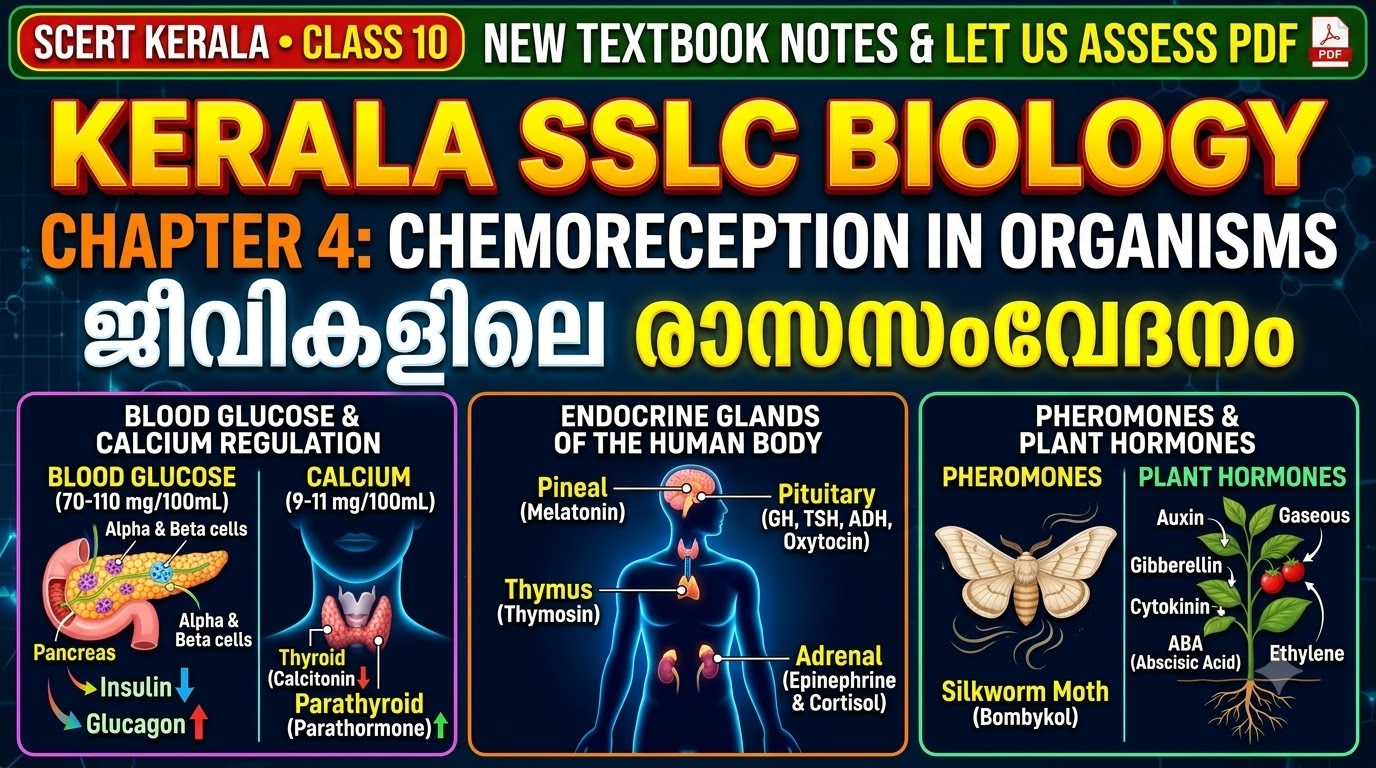
Kerala SSLC Biology Chapter 4 Notes for Chemoreception in Organisms (Malayalam Medium: ജീവികളിലെ രാസസംവേദനം) cover the fourth chapter of the newly revised Class 10 (Std 10) Biology textbook published by the State Council of Educational Research and Training (SCERT Kerala). In the Kerala Pareeksha Bhavan SSLC Biology examination, endocrine glands, hormone regulation of blood glucose and blood calcium, pituitary growth disorders, pheromones, and plant hormones carry 6 to 8 marks every year.
- 1. Hormones, Target Cells & Regulation of Blood Glucose by Pancreas (ഇൻസുലിനും ഗ്ലൂക്കാഗോണും പ്രമേഹവും)
- 2. Thyroid & Parathyroid Glands: Metabolism & Blood Calcium Regulation (തൈറോയ്ഡ്, പാരാതൈറോയ്ഡ് ഗ്രന്ഥികൾ)
- 3. Adrenal, Pineal, Thymus, Pituitary & Hypothalamus Hormones (അഡ്രീനൽ, പിറ്റ്യൂറ്ററി, ഹൈപ്പോതലാമസ് ഹോർമോണുകൾ)
- 4. Pheromones & Plant Hormones (Natural vs Synthetic Phytohormones)
- 5. SCERT Textbook Let Us Assess Questions and Answers & Malayalam Medium Notes
As a High School Natural Science teacher, I have compiled this complete bilingual revision guide so you can effortlessly memorize the normal blood glucose level (70–110 mg/100 mL), normal blood calcium level (9–11 mg/100 mL), Insulin vs Glucagon and Calcitonin vs Parathormone feedback tables, endocrine disorders (Diabetes Mellitus, Diabetes Insipidus, Cretinism, Myxoedema, Exophthalmic Goitre, Dwarfism, Gigantism, Acromegaly), and natural vs synthetic phytohormones.
Quick SSLC Biology & Science Navigation: Revise Chapter 1: Genetics of Life | Chapter 2: Paths of Evolution | Chapter 3: Behind Sensations | SSLC Physics All 7 Chapters Hub | SSLC Chemistry All 7 Chapters Hub.
CHAPTER 4 AT A GLANCE: CLASS 10 BIOLOGY QUICK REVISION BLUEPRINT
- Blood Glucose Regulation (
70–110 mg/100 mL): Islets of Langerhans in Pancreas → Beta (β) Cells secrete Insulin (lowers blood glucose: Glucose → Glycogen) vs Alpha (α) Cells secrete Glucagon (raises blood glucose: Glycogen → Glucose). Deficiency of Insulin = Diabetes Mellitus. - Blood Calcium Regulation (
9–11 mg/100 mL): Calcitonin (from Thyroid gland; lowers blood calcium by depositing Ca into bones) vs Parathormone (from Parathyroid gland; raises blood calcium by reabsorbing Ca from bones/kidneys). - Master Control (Hypothalamus & Pituitary): Anterior Pituitary secretes Somatotropin (Growth Hormone), TSH, ACTH, GTH, Prolactin. Hypothalamus produces Vasopressin (ADH) and Oxytocin (stored in Posterior Pituitary). ADH deficiency = Diabetes Insipidus.
- Pheromones & Plant Hormones: Pheromones = Bombykol, Muskone, Civetone (external communication within same species). Plant Hormones = Auxin, Gibberellin, Cytokinin, Abscisic Acid (ABA), Ethylene.
- Expected Board Weightage: 6 to 8 Marks (Highest-scoring physiology chapter in SSLC Biology!).
1. Hormones, Target Cells & Regulation of Blood Glucose by Pancreas (ഇൻസുലിനും ഗ്ലൂക്കാഗോണും പ്രമേഹവും)
Endocrine Glands (അന്തഃസ്രാവി ഗ്രന്ഥികൾ) are called ductless glands because their secretions (Hormones — chemical messengers) are transported directly through the blood. Although hormones circulate throughout the body, each hormone acts only on specific cells that possess matching receptors; these cells are called Target Cells (ലക്ഷ്യകോശങ്ങൾ).
Normal Fasting Blood Glucose Level: 70 – 110 mg / 100 mL of blood. This level is regulated by the Islets of Langerhans in the Pancreas:
| Pancreatic Hormone & Cell | When Secreted | Exact Action on Blood Glucose (പ്രവർത്തനം) |
|---|---|---|
| 1. Insulin (ഇൻസുലിൻ — secreted by Beta [β] Cells) | When blood glucose rises above 110 mg/100 mL (e.g., after a meal). |
Decreases blood glucose: (1) Speeds up cellular uptake of glucose; (2) Converts excess glucose into Glycogen in the liver and muscles. |
| 2. Glucagon (ഗ്ലൂക്കാഗോൺ — secreted by Alpha [α] Cells) | When blood glucose drops below 70 mg/100 mL (e.g., during fasting). |
Increases blood glucose: (1) Converts stored glycogen in the liver back into Glucose; (2) Synthesizes glucose from amino acids. |
Diabetes Mellitus (പ്രമേഹം): Caused either by decreased production of Insulin (destruction of Beta cells) or inability of target cells to utilize insulin. Symptoms include increased blood sugar above 126 mg/100 mL (fasting), presence of glucose in urine (Glycosuria — tested using Benedict’s Reagent, which turns from blue to green/yellow/orange-red precipitate), frequent urination, and excessive thirst. World Diabetes Day is observed on November 14.
2. Thyroid & Parathyroid Glands: Metabolism & Blood Calcium Regulation (തൈറോയ്ഡ്, പാരാതൈറോയ്ഡ് ഗ്രന്ഥികൾ)
The Thyroid Gland secretes two major hormones: Thyroxine (controls metabolism and brain growth; requires Iodine for its synthesis) and Calcitonin (regulates blood calcium).
| Thyroid Disorder | Cause (രോഗകാരണം) | Key Symptoms (ലക്ഷണങ്ങൾ) |
|---|---|---|
| 1. Cretinism (ക്രെറ്റിനിസം) | Hypothyroidism (deficiency of Thyroxine) during infancy/foetal stage. | Retarded physical and mental growth in children. |
| 2. Myxoedema (മിക്സെഡിമ) | Hypothyroidism (deficiency of Thyroxine) in adults. | Low metabolic rate, sluggishness, increase in body weight, hypertension, and inflammation in body tissues. |
| 3. Exophthalmic Goitre (എക്സോഫ്താൽമിക് ഗോയിറ്റർ) | Hyperthyroidism (excess production of Thyroxine). | High metabolic rate, rise in body temperature, excessive sweating, weight loss, emotional restlessness, and bulging eyeballs. |
| 4. Simple Goitre (ഗോയിറ്റർ) | Deficiency of Iodine in diet (thyroid gland enlarges to produce more thyroxine). | Swelling in the neck region (prevented by using iodized salt and leafy vegetables/seafood). |
Regulation of Normal Blood Calcium Level (9 – 11 mg / 100 mL — 3-Mark Question):
• When Blood Calcium Rises above 11 mg/100 mL: The Thyroid gland secretes Calcitonin, which prevents calcium absorption from blood, promotes mixing of calcium with bones, and lowers blood calcium to normal.
• When Blood Calcium Drops below 9 mg/100 mL: The Parathyroid gland (4 small glands behind the thyroid) secretes Parathormone, which reabsorbs calcium from bones and kidneys into the blood and raises blood calcium to normal.

3. Adrenal, Pineal, Thymus, Pituitary & Hypothalamus Hormones (അഡ്രീനൽ, പിറ്റ്യൂറ്ററി, ഹൈപ്പോതലാമസ് ഹോർമോണുകൾ)
| Endocrine Gland | Hormones Secreted | Functions & Related Disorders |
|---|---|---|
| 1. Adrenal Medulla (Inner part) | Epinephrine (Adrenaline) & Norepinephrine (Noradrenaline) | Emergency Hormones: Act along with the sympathetic nervous system during emergency (“fight or flight”) by increasing heartbeat and blood pressure. |
| 2. Adrenal Cortex (Outer part) | Cortisol, Aldosterone, Sex Hormones | Cortisol: Synthesis of glucose from protein/fat; suppresses immunity and inflammation. Aldosterone: Maintains salt-water balance and blood pressure by acting on kidneys. |
| 3. Pineal Gland (Brain) | Melatonin (മെലാടോണിൻ) | Biological Clock: Secretion increases in darkness and decreases in daylight; regulates daily sleep-wake rhythm (circadian rhythm). |
| 4. Thymus Gland (Behind sternum) | Thymosin (തൈമോസിൻ) | Youth Hormone: Active during infancy; controls maturation of T-Lymphocytes for immunity. |
| 5. Anterior Pituitary | Somatotropin (Growth Hormone – GH), TSH, ACTH, GTH, Prolactin | GH promotes body growth. • Dwarfism (വാമനത്വം): Decreased GH during growth phase (stunted growth). • Gigantism (ഭീമാകാരത്വം): Excessive GH during growth phase. • Acromegaly (അക്രോമെഗാലി): Excessive GH after growth phase (overgrowth of bones on face, jaws, and fingers). |
| 6. Hypothalamus (Stored in Posterior Pituitary) | Vasopressin (ADH — Anti-Diuretic Hormone) & Oxytocin | ADH: Helps kidneys reabsorb water into blood (more ADH in summer = less urine; less ADH in winter/rainy season = more urine). Deficiency of ADH causes Diabetes Insipidus (frequent urination without glucose loss). Oxytocin: Contracts smooth muscles of the uterine wall during childbirth (parturition) and facilitates lactation. |
4. Pheromones & Plant Hormones (Natural vs Synthetic Phytohormones)
Pheromones (ഫെറമോണുകൾ): Chemical substances secreted by organisms to the outside environment to communicate with other members of the same species (for attracting mates, marking territory, trails, and signalling danger).
• Examples: Bombykol (female silkworm moth), Muskone (musk deer), Civetone (civet cat). Artificial pheromone traps are used in agriculture for pest control.
| Plant Hormone (Phytohormone) | Natural Functions in Plants | Synthetic Form & Agricultural Use |
|---|---|---|
| 1. Auxin (ഓക്സിൻ) | Cell growth, cell elongation, promoting growth of terminal buds (apical dominance), inhibiting lateral roots, and fruit formation. | NAA & IBA: Sprouting of roots in stem cuttings; preventing premature fruit drop. 2,4-D: Used as a weedicide to destroy dicot weeds. |
| 2. Gibberellin (ജിബറലിൻ) | Breaks seed dormancy (stimulates germination by breaking down stored food) and elongates stem internodes and leaves. | Synthetic Gibberellins: Used to increase the size of grapes and elongate sugarcane stems for higher yield. |
| 3. Cytokinin (സൈറ്റോകൈനിൻ) | Promotes cell division, cell differentiation, and delays senescence (aging of leaves) by retaining chlorophyll. | Used in plant tissue culture medium along with Auxin. |
| 4. Abscisic Acid (ABA — അബ്സിസിക് ആസിഡ്) | Dormancy of embryos in seeds under unfavourable conditions; promotes abscission (dropping) of mature leaves and fruits; closes stomata during drought. | Synthetic ABA: Sprayed to harvest fruits at the same time in orchards. |
| 5. Ethylene (എഥിലീൻ — Gaseous Hormone) | Only gaseous plant hormone! Helps in the ripening of fruits; excess ethylene degrades chlorophyll and causes ageing of leaves and flowers. | Ethephon (എഥിഫോൺ): Liquid form that releases ethylene gas; used to increase latex production in rubber trees and synchronize flowering/ripening in pineapples and tomatoes. |
5. SCERT Textbook Let Us Assess Questions and Answers & Malayalam Medium Notes
Q1. Why does the quantity of urine decrease during summer and increase during the rainy/winter season?
Answer: During summer, the body loses a large amount of water through sweat. To prevent dehydration, the production of Vasopressin (ADH) increases, which increases the reabsorption of water in the kidneys and reduces urine output. During winter and the rainy season, sweating is minimal, so ADH production decreases, less water is reabsorbed in the kidneys, and more urine is eliminated.
Q2. Distinguish between Diabetes Mellitus and Diabetes Insipidus.
Answer: Diabetes Mellitus is caused by the deficiency or malfunction of Insulin (from the Pancreas), leading to high blood glucose and excretion of glucose through urine. Diabetes Insipidus is caused by the deficiency of Vasopressin (ADH) (from the Hypothalamus/Posterior Pituitary), leading to impaired water reabsorption in the kidneys and frequent excretion of dilute urine without any glucose loss.
പത്താം ക്ലാസ് ജീവശാസ്ത്രം അദ്ധ്യായം 4: ജീവികളിലെ രാസസംവേദനം (മലയാളം മീഡിയം നോട്ടുകൾ)
- രക്തത്തിലെ ഗ്ലൂക്കോസിന്റെ സാധാരണ അളവ് (70–110 mg/100 mL): ആഗ്നേയഗ്രന്ഥിയിലെ ഐലറ്റ്സ് ഓഫ് ലാംഗർഹാൻസിലെ ബീറ്റാ കോശങ്ങൾ ഉൽപ്പാദിപ്പിക്കുന്ന ഇൻസുലിൻ ഗ്ലൂക്കോസിന്റെ അളവ് കുറയ്ക്കുന്നു; ആൽഫാ കോശങ്ങൾ ഉൽപ്പാദിപ്പിക്കുന്ന ഗ്ലൂക്കാഗോൺ ഗ്ലൂക്കോസിന്റെ അളവ് കൂട്ടുന്നു.
- രക്തത്തിലെ കാൽസ്യത്തിന്റെ സാധാരണ അളവ് (9–11 mg/100 mL): തൈറോയ്ഡ് ഗ്രന്ഥി ഉൽപ്പാദിപ്പിക്കുന്ന കാൽസിടോണിൻ കാൽസ്യത്തിന്റെ അളവ് കുറയ്ക്കുന്നു; പാരാതൈറോയ്ഡ് ഗ്രന്ഥി ഉൽപ്പാദിപ്പിക്കുന്ന പാരാതോർമോൺ കാൽസ്യത്തിന്റെ അളവ് കൂട്ടുന്നു.
- സസ്യഹോർമോണുകൾ: ഓക്സിൻ (കോശവളർച്ച), ജിബറലിൻ (വിത്തുകളുടെ സുഷുപ്താവസ്ഥ മാറ്റുന്നു), സൈറ്റോകൈനിൻ (കോശവിഭജനം), അബ്സിസിക് ആസിഡ് (ഇലകളും പഴങ്ങളും പൊഴിയാൻ സഹായിക്കുന്നു), എഥിലീൻ (പഴങ്ങൾ പഴുക്കാൻ സഹായിക്കുന്ന വാതക ഹോർമോൺ).
Teacher’s Classroom Note & Student Discussion Question:
Dear SSLC Students, never confuse Diabetes Mellitus (Insulin deficiency — glucose in urine) with Diabetes Insipidus (ADH/Vasopressin deficiency — excess water loss in urine without glucose)! Quick Question for You: Which synthetic plant hormone is widely used by farmers as a weedicide to destroy dicot weeds, and which one increases latex yield in rubber trees? Write your answer in the comments below!





Latest SCERT & DHSE Kerala Study Notes
- Kerala Class 9 Physics Chapter 2 Notes: Equations of Motion (ചലനസമവാക്യങ്ങൾ) Std 9 Let Us Assess Questions and Answers PDF
- Kerala SSLC Christmas Exam Question Paper 2025-27: All Subjects Second Term & Model Question Papers with Solved Answer Keys PDF (New SCERT Syllabus)
- Kerala SSLC English Christmas Exam Question Paper 2025-27: Second Term & Model Solved 80-Mark Answer Key, Discourses & Grammar PDF
- Kerala SSLC Social Science Christmas Exam Question Paper 2025-27: Second Term & Model Solved 80-Mark Answer Key, Weightage & Map Study PDF
- Kerala SSLC Maths Christmas Exam Question Paper 2025-27: Second Term & Model Solved Answer Key, Weightage & Formula Sheet PDF (New SCERT Syllabus)
- Kerala SSLC Biology Christmas Exam Question Paper 2025-27: Second Term & Model Solved Answer Key, Weightage & Flowcharts PDF (New SCERT Syllabus)
- Kerala SSLC Chemistry Christmas Exam Question Paper 2025-27: Second Term & Model Solved Answer Key, Weightage & Sure A+ Questions PDF (New SCERT Syllabus)
- Kerala SSLC Physics Christmas Exam Question Paper 2025-27: Second Term & Model Solved Answer Key, Weightage & Formula Sheet PDF (New SCERT Syllabus)