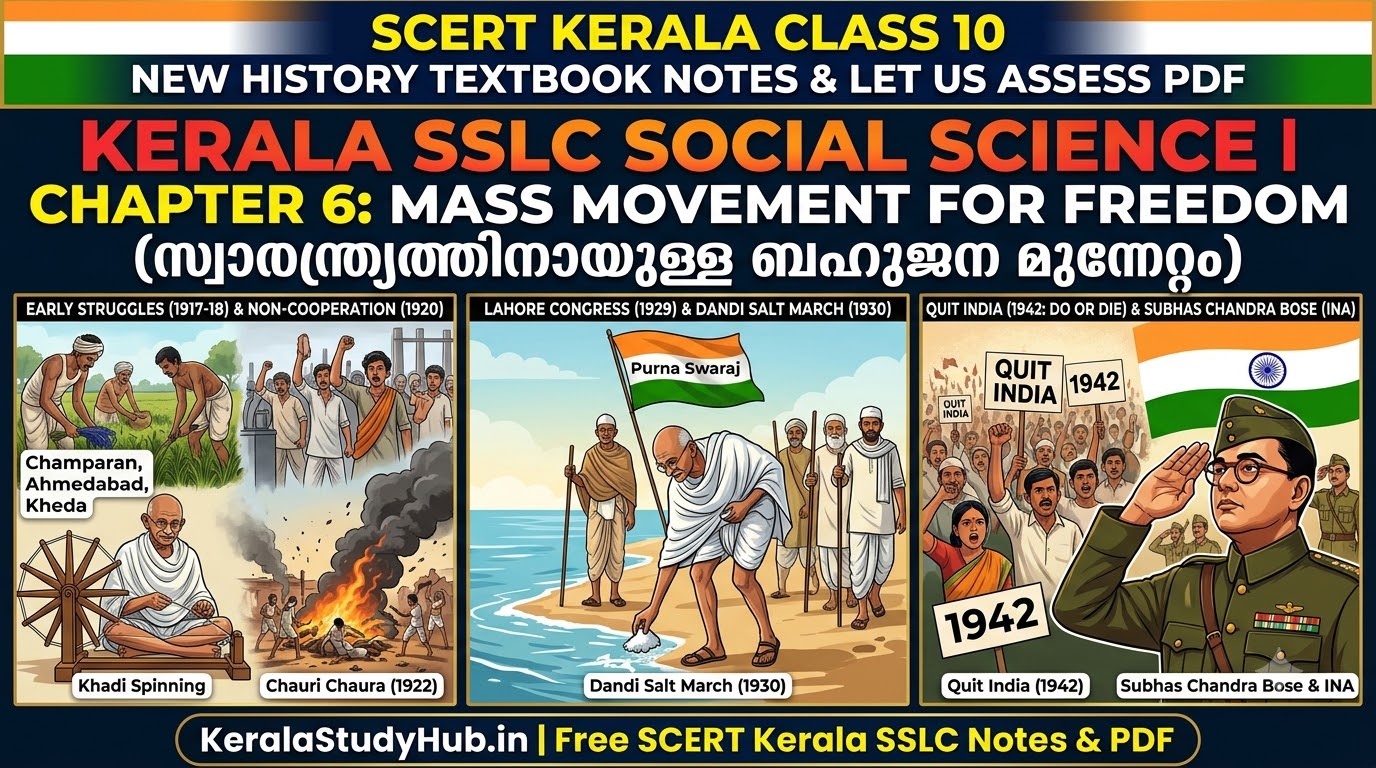
Kerala SSLC Social Science 1 Chapter 6 Notes for Mass Movement for Freedom (Malayalam Medium: സ്വാതന്ത്ര്യത്തിനായുള്ള ബഹുജന മുന്നേറ്റം) cover the sixth unit of the newly revised Class 10 (Std 10) Social Science I (Indian History) textbook published by the State Council of Educational Research and Training (SCERT Kerala). In the Kerala Pareeksha Bhavan SSLC Public Examination (as well as Kerala PSC examinations), this flagship Indian National Movement chapter carries the highest weightage of 8 to 10 marks, including a compulsory 6-Mark or 8-Mark Essay Question on Mahatma Gandhi’s mass movements.
- 1. Early Struggles of Mahatma Gandhi (1917–1918), Rowlatt Act & Jallianwala Bagh Massacre (ഗാന്ധിജിയുടെ ആദ്യകാല സമരങ്ങൾ)
- 2. Khilafat & Non-Cooperation Movement (1920–1922) and the Chauri Chaura Incident (നിസ്സഹകരണ പ്രസ്ഥാനം)
- 3. Simon Commission, Lahore Congress (1929) & Civil Disobedience Movement (സിവിൽ നിയമലംഘന പ്രസ്ഥാനവും ഉപ്പുസത്യാഗ്രഹവും)
- 4. Quit India Movement (1942), Revolutionary Movements & Subhas Chandra Bose (INA) (ക്വിറ്റ് ഇന്ത്യാ സമരവും ഐ.എൻ.എ-യും)
- 5. SCERT Textbook Let Us Assess Questions and Answers & Malayalam Medium Notes
As a High School Social Science teacher, I have prepared this complete bilingual English and Malayalam Medium guide covering Gandhiji’s early struggles (Champaran, Ahmedabad, Kheda), the Rowlatt Act & Jallianwala Bagh Massacre (1919), the Non-Cooperation Movement (1920–22), the Civil Disobedience Movement & Dandi Salt March (1930), the Quit India Movement (1942), Subhas Chandra Bose & the INA, and all solved Let Us Assess questions.
Quick SSLC Social Science I Navigation: Revise Chapter 1: Humanism | Chapter 2: Liberty, Equality, Fraternity | Chapter 4: Wealth and the World | Chapter 5: Public Opinion in Democracy.
CHAPTER 6 AT A GLANCE: CLASS 10 SOCIAL SCIENCE I (INDIAN FREEDOM STRUGGLE) BLUEPRINT
- Gandhiji’s 3 Early Local Struggles (1917–1918): (1) Champaran Satyagraha (Bihar, 1917 — Indigo farmers), (2) Ahmedabad Mill Strike (Gujarat, 1918 — Wage hike; first hunger strike), (3) Kheda Peasant Struggle (Gujarat, 1918 — Tax remission after crop failure).
- 1919 Turning Point: Rowlatt Act (1919) (arrest without warrant) → Jallianwala Bagh Massacre (April 13, 1919, Amritsar) ordered by General Dyer → Khilafat Movement (Ali Brothers: Mohammad Ali & Shaukat Ali).
- 3 All-India Mass Movements Led by Mahatma Gandhi:
• 1. Non-Cooperation Movement (1920–1922): Boycott + Swadeshi/Khadi & National Schools; suspended after the Chauri Chaura incident (Feb 5, 1922, UP).
• 2. Civil Disobedience Movement (1930–1934): Following the 1929 Lahore Congress (Purna Swaraj); launched with the Dandi Salt March (March 12 – April 6, 1930); Payyannur Salt Satyagraha in Kerala led by K. Kelappan; Gandhi-Irwin Pact (March 5, 1931).
• 3. Quit India Movement (August 8, 1942): Slogan “Do or Die”; parallel governments in Ballia, Satara, and Tamluk.
- Revolutionaries & INA: Bhagat Singh, Chandra Shekhar Azad, Surya Sen | Subhas Chandra Bose (Forward Bloc & Indian National Army / Azad Hind Fauj).
1. Early Struggles of Mahatma Gandhi (1917–1918), Rowlatt Act & Jallianwala Bagh Massacre (ഗാന്ധിജിയുടെ ആദ്യകാല സമരങ്ങൾ)
Returning to India from South Africa in January 1915 with his political weapon of Satyagraha (adherence to truth and non-violence / Ahimsa), Mahatma Gandhi intervened in three local struggles between 1917 and 1918 that brought him close to the Indian masses:
| Struggle & Year | Location & Affected Group | Cause, Method & Outcome (ഫലം) |
|---|---|---|
| 1. Champaran Satyagraha (1917) | Champaran, Bihar (Indigo cultivators) | European planters forced peasants to cultivate indigo on 3/20th of their land (Tinkathia system) and buy it at low fixed prices. Gandhiji’s first Civil Disobedience struggle in India forced the government to appoint an inquiry commission and abolish the exploitative system. |
| 2. Ahmedabad Cotton Mill Strike (1918) | Ahmedabad, Gujarat (Textile mill workers) | Dispute over discontinuing the plague bonus and demand for a wage hike against rising prices. Gandhiji undertook his first Fast unto Death (hunger strike) in India, leading mill owners to grant a 35% wage hike. |
| 3. Kheda Satyagraha (1918) | Kheda, Gujarat (Peasant cultivators) | Crops failed due to severe drought and epidemic, yet British authorities insisted on full land revenue collection. Gandhiji and Sardar Vallabhbhai Patel organized non-payment of tax until the government granted tax remission to affected farmers. |
- The Rowlatt Act (1919 — “Black Act”): Passed by the Imperial Legislative Council in 1919 under Sir Sidney Rowlatt to crush the rising national movement after World War I. It empowered the British police to arrest any person without a warrant and imprison them for up to two years without trial. Gandhiji called for a nationwide Rowlatt Satyagraha (hartal) on April 6, 1919.
- Jallianwala Bagh Massacre (April 13, 1919): On Baisakhi day (April 13, 1919), a large peaceful crowd gathered at the enclosed Jallianwala Bagh ground in Amritsar, Punjab, to protest the arrest of nationalist leaders Dr. Saifuddin Kitchlew and Dr. Satyapal. British military commander General Reginald Dyer blocked the single narrow exit and ordered his troops to open fire on the unarmed gathering without warning, killing hundreds of innocent people. In protest, Rabindranath Tagore renounced his British Knighthood.

2. Khilafat & Non-Cooperation Movement (1920–1922) and the Chauri Chaura Incident (നിസ്സഹകരണ പ്രസ്ഥാനം)
To unite Hindus and Muslims against British rule, Gandhiji combined the Khilafat Movement (led by the Ali Brothers—Maulana Mohammad Ali and Maulana Shaukat Ali—to protect the temporal authority of the Ottoman Caliph/Khalifa of Turkey after WWI) with the Non-Cooperation Movement (1920–1922).
- Two-Pronged Programme of the Non-Cooperation Movement (4-Mark Question):
- Boycott (Negative) Programme: Surrender of British titles and honours; boycott of legislative councils, elections, British law courts (by lawyers like Motilal Nehru, C.R. Das, Vallabhbhai Patel), government schools/colleges, and public bonfires of foreign cloth.
- Constructive (Positive) Programme: Popularizing spinning on the Charkha and wearing Khadi; promoting Swadeshi goods; strengthening Hindu-Muslim communal harmony; campaigning against untouchability; and establishing indigenous National Educational Institutions such as Jamia Millia Islamia (Aligarh/Delhi), Kashi Vidyapith, Gujarat Vidyapith, and Bihar Vidyapith.
- Mass Participation (Peasants, Tribals, Workers & Women): Women picketed liquor shops and burned foreign clothes; workers went on strike; peasants in Awadh campaigned against landlordoppression; and tribal people in the Gudem Hills of Andhra Pradesh led by Alluri Sitarama Raju launched the Rampa Rebellion against British forest laws that restricted tribal access to forest livelihoods.
- Chauri Chaura Incident (February 5, 1922) & Suspension of the Movement: On February 5, 1922, at Chauri Chaura in Gorakhpur district of Uttar Pradesh, police opened fire on a procession of Non-Cooperation volunteers. The enraged crowd set the police station on fire, resulting in the death of 22 policemen. Convinced that the movement had deviated from the core principle of Ahimsa (non-violence), Gandhiji immediately called off the Non-Cooperation Movement (a decision Subhas Chandra Bose termed a “national calamity”).
- Formation of the Swaraj Party (1923): Following the suspension of Non-Cooperation, C.R. Das (President) and Motilal Nehru (Secretary) founded the Swaraj Party in 1923 within the Congress to contest elections, enter the Legislative Councils, and wreck colonial governance from within.
3. Simon Commission, Lahore Congress (1929) & Civil Disobedience Movement (സിവിൽ നിയമലംഘന പ്രസ്ഥാനവും ഉപ്പുസത്യാഗ്രഹവും)
- Anti-Simon Commission Movement (1927–1928): In 1927, the British government appointed a seven-member statutory commission under Sir John Simon to review constitutional reforms in India. Because all seven members were British (not a single Indian member), all political parties in India boycotted it with black flags and the slogan “Simon Go Back”. During a peaceful protest in Lahore, senior nationalist leader Lala Lajpat Rai was brutally lathi-charged by police and succumbed to his injuries.
- Historic Lahore Congress Session (December 1929 — Purna Swaraj): Presided over by Jawaharlal Nehru, the December 1929 Lahore session of the Indian National Congress declared Purna Swaraj (Complete Independence) as the ultimate goal of the national movement, decided to launch the Civil Disobedience Movement under Gandhiji, and observed January 26, 1930 as the first Independence Day across India.
- Dandi March / Salt Satyagraha (March 12 – April 6, 1930): Gandhiji chose Salt as the symbol of protest because salt was a basic necessity consumed by both the poorest peasant and the richest citizen, yet the British held an unjust monopoly and heavy tax on it. On March 12, 1930, Gandhiji marched from Sabarmati Ashram with 78 chosen followers, walking 240 miles over 24 days to reach the coastal village of Dandi in Gujarat on April 6, 1930, where he violated the British salt law by picking up a handful of natural sea salt.
- Regional Centres of the Salt Satyagraha:
- Northwestern India (NWFP): Led by Khan Abdul Ghaffar Khan (known as “Frontier Gandhi” / അതിർത്തി ഗാന്ധി), who organized the non-violent volunteer force Khudai Khidmatgars (Servants of God / Red Shirts).
- Tamil Nadu (Vedaranyam): Led by C. Rajagopalachari (March from Tiruchirappalli to Vedaranyam).
- Kerala (Payyannur & Kozhikode): Led by K. Kelappan (“Kerala Gandhi”) at Payyannur in Kannur and Mohammed Abdur Rahiman at Kozhikode beach; P. Krishna Pillai heroically defended the national flag on Kozhikode beach.
- Dharasana Salt Works (Gujarat): Led by Sarojini Naidu after Gandhiji’s arrest.
- Gandhi-Irwin Pact (March 5, 1931): Signed between Mahatma Gandhi and Viceroy Lord Irwin on March 5, 1931; Gandhiji agreed to suspend the Civil Disobedience Movement and attend the Second Round Table Conference in London, while the British agreed to release non-violent political prisoners and allow coastal villagers to make salt for personal use.
4. Quit India Movement (1942), Revolutionary Movements & Subhas Chandra Bose (INA) (ക്വിറ്റ് ഇന്ത്യാ സമരവും ഐ.എൻ.എ-യും)
- Quit India Movement (August 8, 1942 — “Do or Die”): Following the failure of the Cripps Mission (1942) during World War II, the All India Congress Committee met at Bombay on August 8, 1942 and passed the historic Quit India Resolution demanding the immediate end of British rule. Gandhiji gave the clarion call “Do or Die” (Karo ya Maro / പ്രവർത്തിക്കുക അല്ലെങ്കിൽ മരിക്കുക). When top Congress leaders were arrested on August 9, socialists and youth leaders like Jayaprakash Narayan, Aruna Asaf Ali (who hoisted the tricolor at Gowalia Tank Maidan), Ram Manohar Lohia, and Sucheta Kripalani led underground resistance, and people established independent Parallel Governments (സമാന്തര സർക്കാരുകൾ) in places like Ballia (UP), Tamluk (Bengal), and Satara (Maharashtra).
- Revolutionary Nationalists & Left Movements: Youth revolutionaries who believed in armed overthrow of British rule formed organizations like the Hindustan Republican Association (HRA / HSRA) led by Chandra Shekhar Azad, Bhagat Singh, Sukhdev, and Rajguru (martyred on March 23, 1931), and Surya Sen (Masterda) who led the Chittagong Armoury Raid (1930) in Bengal. Meanwhile, peasant and worker struggles grew through the All India Trade Union Congress (AITUC, 1920), the Congress Socialist Party (1934), and the All India Kisan Sabha (1936).
- Subhas Chandra Bose & the Indian National Army (INA / Azad Hind Fauj): After resigning from the Congress presidentship in 1939, Netaji Subhas Chandra Bose founded the Forward Bloc, escaped from British house arrest in Calcutta, and reached Singapore via Germany and Japan. Taking charge of the Indian National Army (INA) (originally organized by Rash Behari Bose and Captain Mohan Singh) and forming the Provisional Government of Free India (Azad Hind Government) in Singapore (1943), Netaji gave the slogans “Give me blood, and I shall give you freedom!” and “Delhi Chalo”. The women’s wing, the Rani Jhansi Regiment, was commanded by Keralite freedom fighter Captain Lakshmi Sahgal.
- Towards Freedom (1945–1947): Post-war mass upsurges—especially the INA Red Fort Trials (1945) and the Royal Indian Navy (RIN) Mutiny (1946)—convinced Clement Attlee’s British government that colonial rule was no longer sustainable. Following the Cabinet Mission (1946) (which set up the Constituent Assembly) and the Mountbatten Plan (June 3, 1947), the British Parliament passed the Indian Independence Act of 1947, and India attained independence on August 15, 1947 (accompanied by the tragic Partition of India and Pakistan).
5. SCERT Textbook Let Us Assess Questions and Answers & Malayalam Medium Notes
Q1. Why did Mahatma Gandhi select “Salt” as the central weapon to launch the Civil Disobedience Movement in 1930?
Answer: Salt was an essential daily food item consumed equally by the poorest peasant and the wealthiest citizen, transcending caste, religion, and class divides. By taxing salt heavily and enforcing a state monopoly prohibiting Indians from making salt even from seawater, the British government imposed an unjust burden on the poor. Choosing salt immediately connected the national political struggle for Purna Swaraj with the everyday household survival of millions of ordinary Indians, especially women.
Q2. What was the significance of the Lahore Congress Session of December 1929?
Answer: Presided over by Jawaharlal Nehru, the 1929 Lahore Congress Session passed two historic resolutions: (1) It declared Purna Swaraj (Complete Independence) from British rule as the ultimate goal of the Indian National Congress; and (2) It authorized Mahatma Gandhi to launch the nationwide Civil Disobedience Movement, celebrating January 26, 1930 as Independence Day.
പത്താം ക്ലാസ് സാമൂഹ്യശാസ്ത്രം I അദ്ധ്യായം 6: സ്വാതന്ത്ര്യത്തിനായുള്ള ബഹുജന മുന്നേറ്റം (മലയാളം മീഡിയം നോട്ടുകൾ)
- ഗാന്ധിജിയുടെ ആദ്യകാല സമരങ്ങൾ: ചമ്പാരൻ സത്യാഗ്രഹം (1917, ബീഹാർ) — നീലം കർഷകർക്കുവേണ്ടി; അഹമ്മദാബാദ് തുണിമിൽ സമരം (1918, ഗുജറാത്ത്) — തൊഴിലാളികളുടെ വേതന വർദ്ധനവിനായി (ഇന്ത്യയിലെ ആദ്യത്തെ നിരാഹാര സമരം); ഖേദ കർഷക സമരം (1918, ഗുജറാത്ത്) — കൃഷിനാശം സംഭവിച്ച കർഷകരുടെ നികുതി ഇളവിനായി.
- നിസ്സഹകരണ പ്രസ്ഥാനവും (1920–22) ചൗരിചൗരാ സംഭവവും: ഖിലാഫത്ത് പ്രസ്ഥാനവുമായി (അലി സഹോദരന്മാർ) ചേർന്നാണ് നിസ്സഹകരണ പ്രസ്ഥാനം നടന്നത്. വിദേശവസ്ത്ര ബഹിഷ്കരണവും ഖാദി പ്രചാരണവും ദേശീയ വിദ്യാലയങ്ങളുടെ (ജാമിയ മില്ലിയ ഇസ്ലാമിയ, കാശി വിദ്യാപീഠം) രൂപീകരണവും ഇതിന്റെ ഭാഗമായിരുന്നു. 1922 ഫെബ്രുവരി 5-ലെ ചൗരിചൗരാ സംഭവത്തെ (ഉത്തർപ്രദേശ്) തുടർന്ന് ഗാന്ധിജി സമരം നിർത്തിവെച്ചു. 1923-ൽ സി.ആർ. ദാസും മോത്തിലാൽ നെഹ്റുവും ചേർന്ന് സ്വരാജ് പാർട്ടി രൂപീകരിച്ചു.
- സിവിൽ നിയമലംഘന പ്രസ്ഥാനവും (1930) ക്വിറ്റ് ഇന്ത്യാ സമരവും (1942): 1929-ലെ ലാഹോർ കോൺഗ്രസ് സമ്മേളനം (ജവഹർലാൽ നെഹ്റു) ‘പൂർണ്ണ സ്വരാജ്’ പ്രഖ്യാപിച്ചു. 1930 മാർച്ച് 12-ന് സബർമതി ആശ്രമത്തിൽ നിന്ന് ദണ്ഡിയിലേക്ക് ഗാന്ധിജി നടത്തിയ ഉപ്പുസത്യാഗ്രഹത്തോടെ സിവിൽ നിയമലംഘന പ്രസ്ഥാനം ആരംഭിച്ചു (കേരളത്തിൽ പയ്യന്നൂരിൽ കെ. കേളപ്പൻ നേതൃത്വം നൽകി; വടക്കുപടിഞ്ഞാറൻ അതിർത്തിയിൽ ഖാൻ അബ്ദുൾ ഗാഫർ ഖാൻ — അതിർത്തി ഗാന്ധി). 1942 ഓഗസ്റ്റ് 8-ന് ഗാന്ധിജി ക്വിറ്റ് ഇന്ത്യാ സമരം (‘പ്രവർത്തിക്കുക അല്ലെങ്കിൽ മരിക്കുക’) ആരംഭിച്ചു. സുഭാഷ് ചന്ദ്രബോസ് ഫോർവേഡ് ബ്ലോക്കും ഇന്ത്യൻ നാഷണൽ ആർമിയും (INA) നയിച്ചു.
Teacher’s Classroom Note & Student Discussion Question:
Dear SSLC Students, always memorize the chronological order of Gandhiji’s struggles (Champaran 1917 → Ahmedabad 1918 → Kheda 1918 → Rowlatt/Jallianwala Bagh 1919 → Non-Cooperation 1920 → Chauri Chaura 1922 → Lahore Congress 1929 → Dandi Salt March 1930 → Quit India 1942) — both timeline arrangement and essay questions come from this sequence! Quick Question for You: Who is known as “Frontier Gandhi” in Northwestern India and who led the Salt Satyagraha at Payyannur in Kerala? Write your answer in the comments below!


Latest SCERT & DHSE Kerala Study Notes
- Kerala Class 9 Physics Chapter 2 Notes: Equations of Motion (ചലനസമവാക്യങ്ങൾ) Std 9 Let Us Assess Questions and Answers PDF
- Kerala SSLC Christmas Exam Question Paper 2025-27: All Subjects Second Term & Model Question Papers with Solved Answer Keys PDF (New SCERT Syllabus)
- Kerala SSLC English Christmas Exam Question Paper 2025-27: Second Term & Model Solved 80-Mark Answer Key, Discourses & Grammar PDF
- Kerala SSLC Social Science Christmas Exam Question Paper 2025-27: Second Term & Model Solved 80-Mark Answer Key, Weightage & Map Study PDF
- Kerala SSLC Maths Christmas Exam Question Paper 2025-27: Second Term & Model Solved Answer Key, Weightage & Formula Sheet PDF (New SCERT Syllabus)
- Kerala SSLC Biology Christmas Exam Question Paper 2025-27: Second Term & Model Solved Answer Key, Weightage & Flowcharts PDF (New SCERT Syllabus)
- Kerala SSLC Chemistry Christmas Exam Question Paper 2025-27: Second Term & Model Solved Answer Key, Weightage & Sure A+ Questions PDF (New SCERT Syllabus)
- Kerala SSLC Physics Christmas Exam Question Paper 2025-27: Second Term & Model Solved Answer Key, Weightage & Formula Sheet PDF (New SCERT Syllabus)
