Kerala SSLC Social Science 1 Chapter 5 Notes for Public Opinion in Democracy (Malayalam Medium: പൊതുജനാഭിപ്രായം ജനാധിപത്യത്തിൽ) cover the fifth unit of the newly revised Class 10 (Std 10) Social Science I (Political Science) textbook published by the State Council of Educational Research and Training (SCERT Kerala). In the Kerala Pareeksha Bhavan SSLC Public Examination, this political science unit carries 5 to 6 marks, with direct questions on the Characteristics of Public Opinion, the 8 Agencies That Shape Public Opinion, Factors Hindering Public Opinion, and Media Literacy vs Digital Literacy.
- 1. Meaning, Characteristics & Importance of Public Opinion in a Democracy (പൊതുജനാഭിപ്രായവും സവിശേഷതകളും)
- 2. Eight Major Agencies That Shape Public Opinion (പൊതുജനാഭിപ്രായ രൂപീകരണ ഏജൻസികൾ — 6-Mark Essay)
- 3. Factors That Hinder Public Opinion, Fake News Prevention & Media vs Digital Literacy
- 4. SCERT Textbook Let Us Assess Questions and Answers & Malayalam Medium Notes
As a High School Social Science teacher, I have structured this complete bilingual English and Malayalam Medium guide with clear comparison tables, textbook examples (such as V.T. Bhattathiripad’s play Adukkalayil Ninnu Arangathekku and fake-news prevention steps), and solved Let Us Assess answers.
Quick SSLC Social Science I Navigation: Revise Chapter 1: Humanism | Chapter 2: Liberty, Equality, Fraternity | Chapter 3: Social Analysis | Chapter 4: Wealth and the World | Next: Chapter 6: Mass Movement for Freedom.
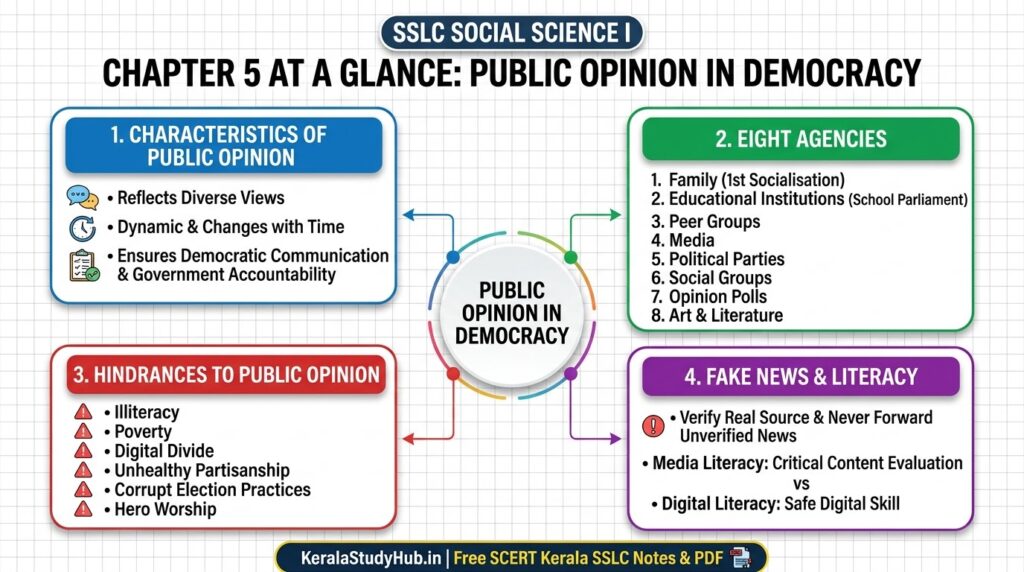
CHAPTER 5 AT A GLANCE: CLASS 10 SOCIAL SCIENCE I (POLITICAL SCIENCE) REVISION BLUEPRINT
- What is Public Opinion (പൊതുജനാഭിപ്രായം)? The general or collective opinion held by a section of society on socio-economic, political, and cultural issues affecting them. It ensures democratic communication and keeps the government accountable.
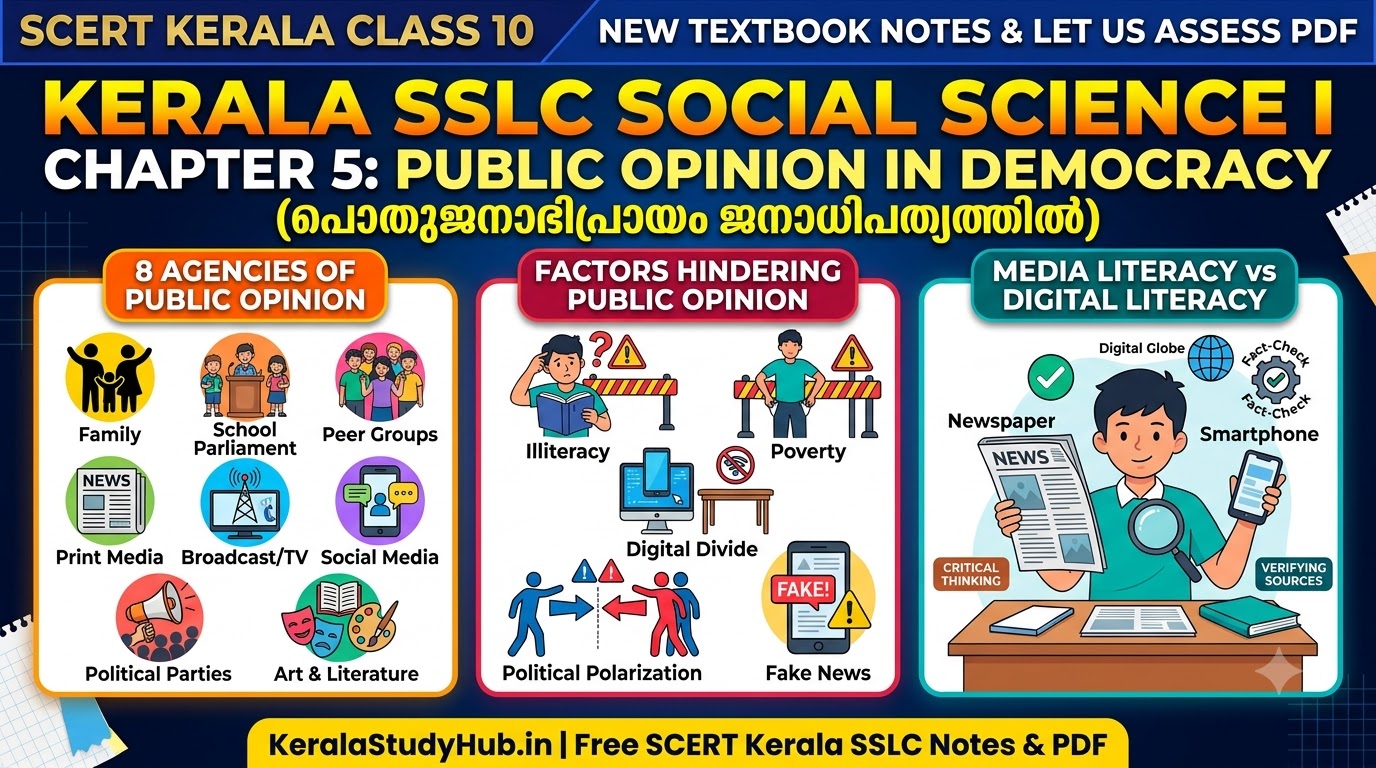
- 8 Agencies Shaping Public Opinion: (1) Family (first stage of socialization), (2) Educational Institutions (School Parliament, clubs), (3) Peer Groups, (4) Media (Newspapers, TV, Radio, Social Media), (5) Political Parties (Ruling & Opposition), (6) Social Institutions/Organizations, (7) Opinion Polls, and (8) Art & Literature (e.g., Adukkalayil Ninnu Arangathekku).
- 6 Factors That Hinder Public Opinion: Illiteracy, Poverty, Digital Divide, Unhealthy Political Partisanship/Polarization, Corrupt Election Practices, and Hero Worship / Fake News.
- Media Literacy vs Digital Literacy: Media literacy is the ability to critically evaluate media messages for truth and bias; Digital literacy is the technical and cognitive skill to find, verify, and communicate information safely using digital platforms.
1. Meaning, Characteristics & Importance of Public Opinion in a Democracy (പൊതുജനാഭിപ്രായവും സവിശേഷതകളും)
Public Opinion (പൊതുജനാഭിപ്രായം) is the general viewpoint or consensus formed among the people regarding public issues that affect their lives. It is formed through formal and informal discussions and debates, and serves as the lifeblood of a democratic government.
- 6 Key Characteristics of Public Opinion (3-Mark / 4-Mark Question):
- Reflects Diverse Views: It emerges from the interaction and synthesis of diverse perspectives held by different sections of society.
- Not Necessarily the Unanimous View of All: It represents the general consensus or majority opinion focused on public welfare rather than the opinion of every single individual.
- Dynamic and Subject to Change: Public opinion is not static; it changes according to changing circumstances, time, and new knowledge.
- Formed on Socio-Economic, Political, and Cultural Issues: It arises whenever a common issue affecting society emerges.
- No Fixed Location of Origin: Anyone can express and shape public opinion from anywhere through democratic channels.
- Ensures Democratic Communication: It creates a continuous two-way dialogue between citizens and the government.
- Factors Influencing an Individual’s Opinion: Social and cultural background, personal attitudes, beliefs, preconceptions, education, and leadership skills.
- Why Public Opinion Is Essential in a Democracy: It acts as a check on arbitrary power and authoritarian rule, ensures government accountability, brings societal problems to the attention of authorities, and compels governments to align policies with the popular will.
2. Eight Major Agencies That Shape Public Opinion (പൊതുജനാഭിപ്രായ രൂപീകരണ ഏജൻസികൾ — 6-Mark Essay)
| Agency of Public Opinion | How It Shapes & Mobilizes Public Opinion |
|---|---|
| 1. Family (കുടുംബം) | A child’s socialization begins in the family. Traditional beliefs, values, and dinner-table discussions among family members hold the first place in shaping a child’s initial opinions on social issues. |
| 2. Educational Institutions (വിദ്യാഭ്യാസ സ്ഥാപനങ്ങൾ) | Schools and colleges cultivate critical thinking, scientific temper, and independent opinions. Platforms like School Parliament, literary/science clubs, NSS, SPC, sports, and arts festivals train students in democratic participation. |
| 3. Peer Groups (സമപ്രായക്കാരുടെ സംഘങ്ങൾ) | Peer groups share common age, personality traits, and experiences. Open debates and informal discussions among friends help individuals refine, correct, and form collective opinions on social and political issues. |
| 4. Media: Print, Electronic & Social Media (മാധ്യമങ്ങൾ) | Newspapers played a historic role during India’s freedom struggle and continue to inform citizens through news and editorials. Radio & Television reach even non-literate sections. Social Media enables instant public reaction and debate, though it also carries the risk of fake news. |
| 5. Political Parties (രാഷ്ട്രീയ പാർട്ടികൾ) | Both Ruling Parties (propagating government achievements and policies) and Opposition Parties (highlighting government shortcomings and public grievances) mobilize public opinion through election manifestos, rallies, conferences, strikes, and party journals. |
| 6. Social Institutions & Organizations (സാമൂഹിക സ്ഥാപനങ്ങൾ) | Religious organizations, caste/community associations, trade unions, किसान/peasant unions, student movements, environmental groups, and human rights organizations shape public attitudes on specific civic issues. |
| 7. Opinion Polls (അഭിപ്രായ സർവ്വേകൾ) | Professional research agencies and media houses collect data from a representative sample population on major policy decisions or elections, helping gauge and shape public mood. |
| 8. Art and Literature (കലയും സാഹിത്യവും) | Poems, novels, cinema, paintings, and plays powerfully awaken social conscience against injustice. SCERT Textbook Example: V.T. Bhattathiripad’s famous play Adukkalayil Ninnu Arangathekku (1929) mobilized strong public opinion against social evils and the oppression of women in Kerala. |
3. Factors That Hinder Public Opinion, Fake News Prevention & Media vs Digital Literacy
- 6 Factors That Hinder the Formation of Genuine Public Opinion (4-Mark Question):
- Illiteracy (നിരക്ഷരത): Prevents citizens from reading newspapers, understanding laws, and critically analysing public issues.
- Poverty (ദാരിദ്ര്യം): Isolates marginalized groups from public affairs as their entire energy is spent on daily survival.
- Digital Divide (ഡിജിറ്റൽ വിഭജനം): The gap between those who have access to modern information technology/internet and those who do not restricts equal participation in digital public discourse.
- Unhealthy Political Activity & Lack of Internal Democracy: Blind political partisanship and communal/political polarization prevent objective thinking.
- Corrupt Election Practices: Bribery, muscle power, and paid news distort genuine voter opinion.
- Hero Worship (വ്യക്തിപൂജ): Blindly following charismatic leaders without questioning their actions undermines rational public opinion.
- Preventive Measures Against the Spread of Fake News on Social Media (3-Mark Question):
- Verify the authentic primary source of any news message before believing it.
- Never forward or share unverified or sensational messages on WhatsApp/social media.
- Cross-check suspicious claims with official government portals and credible fact-checking agencies, and report cyber-crimes to law enforcement.
| Media Literacy (മാധ്യമ സാക്ഷരത) | Digital Literacy (ഡിജിറ്റൽ സാക്ഷരത) |
|---|---|
| 1. The ability to access, critically analyse, evaluate, and understand messages received through various print, broadcast, and digital media. | 1. The ability to effectively find, evaluate, create, and communicate information using digital devices, computers, and the internet. |
| 2. Focuses on identifying hidden biases, commercial propaganda, and separating facts from fake news in media content. | 2. Focuses on safe, ethical, and technically competent use of digital tools, cyber-safety, and online services. |
4. SCERT Textbook Let Us Assess Questions and Answers & Malayalam Medium Notes
Q1. Do school authorities seek students’ opinions regarding the organization of school anniversary celebrations? Through which democratic forum do students express their suggestions?
Answer: Yes. Students express their opinions and suggestions through the School Parliament, Class Assemblies, PTA/Student Council meetings, and school clubs. These forums serve as practical training grounds for forming constructive public opinion in a democracy.
പത്താം ക്ലാസ് സാമൂഹ്യശാസ്ത്രം I അദ്ധ്യായം 5: പൊതുജനാഭിപ്രായം ജനാധിപത്യത്തിൽ (മലയാളം മീഡിയം നോട്ടുകൾ)
- പൊതുജനാഭിപ്രായം (Public Opinion): സമൂഹത്തെ ബാധിക്കുന്ന പൊതുവിഷയങ്ങളിൽ ജനങ്ങൾക്കിടയിൽ രൂപപ്പെടുന്ന പൊതുവായ അഭിപ്രായമാണിത്. ഇത് ജനാധിപത്യപരമായ ആശയവിനിമയം ഉറപ്പാക്കുന്നു.
- പൊതുജനാഭിപ്രായം രൂപീകരിക്കുന്ന ഏജൻസികൾ: (1) കുടുംബം, (2) വിദ്യാഭ്യാസ സ്ഥാപനങ്ങൾ (സ്കൂൾ പാർലമെന്റ്, ക്ലബ്ബുകൾ), (3) സമപ്രായക്കാരുടെ സംഘങ്ങൾ (Peer groups), (4) മാധ്യമങ്ങൾ (പത്രങ്ങൾ, ടെലിവിഷൻ, സോഷ്യൽ മീഡിയ), (5) രാഷ്ട്രീയ പാർട്ടികൾ (ഭരണകക്ഷിയും പ്രതിപക്ഷവും), (6) സാമൂഹിക സ്ഥാപനങ്ങൾ, (7) അഭിപ്രായ സർവ്വേകൾ (Opinion Polls), (8) കലയും സാഹിത്യവും (ഉദാ: വി.ടി. ഭട്ടതിരിപ്പാടിന്റെ ‘അടുക്കളയിൽ നിന്ന് അരങ്ങത്തേക്ക്’).
- പൊതുജനാഭിപ്രായ രൂപീകരണത്തിന് തടസ്സമാകുന്ന ഘടകങ്ങൾ: നിരക്ഷരത, ദാരിദ്ര്യം, ഡിജിറ്റൽ വിഭജനം (Digital Divide), അനാരോഗ്യകരമായ രാഷ്ട്രീയ പ്രവർത്തനങ്ങൾ, തിരഞ്ഞെടുപ്പ് അഴിമതികൾ, വ്യക്തിപൂജ (Hero worship), വ്യാജവാർത്തകൾ (Fake News).
Teacher’s Classroom Note & Student Discussion Question:
Dear SSLC Students, the 3-Mark comparison between Media Literacy and Digital Literacy and the 6-Mark essay on Agencies of Public Opinion are top favourites for the SSLC Social Science examination! Quick Question for You: Which famous social reform play by V.T. Bhattathiripad is cited in your textbook as an example of Art and Literature shaping public opinion? Write your answer in the comments below!