
Welcome to Higher Secondary Class 11 Biology! Just as you started your Class 11 journey with Plus One Physics Chapter 1 (Units and Measurement), Plus One Chemistry Chapter 1 (Some Basic Concepts of Chemistry), and Plus One Maths Chapter 1 (Sets), we now enter the world of living organisms in Kerala Plus One Biology (Botany & Zoology) Chapter 1 — The Living World (ജീവലോകം).
- Plus One Biology Chapter 1 Overview & Exam Weightage (പാഠഭാഗത്തിന്റെ സംഗ്രഹം)
- Easy Revision Notes: The Living World (പ്രധാന ആശയങ്ങൾ ലളിതമായി പഠിക്കാം)
- 1. Defining Properties of Living Organisms & Biodiversity (ജീവജാലങ്ങളുടെ സവിശേഷതകളും ജൈവവൈവിധ്യവും)
- 2. Binomial Nomenclature & Its Four Universal Rules (ദ്വിനാമ പദ്ധതിയും നിയമങ്ങളും)
- 3. Taxonomy, Systematics & The 7 Taxonomic Categories (വർഗ്ഗീകരണ തലങ്ങൾ)
- 4. Master Classification Table of 4 Organisms (Guaranteed 2-Mark / 3-Mark Exam Table!)
- 1 Mark, 2 Mark & 3 Mark Questions — DHSE Board Pattern (ചോദ്യോത്തരങ്ങൾ)
- Frequently Asked Questions (FAQ) — Kerala Plus One Biology Chapter 1
- 1. Are Herbarium, Botanical Gardens, and Taxonomic Keys included in the 2026–27 Kerala Plus One Biology Exam?
- 2. Where can I study Plus One Physics, Chemistry, and Maths notes on Kerala Study Hub?
Under the rationalised 2026–27 SCERT Kerala and NCERT Class 11 Biology syllabus, topics like Taxonomical Aids (Herbarium, Botanical Gardens, Museums, Zoological Parks, and Keys) have been removed, making Chapter 1 super short and high-scoring! If you master the 4 Rules of Binomial Nomenclature (ദ്വിനാമ പദ്ധതി), ICBN & ICZN full forms, the 7-Step Taxonomic Hierarchy, and the Taxonomic Classification Table of Man, Housefly, Mango, and Wheat, you will score 100% marks in both your DHSE Kerala Board Exam and NEET. Here is the complete English and Malayalam Medium (മലയാളം മീഡിയം) revision guide by Kerala Study Hub (KeralaStudyHub.in).
Plus One Biology Chapter 1 Overview & Exam Weightage (പാഠഭാഗത്തിന്റെ സംഗ്രഹം)
| Exam Feature | Details for 2026–27 DHSE Kerala Plus One Biology Syllabus |
|---|---|
| Board & Class | DHSE & SCERT Kerala — Plus One (Class 11) |
| Subject | Biology — Part 1: Botany & Part 2: Zoology (ജീവശാസ്ത്രം) |
| Chapter Number & Title | Chapter 1: The Living World (ജീവലോകം) |
| Deleted Topics (Rationalised Syllabus) | Taxonomical Aids (Herbarium, Museum, Botanical Gardens, Key) — Deleted |
| Expected Marks Weightage | 3 to 4 Marks (Board Exam) + 1 Guaranteed Question in NEET |
| Sure-Shot Exam Topics | 4 Universal Rules of Binomial Nomenclature, ICBN/ICZN, Taxonomic Hierarchy Arrow Diagram, Mango/Wheat/Man/Housefly Table |
Easy Revision Notes: The Living World (പ്രധാന ആശയങ്ങൾ ലളിതമായി പഠിക്കാം)
1. Defining Properties of Living Organisms & Biodiversity (ജീവജാലങ്ങളുടെ സവിശേഷതകളും ജൈവവൈവിധ്യവും)
- Defining vs. Non-Defining Properties of Life (1-Mark / 2-Mark Exam Trap!):
• Growth (വളർച്ച) and Reproduction (പ്രത്യുൽപ്പാദനം) are NOT defining properties of living organisms! Why? Because non-living mountains/sand mounds also grow by accumulation of material on the surface, and sterile living organisms like Mules (കോവർകഴുത), Sterile Worker Bees, and Infertile Human Couples do not reproduce!
• Metabolism (ഉപാപചയം), Cellular Organisation (കോശഘടന), and Consciousness / Response to Stimuli (പ്രതികരണശേഷി) are the true Defining Properties of all living organisms without any exception! - Biodiversity (ജൈവവൈവിധ്യം): The total number and types of organisms present on Earth. Currently, around 1.7 to 1.8 million species have been scientifically described and named!
2. Binomial Nomenclature & Its Four Universal Rules (ദ്വിനാമ പദ്ധതിയും നിയമങ്ങളും)
To avoid confusion caused by local regional names, the Swedish biologist Carolus Linnaeus (കാൾ ലിനേയസ് — Father of Taxonomy) introduced Binomial Nomenclature (ദ്വിനാമ പദ്ധതി), where every organism is given a scientific name consisting of two components: the Generic name (ജനുസ് നാമം) and the Specific epithet (സ്പീഷീസ് നാമം).
- Important Full Forms for 1-Mark Questions (പൂർണ്ണരൂപം എഴുതുക):
1. ICBN: International Code for Botanical Nomenclature (for naming plants).
2. ICZN: International Code of Zoological Nomenclature (for naming animals).
💡 Four Universal Rules of Binomial Nomenclature (Guaranteed 2-Mark / 3-Mark Question!):
- Biological names are generally in Latin and written in Italics. They are Latinised or derived from Latin irrespective of their origin.
- The first word in a biological name represents the Genus (Generic name) while the second component denotes the specific epithet (Species).
- Both the words in a biological name, when handwritten, are separately underlined, or printed in italics to indicate their Latin origin.
- The first word denoting the Genus starts with a Capital letter, while the specific epithet starts with a small letter.
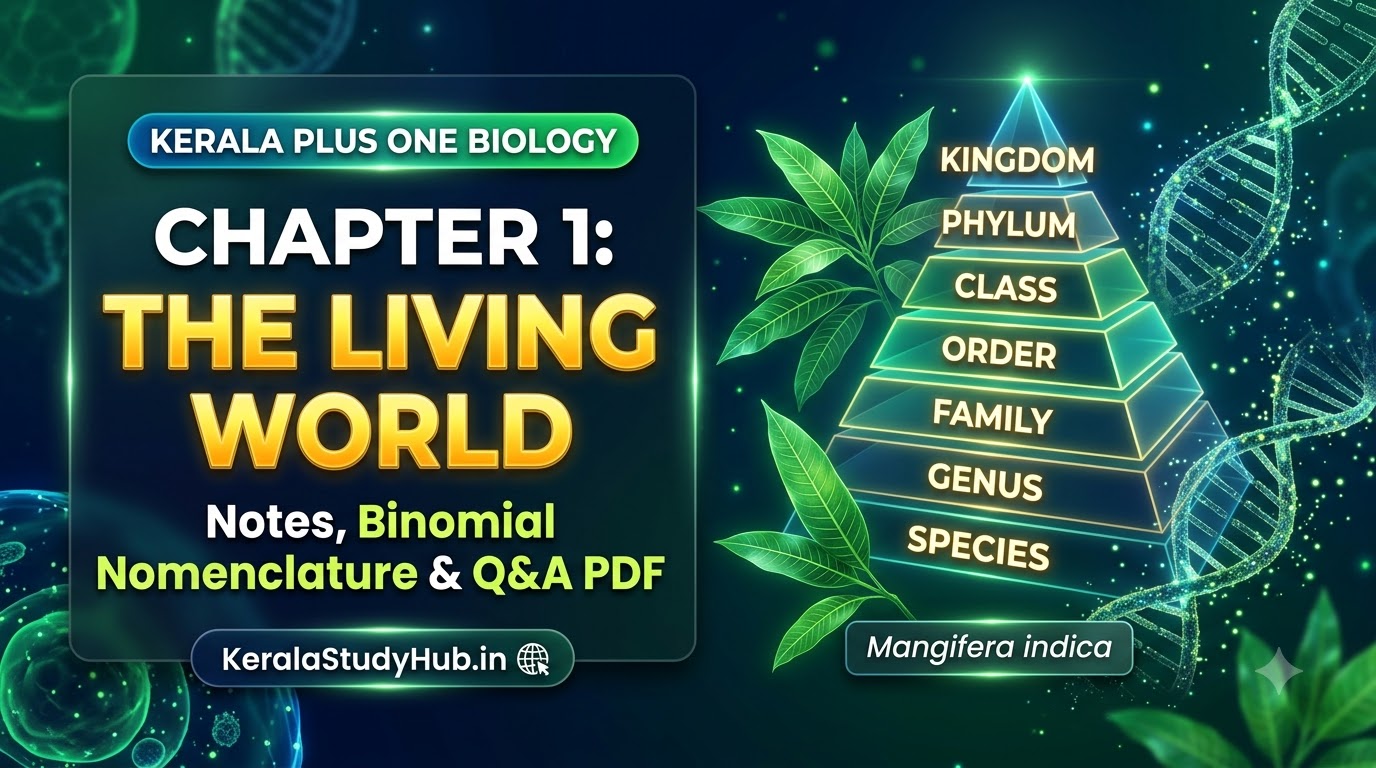
• Example: Scientific name of Mango is written as Mangifera indica Linn. (where Mangifera is the Genus, indica is the specific epithet, and Linn. indicates that this species was first described by Linnaeus!).
3. Taxonomy, Systematics & The 7 Taxonomic Categories (വർഗ്ഗീകരണ തലങ്ങൾ)
- Taxonomy (വർഗ്ഗീകരണ ശാസ്ത്രം): The process of classification of all living organisms into different taxa based on Characterisation, Identification, Classification, and Nomenclature.
- Systematics (സിസ്റ്റമാറ്റിക്സ്): Derived from the Latin word ‘systema’ (meaning systematic arrangement of organisms). Carolus Linnaeus used Systema Naturae as the title of his publication. Systematics takes into account evolutionary relationships (phylogeny) between organisms along with taxonomy.
- Taxonomic Hierarchy (വർഗ്ഗീകരണ ശ്രേണി — 2-Mark / 3-Mark Flowchart Question!):
Each rank or unit of classification is called a Taxon (plural: Taxa). There are 7 obligate taxonomic categories arranged from lowest (most specific) to highest (most general):Species ➔ Genus ➔ Family ➔ Order ➔ Class ➔ Phylum (or Division in Plants) ➔ Kingdom
| Taxonomic Category (Rank) | Simple Definition & Key Exam Examples |
|---|---|
| 1. Species (സ്പീഷീസ്) (Lowest / Basic Unit!) |
Group of individual organisms with fundamental similarities capable of interbreeding. • Potato: Solanum tuberosum | Nightshade: Solanum nigrum | Brinjal: Solanum melongena • Lion: Panthera leo | Tiger: Panthera tigris | Leopard: Panthera pardus • Modern Human: Homo sapiens |
| 2. Genus (ജനുസ്) | Group of closely related species having more characters in common. • Potato and Brinjal belong to Genus Solanum. • Lion, Leopard, and Tiger belong to Genus Panthera (which differs from Genus Felis that includes cats). |
| 3. Family (ഫാമിലി / കുടുംബം) | Group of related genera. *(In plants, family names end with suffix -aceae!)* • Genera Solanum, Petunia, and Datura are placed in Family Solanaceae. • Genus Panthera (Lion, Tiger) and Genus Felis (Cat) are placed in Family Felidae (Cat family), while dogs belong to Family Canidae. |
| 4. Order (ഓർഡർ) | Assemblage of related families. *(In plants, order names end with suffix -ales!)* • Plant families Convolvulaceae and Solanaceae are included in the Order Polymoniales (mainly based on floral characters!). • Animal families Felidae (cats) and Canidae (dogs) are included in the Order Carnivora. |
| 5. Class (ക്ലാസ്) | Includes related orders. • Order Primata (monkey, gorilla, human) and Order Carnivora (tiger, cat, dog) are placed in Class Mammalia. |
| 6. Phylum / Division (ഫൈലം / ഡിവിഷൻ) | • In Animals, related classes form a Phylum (e.g., Fishes, Amphibians, Reptiles, Birds, and Mammals form Phylum Chordata). • In Plants, related classes form a Division (e.g., Division Angiospermae). |
| 7. Kingdom (കിംഗ്ഡം) (Highest Taxonomic Category!) |
All animals belong to Kingdom Animalia, and all plants belong to Kingdom Plantae. |
💡 Golden Trend Rule (1-Mark / 2-Mark HOTS Question):
As we go HIGHER from Species to Kingdom, the number of common characteristics goes on DECREASING! Lower the taxa (closer to Species), more are the characteristics that the members within the taxon share.
4. Master Classification Table of 4 Organisms (Guaranteed 2-Mark / 3-Mark Exam Table!)
Every Plus One Biology student must memorize this exact NCERT/SCERT table—examiners leave 2 or 3 blanks in this table every year:
| Common Name | Biological (Scientific) Name | Genus | Family | Order | Class | Phylum / Division |
|---|---|---|---|---|---|---|
| 1. Man (മനുഷ്യൻ) | Homo sapiens | Homo | Hominidae | Primata | Mammalia | Chordata (Phylum) |
| 2. Housefly (ഈച്ച) | Musca domestica | Musca | Muscidae | Diptera | Insecta | Arthropoda (Phylum) |
| 3. Mango (മാവ്) | Mangifera indica | Mangifera | Anacardiaceae | Sapindales | Dicotyledonae | Angiospermae (Division) |
| 4. Wheat (ഗോതമ്പ്) | Triticum aestivum | Triticum | Poaceae | Poales | Monocotyledonae | Angiospermae (Division) |
1 Mark, 2 Mark & 3 Mark Questions — DHSE Board Pattern (ചോദ്യോത്തരങ്ങൾ)
Q1. Expand the abbreviations (a) ICBN, and (b) ICZN.
Answer:
• (a) ICBN: International Code for Botanical Nomenclature.
• (b) ICZN: International Code of Zoological Nomenclature.
Q2. Which is the lowest (basic) taxonomic category, and which is the highest taxonomic category?
Answer:
• Lowest (basic) category: Species (സ്പീഷീസ്).
• Highest category: Kingdom (കിംഗ്ഡം).
Q3. A student wrote the scientific name of Mango as “Mangifera Indica” without underlining it in his notebook. Point out two mistakes in his writing and rewrite it correctly.
Answer:
• Mistake 1: The specific epithet (indica) was written starting with a capital letter ‘I’ instead of a small letter ‘i’.
• Mistake 2: When handwritten, both words (Genus and specific epithet) must be separately underlined.
• Correct way (when handwritten): Mangifera indica (or in print: Mangifera indica).
Q4. Arrange the following taxonomic categories in the correct ascending sequence (from lowest to highest):
Class, Family, Species, Kingdom, Order, Genus, Division.
Answer:
Species ➔ Genus ➔ Family ➔ Order ➔ Class ➔ Division ➔ Kingdom.
Q5. What happens to the number of common characteristics as we move up the taxonomic hierarchy from Species to Kingdom?
Answer:
As we move higher up from Species to Kingdom, the number of common (shared) characteristics goes on decreasing, and the complexity of determining the relationship to other taxa at the same level increases.
Frequently Asked Questions (FAQ) — Kerala Plus One Biology Chapter 1
1. Are Herbarium, Botanical Gardens, and Taxonomic Keys included in the 2026–27 Kerala Plus One Biology Exam?
No. Under the rationalised SCERT Kerala and NCERT Class 11 Biology syllabus for 2026–27, the section on Taxonomical Aids has been excluded from board examination evaluation.
2. Where can I study Plus One Physics, Chemistry, and Maths notes on Kerala Study Hub?
Explore our complete Class 11 Science notes here:
• Plus One Physics All Chapters Notes & Formula Sheet
• Plus One Chemistry Chapter 1: Some Basic Concepts of Chemistry Notes
• Plus One Maths Chapter 1: Sets Notes & Solutions


Latest SCERT & DHSE Kerala Study Notes
- Kerala Class 9 Physics Chapter 2 Notes: Equations of Motion (ചലനസമവാക്യങ്ങൾ) Std 9 Let Us Assess Questions and Answers PDF
- Kerala SSLC Christmas Exam Question Paper 2025-27: All Subjects Second Term & Model Question Papers with Solved Answer Keys PDF (New SCERT Syllabus)
- Kerala SSLC English Christmas Exam Question Paper 2025-27: Second Term & Model Solved 80-Mark Answer Key, Discourses & Grammar PDF
- Kerala SSLC Social Science Christmas Exam Question Paper 2025-27: Second Term & Model Solved 80-Mark Answer Key, Weightage & Map Study PDF
- Kerala SSLC Maths Christmas Exam Question Paper 2025-27: Second Term & Model Solved Answer Key, Weightage & Formula Sheet PDF (New SCERT Syllabus)
- Kerala SSLC Biology Christmas Exam Question Paper 2025-27: Second Term & Model Solved Answer Key, Weightage & Flowcharts PDF (New SCERT Syllabus)
- Kerala SSLC Chemistry Christmas Exam Question Paper 2025-27: Second Term & Model Solved Answer Key, Weightage & Sure A+ Questions PDF (New SCERT Syllabus)
- Kerala SSLC Physics Christmas Exam Question Paper 2025-27: Second Term & Model Solved Answer Key, Weightage & Formula Sheet PDF (New SCERT Syllabus)